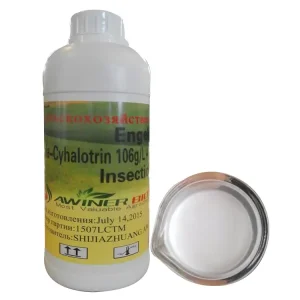
Direct B2B quotes and premium factory prices for insecticides, herbicides, and custom active ingredient formulations.
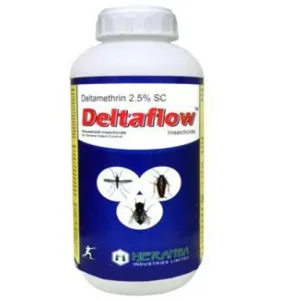
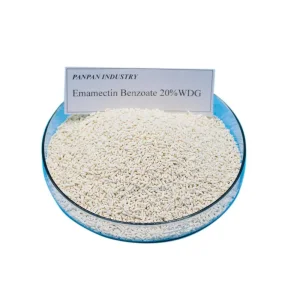
Analyzing global demand, physiological challenges, and China's strategic position in active ingredient manufacturing.
Thrips (specifically Frankliniella occidentalis, Thrips tabaci, and Scirtothrips dorsalis) represent one of the most severe biological vectors impacting intensive commercial agriculture worldwide. Characterized by their rasping-sucking mouthparts, high fecundity, extremely rapid life cycle (7 to 14 days under optimal temperature conditions), and high mutation potential, thrips inflict both direct mechanical damage on crop epidermis and indirect damage by transmitting destructive phytopathogenic viruses such as Tomato Spotted Wilt Virus (TSWV) and Impatiens Necrotic Spot Virus (INSV).
Global economic losses attributable to thrips damage in high-value horticulture, greenhouse floriculture, cash crops (cotton, tobacco), and staple agronomic production (corn, legumes, citrus) exceed $1.5 billion annually. Procurement directors, agricultural chemical distributors, and commercial growers face compounding pressure due to rapid target-site resistance development against historical chemical classes like organophosphates, carbamates, and single-mode synthetic pyrethroids.
China stands as the dominant global hub for technical-grade active ingredient (TC) synthesis and high-performance end-use formulation (SC, WDG, EC, FS). Key chemical industrial clusters centered in Shijiazhuang, Hebei Province, as well as Jiangsu and Shandong, provide unmatched integration of basic chemical precursors, intermediates synthesis, and specialized adjuvant chemistry.
B2B importers and enterprise buyers sourcing China Insecticides for thrips control require more than simple spot quotes; they require robust supply chain predictability, strict FAO/WHO standard chemical validation, batch-to-batch HPLC purity documentation, and customized resistance-breaking dual-action premixes. China's scalable infrastructure allows enterprise sourcing managers to lock in competitive bulk quotes and secure long-term stability against international supply chain volatility.
A technical guide for agricultural engineers and sourcing specialists to prevent field resistance development.
Successful management of persistent thrips populations depends on strict rotation among non-cross-resistant Insecticide Resistance Action Committee (IRAC) mode of action groups. Relying on a single chemical family rapidly selects for resistant biotypes. Below is an institutional analysis of key active ingredients produced in China for thrips management:
| Active Ingredient | IRAC Group | Primary Mode of Action | Target Species | Typical Formulation | Key Performance Advantage |
|---|---|---|---|---|---|
| Flonicamid | Group 29 | Selective feeding blocker (Chordotonal organ modulator) | F. occidentalis, Aphids, Whiteflies | 50% WDG, 20% SC, 97% TC | Stops feeding within 30 min; benign to beneficial pollinators and predatory mites. |
| Emamectin Benzoate | Group 6 | Glutamate-gated chloride channel allosteric modulators | Thrips larvae, Lepidoptera, Leafminers | 5% WDG, 5.7% WDGDF, 30% WDG, 70% TC | Translaminar translomatic activity; rapid knockdown of cryptic thrips inside flower buds. |
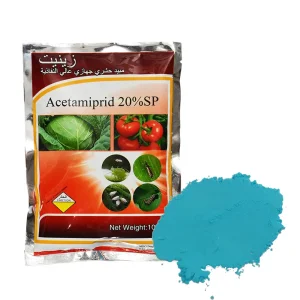
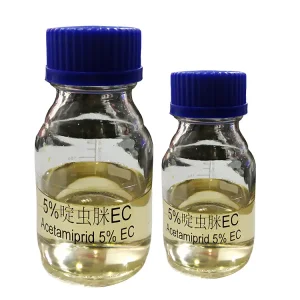
| Acetamiprid | Group 4A | Nicotinic acetylcholine receptor (nAChR) competitive modulators | Thrips spp., Whiteflies, Planthoppers | 20% SP, 5% EC, 70% WP | High systemic mobility through xylem; swift systemic absorption across leaf cuticles. |
| Lambda-Cyhalothrin + Thiamethoxam | Group 3A + 4A | Dual Action: Voltage-gated sodium channel modulator + nAChR agonist | Broad spectrum: Thrips, Beetles, Bugs | 141g/L SC, 247g/L SC, 300g/L SC | Synergistic combination offering rapid contact flush-out combined with long residual control. |
| Spinetoram / Spinad | Group 5 | Nicotinic acetylcholine receptor (nAChR) allosteric modulators | Western Flower Thrips, Citrus Thrips | 120g/L SC, 60g/L SC | Gold-standard bio-rational potency against organophosphate/pyrethroid-resistant strains. |
Because thrips hide deep within unopened flower buds, growing leaf sheaths, and underside leaf crevices, contact-only sprays often fail. Modern Chinese formulations prioritize translaminar active ingredients (such as Emamectin Benzoate and Flonicamid) that penetrate the upper cuticle to form an active reservoir within leaf tissue.
Systemic neonicotinoids like Acetamiprid 20% SP or Thiamethoxam move acropetally (upward) through xylem channels. This provides continuous protection to new emerging shoots and flush growth where adult thrips aggregate and deposit eggs.
Combining fast-acting pyrethroids with systemic chordotonal modulators or avermectins provides immediate knockdown ("flush-out") while managing resistant nymphs. Enterprise buyers frequently request custom co-formulations to suit localized resistance profiles.
Transitioning from solvent-heavy ECs to modern, eco-friendly water-dispersible granules (WDG) and microemulsions.
Traditional Emulsifiable Concentrates (EC) face growing regulatory scrutiny due to volatile organic compound (VOC) emissions and solvent phytotoxicity under high-temperature greenhouse conditions. Chinese manufacturing facilities have made significant capital investments in fluid-bed granulation technology to yield premium Water Dispersible Granules (WDG) and Dry Flowables (DF).
Advanced polymeric microencapsulation shields sensitive active ingredients (such as pyrethroids or biological derivatives) from ultraviolet degradation, offering controlled release dynamics over 14 to 21 days. Suspension Concentrates (SC) utilize sub-micron wet milling technology to achieve particle size distributions ($d_{90} < 2.5 \mu m$), optimizing leaf surface coverage and rain-fastness.
Because thrips possess waxy, water-repellent cuticles and reside within hydrophobic leaf structures, standard spray droplets often bounce off or pool inefficiently. Leading Chinese formulation laboratories integrate specialized trisiloxane organosilicone surfactants and methylated seed oils (MSO) into technical formulations.
These adjuvants lower the dynamic surface tension of the spray solution from ~72 mN/m (pure water) to under 21 mN/m, driving immediate super-spreading action. This physical spreading mechanism forces the insecticide solution directly into flower structures and leaf axils where thrips harbour, maximizing active ingredient delivery.
Understanding cost drivers, raw material precursor trends, and bulk purchasing strategies in China.
B2B pricing for China insecticides intended for thrips control depends on several core variables: upstream chemical precursor supply, technical synthesis yield, formulation processing complexity, custom packaging specifications, and international shipping parameters (FOB Qingdao/Tianjin/Shanghai vs. CIF destination port).
| Insecticide Product / Formulation | CAS Registry No. | Purity / Grade | Indicative Price Range (FOB China)* | Standard Commercial Packaging |
|---|---|---|---|---|
| Flonicamid Technical | 158062-67-0 | 97% TC | $110.00 – $135.00 / kg | 25kg Fiber Drum (UN Certified) |
| Flonicamid 50% WDG | 158062-67-0 | 50% WDG | $65.00 – $78.00 / kg | 500g Aluminum Bag / 1kg Bag / 25kg Drum |
| Emamectin Benzoate Technical | 155569-91-8 | 70% TC – 90% TC | $145.00 – $170.00 / kg | 25kg Sealed Fiber Drum |
| Emamectin Benzoate 5% WDG | 155569-91-8 | 5% WDG / WDGDF | $14.50 – $18.50 / kg | ="#ffffff">100g, 500g Sachet / 10kg Carton|
| Acetamiprid Technical | 135410-20-7 | 97% TC | $15.20 – $18.80 / kg | 25kg Bag / Drum |
| Acetamiprid 20% SP | 135410-20-7 | 20% SP | $4.80 – $6.20 / kg | 1kg Bag / 25kg Bag |
| Lambda-Cyhalothrin + Thiamethoxam SC | 91465-08-6 + 153719-23-4 | 141g/L + 106g/L SC | $5.80 – $7.50 / Liter | 1L HD-PE Bottle / 200L HD-PE Drum |
*Note: Market price quotations fluctuate based on raw material costs, seasonal demand cycles, energy tariffs, and exchange rates. Contact Awiner Biotech's commercial desk for real-time firm price quotes.
Upstream intermediates such as 2-chloro-5-chloromethylpyridine (CCMP) for neonicotinoids or 2-fluoropyridine for flonicamid strongly dictate technical batch pricing. Sourcing direct from integrated manufacturers mitigates these intermediary spikes.
Small-pack customization (e.g., 10ml, 50ml, 100ml HD-PE or Co-ex bottles with custom fluorination and anti-counterfeit foil seals) involves additional labor and material costs compared to bulk 200L steel/HD-PE drums.
Full Container Load (FCL) orders (e.g., 20ft FCL carrying ~16,000 kg WDG or 18,000 L SC) benefit from significant freight and manufacturing scale efficiencies, yielding the lowest unit prices for distributors.
Combining research, synthesis, global regulatory assistance, and local market inspection expertise.
Founded in 2006, Awiner Biotech is headquartered in Shijiazhuang, Hebei Province, North China—strategically adjacent to Beijing with convenient logistics access to major northern international shipping ports such as Tianjin and Qingdao.
Awiner Biotech is dedicated to the scientific research, high-standard production, and international distribution of advanced agrochemicals. Our comprehensive portfolio encompasses insecticides, herbicides, fungicides, plant growth regulators (PGR), and public health pest control chemicals.
Over nearly two decades of operation, Awiner Biotech has built an exceptional track record of supply reliability, strict Quality Control (QC), and dedicated customer registration support across global agricultural markets.
Through proactive market presence, field trial verifications, and regulatory registrations, Awiner Biotech serves agricultural distributors and enterprise buyers across a broad global network, including:
Awiner Biotech regularly participates in premier global chemical and agricultural trade exhibitions to remain closely aligned with local market demands. Our team maintains strong presences at agricultural events across Turkey, Iran, Pakistan, Nigeria, Russia, Cambodia, Malaysia, and Uzbekistan, establishing direct connections with key regional agricultural leaders.
Beyond export delivery, Awiner Biotech conducts hands-on customer market surveys directly within client destination countries. Our field technical specialists visit local farms and distribution networks to inspect product usage, evaluate local pest resistance patterns, analyze crop performance, and collaborate with partners to resolve field challenges effectively.
Stringent analytical testing, FAO/WHO specifications compliance, and GLP dossier support for global registrations.
Every manufacturing batch undergoes High-Performance Liquid Chromatography (HPLC) and Gas Chromatography (GC) analysis to verify active ingredient content, control impurity thresholds, and guarantee physical-chemical stability in compliance with FAO specifications.
We assist agricultural ministries and enterprise importers by providing comprehensive registration support, including Certificates of Analysis (COA), Safety Data Sheets (MSDS), stability data, and GLP-certified toxicological summaries needed for smooth clearance.
Formulations are packaged using UN-approved HD-PE drums, multi-layer aluminum foil sachets, or fluorinated bottles designed to withstand ocean transport vibrations, humidity, and temperature variations without leakage or chemical degradation.
Expert answers to common procurement, formulation choice, and resistance management questions.
Explore our complete enterprise catalog for technical agrochemical procurement and worldwide distribution.
 Awiner Biotech