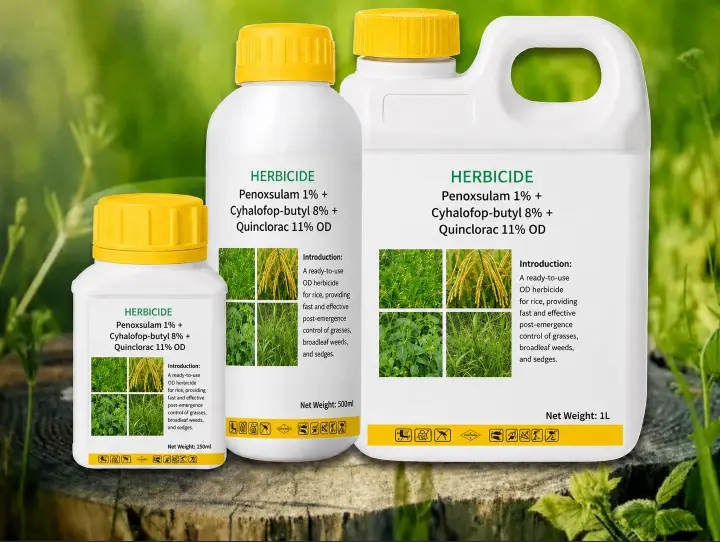
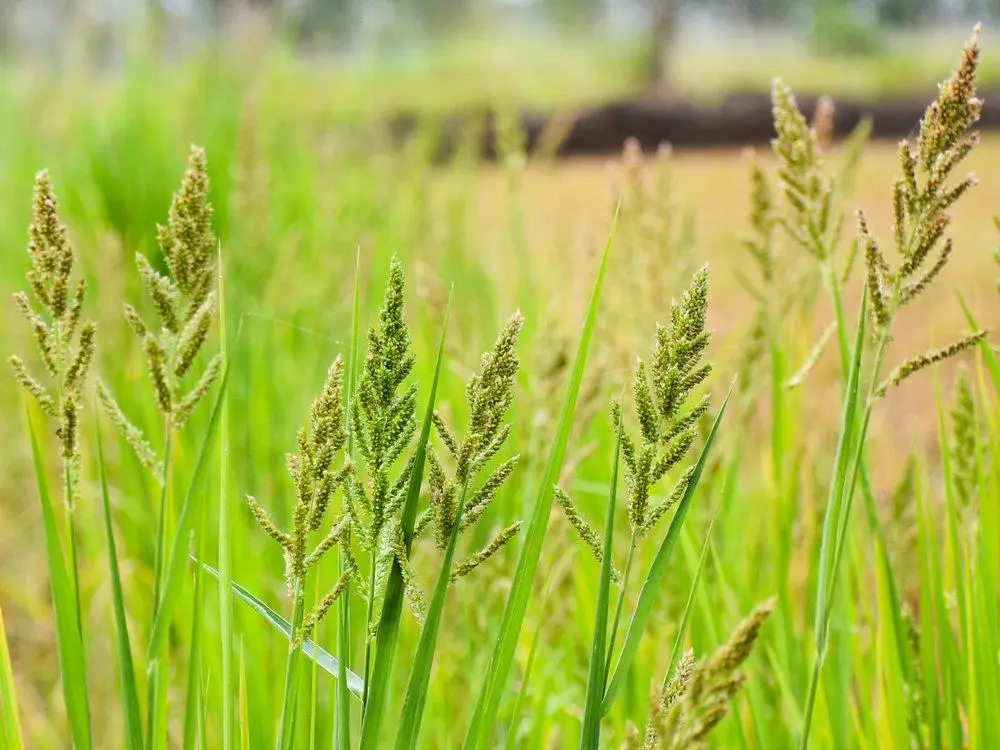
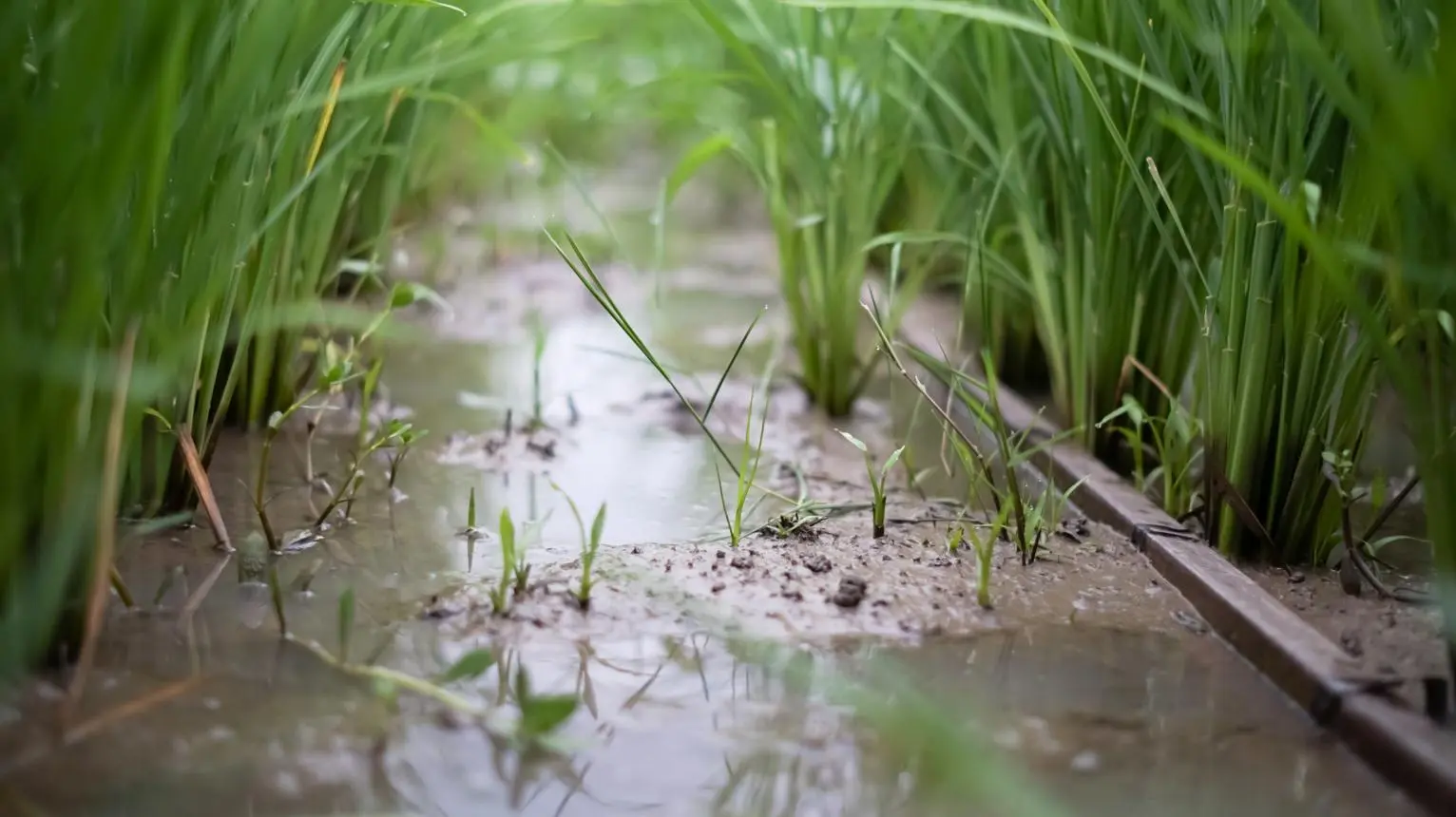
Rice feeds more than half the global population, but mixed weeds heavily cut harvests across rice-growing regions including the Middle East. Data shows unmanaged weeds slash rice yields by 25%–42%, while regular two-ingredient weed killers barely work on tough, hardened barnyardgrass, delivering less than 65% control. This is where Penoxsulam + Cyhalofop-butyl + Quinclorac OD makes a clear difference.
🔬 1. Penoxsulam mixture Mode of action
(1) Quinclorac
Quinclorac is a new selective post-emergence herbicide that can be used in rice fields both before and after weed emergence. It is mainly used to control barnyardgrass (Echinochloa spp.) and some broadleaf weeds in paddy fields. It is especially effective against barnyardgrass at the 4–6 leaf stage. The product offers several advantages, including low application rates, long residual activity, and a wide application window. After being absorbed by seeds, roots, shoots, and leaves, Quinclorac moves throughout the plant in both upward and downward directions. Treated weeds gradually show leaf twisting and deformation, followed by a deep reddish coloration, and the entire plant usually dies within 2–4 weeks after treatment.
(2) Cyhalofop-butyl
Cyhalofop-butyl is the only herbicide with exceptionally high safety to rice among its class. It is a systemic herbicide that is absorbed mainly through the leaves and leaf sheaths and then transported within the weed. The herbicidal process is relatively slow, and weeds generally die within 1–3 weeks after absorbing the product. Cyhalofop-butyl is mainly used to control important grass weeds. It is highly effective against Chinese sprangletop (Leptochloa chinensis) and provides good control of young barnyardgrass. It is also effective against crabgrass, Paspalum species, foxtail, goosegrass, and blackgrass. However, it has little or no activity against sedges and broadleaf weeds.
(3) Penoxsulam
Penoxsulam is a post-emergence, systemic herbicide for rice fields with a broad weed control spectrum. It is absorbed through the stems, leaves, young shoots, and roots, and then moves through the plant to the growing points. After treatment, the growth points gradually lose their green color, and within 7–14 days, the terminal buds turn red and become necrotic. The weeds usually die completely within 2–4 weeks. Penoxsulam effectively controls barnyardgrass, annual sedges, and many broadleaf weeds. Its residual activity can last for 30–60 days, and a single application is generally sufficient to provide season-long weed control in rice fields.
🌟 2. Product Highlights
1. Controls both young and large barnyardgrass Excellent activity from early-stage weeds to 4–6 leaf barnyardgrass, reducing the need for rescue spraying.
2. One-shot solution for mixed weeds Simultaneously controls barnyardgrass, sprangletop, sedges, and broadleaf weeds in rice fields.
3. Strong on resistant barnyardgrass populations Three active ingredients with complementary activity help manage fields where single-product performance is declining.
4. Fast knockdown + long residual control Cyhalofop-butyl provides rapid grass control, while Penoxsulam and Quinclorac deliver extended residual activity to suppress later flushes.
5. Wide application window, more flexibility Performs well even when weeds are uneven or have passed the ideal spraying stage.
6. Designed for difficult rice fields An ideal choice for fields with mixed weed pressure, large barnyard grass, and tough management conditions.
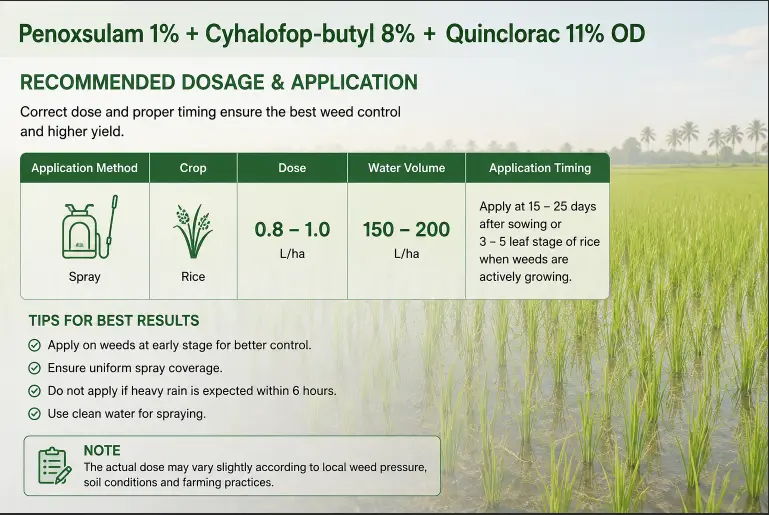
📋 3. Instructions for Use
❓ 4. FAQ
Does it work on over 6-leaf tough barnyardgrass?
Yes. Quinclorac delivers stable control for barnyardgrass at 1–7 leaf stage, including resistant populations dual mixes cannot eliminate.
Is OD better than suspension concentrate (SC)?
OD oil carrier adheres better to weed waxy cuticles, boosts absorption speed, performs better under sudden rainfall and generates less drift.
Can I mix this herbicide with other rice crop protection products?
Compatible with most mainstream rice fungicides and insecticides. Avoid tank mixing or consecutive use with organophosphorus insecticides within 7 days.
How long will residual weed suppression last?
25–32 days under standard recommended dosage, while Penoxsulam residual activity can last up to 30–60 days to provide long-term protection.
What target weeds can this three-way combination control?
It simultaneously controls barnyardgrass, Chinese sprangletop, crabgrass, foxtail, annual sedges, and various broadleaf weeds in paddy fields.
Why choose a three-ingredient mixture over a single herbicide?
Combining three active ingredients provides complementary modes of action, broadening the spectrum, preventing herbicide resistance, and combining fast knockdown with long-lasting control.
 Awiner Biotech