Explore our premium grade agrochemicals engineered for high bio-efficacy, environmental safety, and target specificity.
The global agrochemical landscape is undergoing a structural paradigm shift driven by stringent regulatory frameworks, climate-induced pest pressure shifts, and an urgent demand for enhanced food security. As agricultural producers worldwide face complex resistance challenges in target insect populations, the reliance on advanced, multi-component, and ecologically responsible insecticide formulations has reached an all-time peak.
Modern pest management no longer relies solely on basic technical active ingredients (TC). The real competitive edge lies within formulation physics and chemical engineering—the ability to transform raw active ingredients into highly stable, bio-available, rainfast, and environmentally safe field applications. China has emerged as the global epicenter for this transformation, evolving from a raw chemical producer into a high-tech formulation processing hub powering global agriculture.
China's comprehensive chemical supply chain enables direct, uninterrupted access to technical grade actives, specialty surfactants, carriers, and emulsifiers, reducing lead times and buffering global price volatility.
Modern facilities have transitioned from legacy solvent-heavy Emulsifiable Concentrates (EC) toward eco-friendly, water-based formulations such as Suspension Concentrates (SC) and Water Dispersible Granules (WDG).
Leading Chinese formulation plants operate under strict GLP data standards, providing robust FAO/WHO compliant physical chemistry, toxicology, and efficacy data packages for international registrations.
A high-performance insecticide formulation requires precise micronization, wetting agent optimization, dynamic surface tension reduction, and physical anti-caking properties. Chinese formulation factories leverage cutting-edge equipment including sub-micron wet bead mills, jet pulverizers, and fluidized bed granulators to achieve unmatched batch-to-batch consistency.
Key Engineering Metric: Particle size distribution in Suspension Concentrates (SC) is engineered to a median D90 of < 3.0 microns, maximizing plant cuticle penetration and bio-efficacy while ensuring zero phase separation or crystal growth during long-term storage across diverse climate zones.
| Formulation Type | Physical State | Core Technical Advantages | Target Pest Application |
|---|---|---|---|
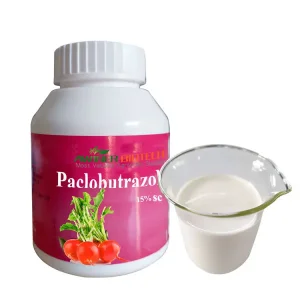
| SC (Suspension Concentrate) | Liquid (Water-Based) | Zero organic solvent fire hazard, low phytotoxicity, ultra-fine particle dispersion. | Foliar & Soil Application (e.g., Paclobutrazol 15% SC, Azoxystrobin 25% SC) |
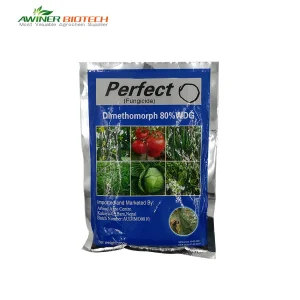
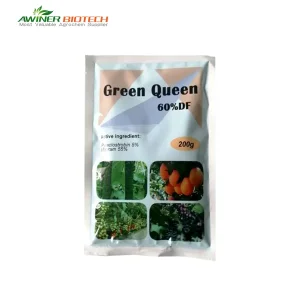
| WDG (Water Dispersible Granules) | Solid Granules | Dust-free handling, rapid disintegration in water, high concentration efficiency. | Broad-Spectrum Crop Protection (e.g., Pyraclostrobin + Difenoconazole WDG) |
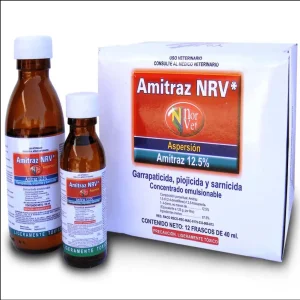
| EC (Emulsifiable Concentrate) | Liquid (Solvent-Based) | Superior cuticle lipid layer penetration, immediate knock-down action. | Public Health & Field Pests (e.g., Amitraz 12.5% EC, Permethrin 500g/L EC) |
| CS (Capsule Suspension) | Micro-encapsulated Liquid | Controlled release, reduced toxicity to non-target organisms, extended residual control. | Public Health Mosquito Control & High-Value Horticultural Crops |
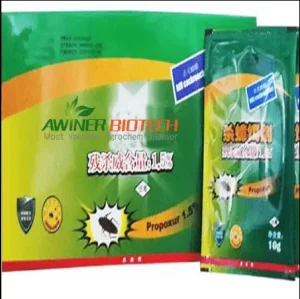
| Bait Formulations | Solid / Gel matrix | Targeted attractants, low environmental release, localized pest eradication. | Vector & Structural Pest Control (e.g., Propoxur 1.5% Bait) |
Combining rigorous scientific research, state-of-the-art manufacturing, and custom OEM/ODM delivery systems.
Awiner Biotech was founded in 2006, located in the northern chemical manufacturing heartland of Shijiazhuang, Hebei Province, China. Situated in close proximity to Beijing, our strategic location grants streamlined access to major international shipping ports and advanced logistical networks.
Awiner Biotech is dedicated to the research, synthesis, formulation engineering, and international distribution of advanced agrochemicals. Our comprehensive product portfolio includes broad-spectrum insecticides, selective herbicides, systemic fungicides, plant growth regulators (PGR), and public health vector control formulations.
Driven by strict ISO 9001 and ISO 14001 compliance standards, our formulation lines undergo rigorous quality checks utilizing High-Performance Liquid Chromatography (HPLC), Gas Chromatography (GC), and particle size lasers to guarantee every batch matches or exceeds FAO/WHO specifications.
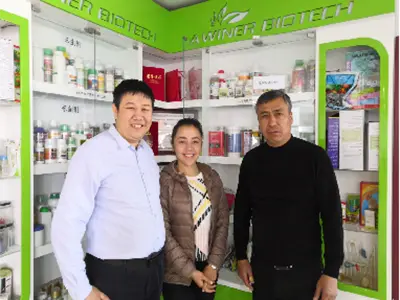
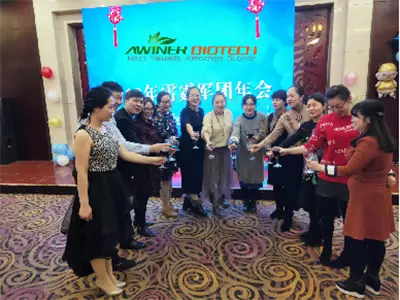
Up to now, we have established long-term strategic partnerships with leading agricultural distributors across Iraq, Iran, Afghanistan, Pakistan, India, Libya, Syria, Turkey, Yemen, Ukraine, Russia, Kazakhstan, Uzbekistan, Chile, Bolivia, Mexico, Brazil, Paraguay, Nigeria, Djibouti, Rwanda, Somalia, Malaysia, Cambodia, Nepal, Myanmar, and many other agricultural economies.
We actively participate in renowned international trade exhibitions across Turkey, Iran, Pakistan, Nigeria, Russia, Cambodia, Malaysia, and Uzbekistan. Furthermore, our technical support engineers regularly conduct international customer market surveys—visiting fields, evaluating regional climate stress, troubleshooting application issues, and optimizing customized packaging solutions tailored to local market requirements.
Insecticide efficacy varies significantly depending on regional climatic conditions, soil chemistry, target crop morphology, and local insect resistance profiles. Modern Chinese formulation suppliers work closely with global partners to adapt active concentration ratios, tank-mix compatibilities, and surfactant packages for specialized agricultural environments.
In high humidity environments (e.g., Southeast Asia, West Africa), rapid wash-off due to heavy rains is a primary challenge. Formulations incorporated with specialized organosilicone adjuvants and latex rainfastness agents ensure active ingredients adhere firmly to the foliage cuticle, delivering prolonged protection against chewing and sucking insects like thrips, aphids, and whiteflies.
In desert agricultural regions (e.g., Middle East, Central Asia), intense ultraviolet (UV) radiation accelerates the photodegradation of delicate active molecules. Advanced formulation plants utilize UV-blocking microencapsulation technologies and anti-evaporative solvent systems to maintain bio-availability under extreme heat stress.
Urbanization and vector-borne disease transmission require public health pest management solutions that combine low mammalian toxicity with rapid knockdown. Synthesized formulations containing permethrin, amitraz, and propoxur are tailored for municipal mosquito abatement, livestock protection, and structural vector elimination.
Comprehensive answers to complex technical, regulatory, and logistics queries for international agrochemical buyers.
Browse our complete spectrum of specialized bio-insecticides, fungicides, and vector control solutions.
 Awiner Biotech