Direct B2B supply of optimized active ingredients engineered for high knockdown, long residual activity, and anti-resistance rotation protocols.
Understanding the destructive physiological mechanics of Hemipteran pests (*Cicadellidae*) and strategic control vector protocols for industrial farming operations.
Leafhoppers utilize piercing-sucking mouthparts (stylets) to penetrate plant vascular tissues, primarily targeting the phloem and xylem vessels. During feeding, they secrete phytotoxic saliva containing salivary enzymes that disrupt cellular integrity. This causes localized necrosis, leaf curl, margin chlorosis, and eventual premature leaf drop—a physiological condition termed "hopperburn." Left unmanaged, net photosynthetic efficiency drops by 45% to 85%, severely diminishing yield metrics in high-value cash crops.
Beyond direct mechanical injury, species such as Empoasca vitis, Nephotettix cincticeps, and Homalodisca vitripennis act as primary biological vectors for destructive agricultural pathogens. They transmit wall-less bacteria known as Phytoplasmas (e.g., Grapevine Flavescence dorée, Rice Yellow Dwarf) and Xylella fastidiosa (Pierce's Disease in viticulture). Transmission efficiency can exceed 90% once a insect acquires the bacterium, making zero-density adult suppression mandatory in commercial vineyards and tea plantations.
Precision IPM (Integrated Pest Management) requires established Action Thresholds (AT) based on economic loss formulas: \( EIL = \frac{C}{V \cdot I \cdot D \cdot K} \). For instance, in commercial tea gardens, an inflection point of 5 to 8 nymphs per 50 leaves triggers chemical intervention. In rice systems, densities exceeding 10 green leafhoppers per hill necessitate rapid, broad-spectrum or selective neurotoxic active ingredient applications to protect canopy vigor during tillering and panicle initiation phases.
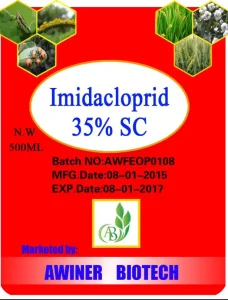
Deploying targeted neonicotinoids (such as Imidacloprid 35% SC or Acetamiprid mixtures) at the first nymphal instar stage reduces overall seasonal chemical load by up to 40% while preventing systemic pathogen inoculation across broad crop acres.
Market baseline evaluation detailing active ingredient (AI) concentration, IRAC classification, operational cost dynamics, and typical bulk factory pricing parameters.
| Active Ingredient & Formulation | IRAC MoA Group | Target Vector Spectrum | Key Formulation Features | Indicative Bulk FOB Price Range (USD/L or KG) |
|---|---|---|---|---|
| Imidacloprid 35% SC | Group 4A (Neonicotinoid) | Green Leafhopper, Planthoppers, Whiteflies | Systemic root/foliar absorption, long duration control | $6.80 - $9.50 / L |
| Acetamiprid 32g/L + Abamectin 18g/L EC | Group 4A + Group 6 (Avermectin) | Leafhoppers, Mites, Thrips, Aphids | Dual-action knock-down with rapid translaminar activity | $11.20 - $14.80 / L |
| Cyantraniliprole 10% OD / Technical | Group 28 (Diamide) | Chewing & Piercing-Sucking Insects | Cross-spectrum residual efficacy, low beneficial impact | $45.00 - $68.00 / L (Formulated) |
| Profenofos 300g/L + Lambda-Cyhalothrin 15g/L EC | Group 1B (OP) + Group 3A (Pyrethroid) | Refractory Leafhoppers, Armyworms, Beetles | Strong contact & stomach action; vapor phase movement | $7.40 - $10.20 / L |
| Thiocyclam-hydrogenoxalate + Acetamiprid SP | Group 14 (Nereistoxin) + Group 4A | Resistant Leafhopper Nymphs & Adults | Overcomes organophosphate & pyrethroid resistance | $12.50 - $16.00 / kg |
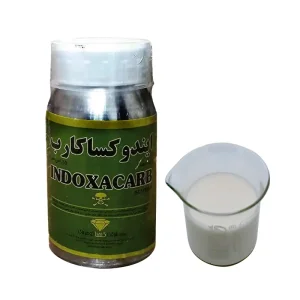
| Indoxacarb 150 SC / Emamectin Benzoate Mix | Group 22A (Oxadiazine) + Group 6 | Broad Spectrum Lepidoptera & Leafhoppers | Blocks voltage-gated sodium channels; crop safe | $18.00 - $24.50 / L |
*Note: Prices vary dynamically based on raw material chemical synthesis indexes, global petroleum feedstock shifts, customized packaging requirements (e.g., 100ml HDPO bottle vs 200L drum), and order volume volume tiers. Contact our procurement desk for live binding quotes.*
How concentrated agrochemical synthesis zones deliver unprecedented cost efficiency, stability, and global export velocity.
Situated in Shijiazhuang, Hebei Province—a core chemical manufacturing epicenter of Northern China—our supply ecosystem features direct pipeline and raw material access to fundamental active ingredient precursors. This structural integration mitigates price volatility of key intermediates like 2-chloro-5-chloromethylpyridine (CCMP) for neonicotinoid synthesis, ensuring price protection for long-term supply contracts.
Advanced automated synthesis plants maintain scalable reaction kettles capable of continuous mass production of SC (Suspension Concentrate), WDG (Water Dispersible Granules), EC (Emulsifiable Concentrate), and SP (Soluble Powder) formulations. With an annual capacity exceeding 12,000 metric tons, lead times are compressed by up to 35% compared to non-clustered global manufacturing facilities.
Located near capital Beijing and major maritime shipping infrastructure (Tianjin Port/Qingdao Port), our logistics network provides seamless cold-chain and hazardous cargo freight handling. Direct highway corridors enable standard export shipments to reach vessel berthing within 24–48 hours from final factory quality validation testing.
Overcoming insect metabolic resistance through multi-site chemical rotations, bio-surfactants, and precise chemical delivery systems.
Repeated single-active applications lead to rapid target-site sensitivity loss and elevated metabolic detoxification in leafhopper strains. Our anti-resistance framework emphasizes combining broad-spectrum target site modulators (e.g., Profenofos + Lambda-Cyhalothrin or Thiocyclam + Acetamiprid). This dual-action pathway suppresses P450 monooxygenase and esterase activity simultaneously, neutralizing resistant populations.
Migrating conventional EC formulations to microencapsulated suspension (CS) systems shields UV-sensitive active ingredients from rapid photodegradation under extreme sunlight. Micro-capsule shell wall structures deliver slow release over 21-28 days, ensuring persistent protection of crop foliage while minimizing worker toxicity and volatile organic compound (VOC) emissions.
Leafhoppers typically aggregate on the underside of dense foliage where standard hydraulic spray nozzles fail to reach. Incorporating organosilicone tank-mix adjuvants lowers surface tension down to ~20.5 mN/m (compared to ~72 mN/m for pure water). This triggers immediate stomatal flooding and translaminar movement, guaranteeing full contact with cryptic nymph stages.
Specific field execution protocols designed for key agricultural commercial sectors suffering leafhopper vector pressure.
Target Pest: Empoasca onukii
Recommended Solution: Cytokinin 6BA combined with low-residue bio-pesticide schedules or selective Thiocyclam + Acetamiprid SP.
Protocol: Apply at early nymphal peak before shoot hardening. Zero-residue compliance ensures green tea meets strict EU & Japanese Maximum Residue Limits (MRLs). Complement with Cytokinin 6BA to rapidly repair damaged leaf tissue and stimulate lateral bud growth.
Target Pest: Nephotettix cincticeps / Planthoppers
Recommended Solution: Imidacloprid 35% SC or Cyantraniliprole via seedling tray soak or early foliar spray.
Protocol: Early systemic delivery through root uptake provides up to 40 days of continuous protection against Rice Yellow Dwarf transmission, protecting vegetative tiller establishment and crop yield potential.
Target Pest: Erythroneura spp. / Scaphoideus titanus
Recommended Solution: Indoxacarb 150 SC + Emamectin Benzoate rotation.
Protocol: Spray during canopy growth prior to fruit set. Fast feeding cessation prevents inoculation of Phytoplasma pathogens (Flavescence dorée) while preserving beneficial predaceous mites (*Phytoseiidae*).
Target Pest: Amrasca biguttula (Cotton Leafhopper)
Recommended Solution: Acetamiprid 32g/L + Abamectin 18g/L EC or Profenofos + Lambda-Cyhalothrin EC.
Protocol: Applied upon reaching threshold of 1-2 hoppers per leaf. Provides quick knockdown of adult leafhoppers while simultaneously suppressing secondary pests like spider mites and bollworms.
Global agrochemical synthesis partner headquartered in Shijiazhuang, Hebei Province, driving sustainable crop protection innovation worldwide.
Founded in 2006, Awiner Biotech has grown into a leading research-driven enterprise specializing in agrochemical synthesis, custom formulation development, and international crop protection distribution. Situated in Northern China’s industrial cluster in Shijiazhuang, Hebei Province—with convenient transport access to Beijing—our operations strictly conform to international ISO 9001 quality management and ISO 14001 environmental protocols.
We offer comprehensive chemical solutions across Insecticides, Herbicides, Fungicides, Plant Growth Regulators (PGRs), and Public Health Pesticides. Through continuous technical investment and on-the-ground regional market research, Awiner Biotech empowers agricultural distributors, state-owned agrarian enterprises, and multinational formulation brands to secure superior crop health and reliable supply chains.
We support our partners with full regulatory dossiers, Certificate of Analysis (COA), SDS/MSDS, FAO/WHO standard matching specifications, GLP toxicological data, and customized label artwork tailored to regional market clearance requirements.
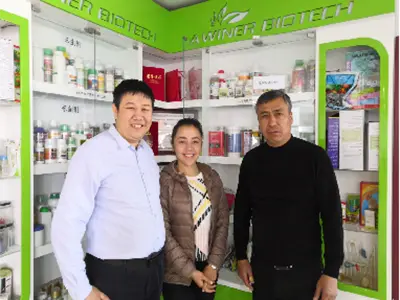
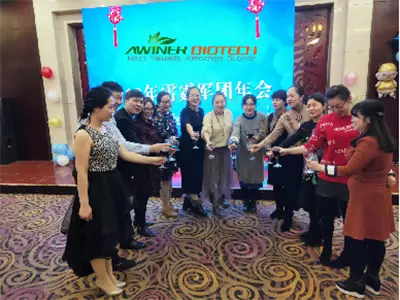
Up to now, we have built trusted long-term partnerships across key regional agricultural markets, including:
Iraq, Iran, Afghanistan, Pakistan, India, Libya, Syria, Turkey, Yemen, Ukraine, Russia, Kazakhstan, Uzbekistan, Chile, Bolivia, Mexico, Brazil, Paraguay, Nigeria, Djibouti, Rwanda, Somalia, Malaysia, Cambodia, Nepal, Myanmar, and beyond.
International Agrochemical Exhibitions & Field Surveys: We regularly participate in major industry tradeshows across Turkey, Iran, Pakistan, Nigeria, Russia, Cambodia, Malaysia, and Uzbekistan. Our technical support teams conduct direct on-site customer market surveys to evaluate vector efficacy, resolve field resistance challenges, and provide targeted technical optimizations.
Expert answers regarding chemical efficacy, resistance protocols, custom packaging, and supply chain logistics.
Explore our extended catalog of plant growth regulators, broad-spectrum fungicides, herbicides, and public health control agents.
 Awiner Biotech