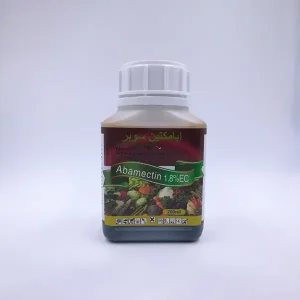
High-purity technical grade & formulated chemicals engineered for commercial mechanical harvesting efficiency.
Optimizing Fiber Integrity, Baling Efficiency, and Harvest Yield Through Advanced Chemical Defoliation
The global commercial cotton industry is undergoing a structural paradigm shift toward complete #mechanicalcottonharvesting. As agricultural labor shortages intensify across major cotton-producing belts—ranging from Northwest China's Xinjiang Autonomous Region to the Mato Grosso plains of Brazil, the Indus Basin in Pakistan, and the Mississippi Delta in the United States—the transition from manual picking to automated spindle pickers and stripper harvesters has become an absolute necessity for commercial survival and profitability.
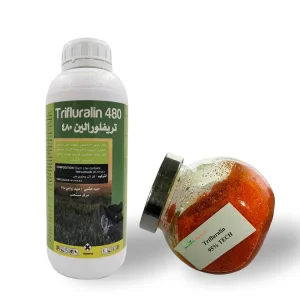
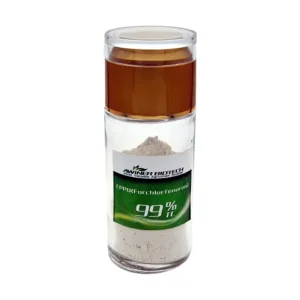
China has established itself as the world center for specialized chemical manufacturing and precision ag-engineering solutions for mechanical cotton harvesting. High-density mechanized farming requires tailored combinations of Thidiazuron (TDZ), Ethephon, plant growth regulators like Gibberellic Acid (GA3), Forchlorfenuron (CPPU), alongside targeted crop protection systems (such as high-efficiency systemic insecticides and protective fungicides). As a premier Chinese manufacturer and global exporter, Awiner Biotech delivers state-of-the-art formulations designed to optimize harvest timing, preserve staple length, and minimize seed cotton moisture.
Decoupling Bottlenecks in International Agrochemical Supply Chains
Large-scale agricultural enterprises require multi-metric ton shipments of stable defoliants, herbicides, and PGRs arriving precisely ahead of narrow harvesting windows. Chinese manufacturers offer unmatched raw material synthesis capacity and bulk container packaging integrity.
Global cotton merchants require low chemical residue profiles to meet international textile safety protocols (OEKO-TEX Standard 100). Technical grade chemicals (e.g., GA3 90% TC, Lambda-Cyhalothrin 95% TC) must comply with strict active constituent thresholds.
Modern machine harvesters demand single-pass field preparation. Agrochemical formulations must maintain physical stability, zero-flocculation, and high solubility when combining defoliants, ripening agents, and insecticides in high-speed sprayers.
| Harvest Parameter | Unassisted / Manual Harvesting | Standard Mechanical Harvesting | Awiner Chemical-Optimized Mechanical Harvesting |
|---|---|---|---|
| 0.05 - 0.10 Ha per picker | 15 - 25 Ha per machine | 25 - 35 Ha (Zero header clogging) | |
| 1.5% - 3.0% | 8.0% - 14.0% (High contamination) | < 4.5% (Clean defoliation) | |
| Staggered over 45 days | 65% - 75% at harvest | 92% - 98% synchronized open | |
| High manual care / Low yield | Frequent green leaf staining | Premium White Grade (Strict Good Middling) | |
| Baseline (High Labor Costs) | +35% vs Manual | +82% (Optimized chemical & fuel efficiency) |
Physiological Manipulation of Cotton Canopy for Flawless Mechanical Picking
Mechanical cotton harvesters (spindle pickers) operate by utilizing high-speed rotating barbed spindles to wrap around and extract seed cotton fibers from open bolls. If green leaves remain on the plant during machine passage, spindle rotation crushes the leaves, releasing chlorophyll fluids that permanently stain cotton fibers and drastically lower market grade. Furthermore, un-opened bolls are knocked off or crushed, leading to crop loss.
To overcome this, Awiner Biotech has developed a comprehensive 3-Stage Agrochemical Protocol specifically for mechanical cotton harvesting:
Application of Thidiazuron (TDZ) combined with specialized surfactant adjuvants triggers the formation of an abscission layer at the petiole base without desiccation. Leaves drop off clean and green, avoiding leaf sticking ("freezing") on the plant frame.
Co-application of Ethephon accelerates internal ethylene production inside unopened mature bolls. This induces rapid carpel dehiscence, forcing over 90% of bolls to open wide within 10–14 days for single-pass mechanical extraction.
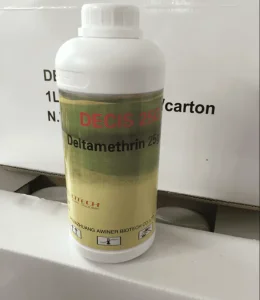
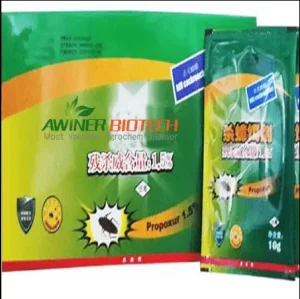
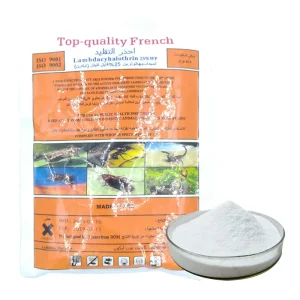
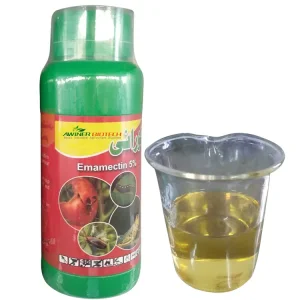
Integrating targeted insecticides such as Lambda-Cyhalothrin, Emamectin Benzoate, and fungicides like Carbendazim prevents late-season boll rot, aphid honeydew contamination, and secondary leaf regrowth before harvest.
Pioneering Agrochemical Innovation Since 2006 from North China
Awiner Biotech was founded in 2006, located in North of China - Shijiazhuang, Hebei Province. The city is close to our capital Beijing, and transportation is convenient. Awiner Biotech is committed to research, produce, and distribute agrochemicals, mainly dealing with pesticides, herbicides, fungicides, plant growth regulators, and public health pesticides.

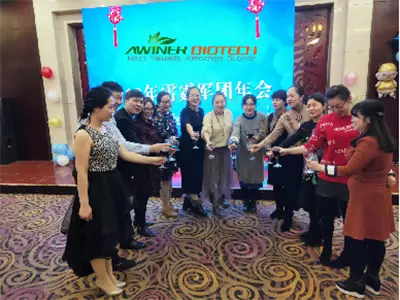
Up to now, we have won customers from Iraq, Iran, Afghanistan, Pakistan, India, Libya, Syria, Turkey, Yemen, Ukraine, Russia, Kazakhstan, Uzbekistan, Chile, Bolivia, Mexico, Brazil, Paraguay, Nigeria, Djibouti, Rwanda, Somalia, Malaysia, Cambodia, Nepal, Myanmar and so on.
Our countries participating in international exhibitions include Turkey, Iran, Pakistan, Nigeria, Russia, Cambodia, Malaysia, Uzbekistan, and many more key agricultural hubs across Eurasia, Africa, and South America.
We proactively go to the customer's country to conduct field market inspections, analyze agronomic challenges, optimize product performance under local microclimates, and build long-term OEM relationships.
AI-Guided Drone Spraying, Ultra-Low Volume Formulations, & Green Bio-Defoliants
Traditional high-clearance tractor sprayers can cause up to 2-4% mechanical damage to lower cotton bolls. Modern cotton management leverages UAV aerial application. Awiner Biotech's specialized formulation additives enhance droplet anti-evaporation and target penetration during high-speed aerial spraying.
Temperature drops during autumn harvesting can severely reduce chemical defoliation activity. Future technical roadmaps involve synergistic temperature-insensitive co-formulations that maintain high abscission rates even when ambient temperatures drop below 18°C.
Expert technical answers for agronomists, commercial cotton growers, and global agrochemical buyers.
Essential agrochemicals to protect field yields and maintain crop hygiene before mechanical harvesting.
 Awiner Biotech