High-potency systemic fungicides, broad-spectrum herbicides, and targeted insecticides engineered for global agricultural and ornamental crop protection.
Strategic analysis of fungal pathogen dynamics in commercial floriculture, nursery production, and greenhouse systems.
The global ornamental plant market—encompassing cut flowers, potted foliage, woody landscape nursery stock, and bedding plants—is a high-value sector where cosmetic appearance directly dictates commercial value. Unlike field agronomy, where minor foliar scarring can be tolerated, commercial floriculture operates under a zero-tolerance threshold for visual blemishes. Fungal infections caused by Botrytis cinerea (gray mold), Erysiphe spp. (powdery mildew), Puccinia spp. (rust), Phytophthora cinnamomi, and Pythium ultimum (root rot complexes) pose catastrophic financial risks to growers in greenhouse operations and open-field nurseries worldwide.
China's industrial agro-chemical synthesis complex, particularly centered in chemical hubs like Hebei Province, supplies over 65% of the world's active ingredient (AI) technical materials and advanced formulations. For international distributors, enterprise nurseries, and agro-chemical importers, evaluating China ornamental plant fungicide factories and suppliers requires deep technical auditing of active ingredient purity, formulation micro-emulsification technology, surfactant safety on delicate foliage, and stringent environmental regulatory compliance.
A rigorous breakdown of key fungicide chemistry utilized in modern ornamental crop management systems.
Targeting mitochondrial respiration at Complex III (cytochrome bc1). Actives like Pyraclostrobin provide powerful protective barrier coatings, inhibiting spore germination and germ tube elongation while delivering significant greening physiological effects on broadleaf ornamentals.
Inhibiting C14-demethylase in ergosterol biosynthesis. Actives like Tebuconazole exhibit rapid acropetal systemic movement within leaf parenchyma, offering robust curative and eradicant action against persistent powdery mildews and rusts.
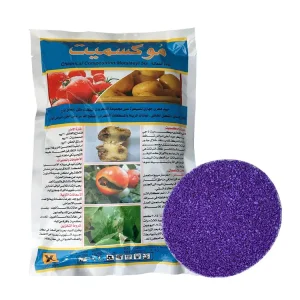
Disrupting RNA polymerase I synthesis in Oomycete pathogens. Metalaxyl (e.g., 5% GR) provides systemic root-zone protection against Pythium and Phytophthora crown and root rot complexes in potted floral crops.
| Active Ingredient / Formulation | FRAC Code | Target Pathogens / Diseases | Mode of Movement | Key Ornamental Applications |
|---|---|---|---|---|
| Metalaxyl 5% GR | FRAC 4 | Pythium spp., Phytophthora spp. | Systemic (Acropetal Root uptake) | Container nursery soils, potted orchids, poinsettias |
| Pyraclostrobin 20% + Tebuconazole 40% WDG | FRAC 11 + FRAC 3 | Black Spot, Powdery Mildew, Anthracnose, Leaf Blight | Translaminar & Systemic | Rose nurseries, commercial greenhouse cut flowers |
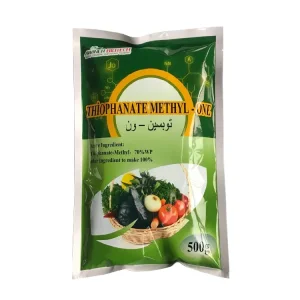
| Thiophanate-methyl 70% WP | FRAC 1 | Botrytis cinerea, Fusarium Wilt, Stem Rot | Systemic (Vascular Protection) | Bulb dips, landscape ornamentals, woody shrubs |
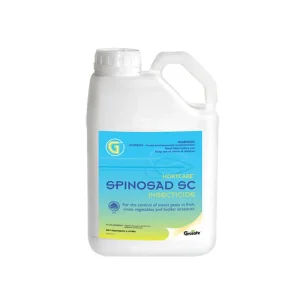
| Spinosad Formulations | IRAC 5 (Organic IPN) | Thrips, Leafminers, Caterpillars (Vectors) | Translaminar Contact & Ingestion | Integrated Pest & Disease Management programs |
Leveraging Northern China's chemical synthesis legacy, advanced safety controls, and global export infrastructure.
Awiner Biotech was founded in 2006, located in the north of China—Shijiazhuang, Hebei Province. The city is strategically situated close to China's capital, Beijing, benefiting from exceptional logistics and transport connectivity.
Awiner Biotech is deeply committed to researching, producing, and distributing world-class agrochemicals. Our comprehensive commercial portfoliio mainly deals with high-potency pesticides, herbicides, fungicides, plant growth regulators, and public health pesticides engineered to satisfy international statutory standards.
Our production facilities utilize modern liquid and solid formulation machinery capable of producing Water Dispersible Granules (WDG), Suspensions Concentrates (SC), Emulsifiable Concentrates (EC), Soluble Concentrates (SL), and Wettable Powders (WP) with precise particle size distribution.
Serving agricultural, public health, and floriculture sectors across 30+ countries through empirical field inspections and trade exhibitions.
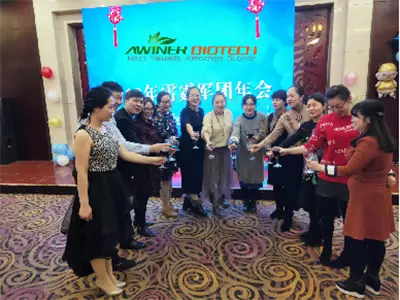
Up to now, we have won customers across diverse international territories including Iraq, Iran, Afghanistan, Pakistan, India, Libya, Syria, Turkey, Yemen, Ukraine, Russia, Kazakhstan, Uzbekistan, Chile, Bolivia, Mexico, Brazil, Paraguay, Nigeria, Djibouti, Rwanda, Somalia, Malaysia, Cambodia, Nepal, Myanmar, and so on.
We regularly participate in premier global agricultural and chemical expos to connect with local distributors. Key exhibition countries include Turkey, Iran, Pakistan, Nigeria, Russia, Cambodia, Malaysia, Uzbekistan, and more.
We travel directly to our customers' countries to conduct thorough market inspections, analyze regional pest pressure, and solve complex application challenges. Understanding real-world product performance builds lasting partnerships, alongside welcoming international client delegations to our factory.
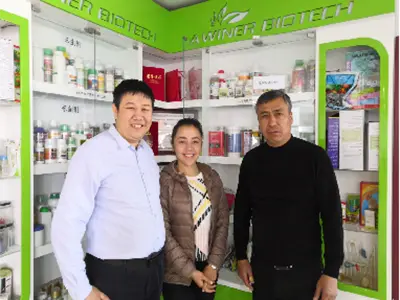
Establishing dependable agro-chemical supply lines requires understanding varied climate zones, soil chemistries, and regional fungal strain resistance profiles. From heat-tolerant greenhouse cut flower farms in the Middle East to high-humidity nursery operations in Southeast Asia and South America, Awiner Biotech tailors crop protection strategies to maximize plant yield and visual quality.
Next-generation formulation technology, bio-rational integrations, and precision application methodologies.
Developing ultra-fine nano-emulsions (ME and EW) that minimize organic solvent content, reducing phytotoxicity risk on sensitive floral petals.
Optimizing WDG particle dispersibility and droplet drift control additives for Ultra-Low Volume (ULV) aerial and automated greenhouse fogging systems.
Integrating biochemical peptides and microbial metabolites with low-dose chemical actives to delay FRAC resistance development.
Formulating rapid-degrading systemic compounds designed for export-oriented floriculture adhering to strict import residue tolerances.
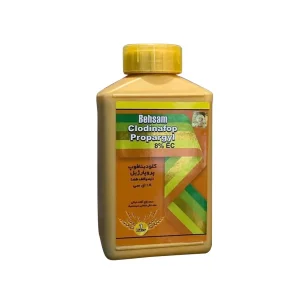
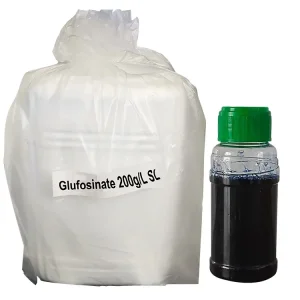
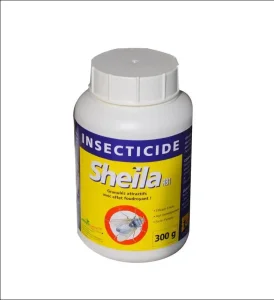
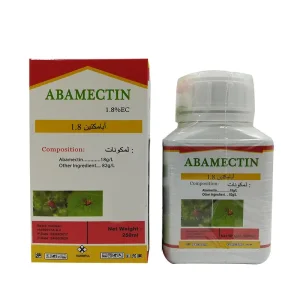
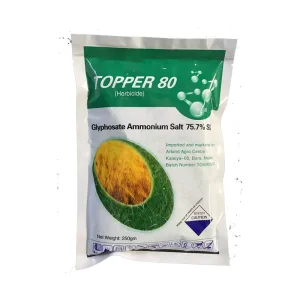
Complete agro-chemical portfolio including high-performance selective herbicides, specialized acaricides, and public health pest controls.
Expert technical insights for commercial buyers, importers, and agricultural distributors evaluating Chinese ornamental fungicide manufacturers.
Shijiazhuang, Hebei Province is recognized globally as China's premier chemical synthesis and agrochemical production hub. Sourcing from this region offers enterprise buyers direct access to robust raw active ingredient supply chains, highly experienced chemical formulation engineers, competitive unit pricing, and streamlined rail/sea freight access via nearby Tianjin and Qingdao ports.
Metalaxyl (FRAC Group 4) is an Oomycete specialist targeting soil-borne root rot (Pythium/Phytophthora) via acropetal xylem transport when applied as a granule (5% GR) or drench. Pyraclostrobin (FRAC Group 11) is a broad-spectrum strobilurin providing translaminar foliar protection against leaf spots, rusts, and blights while boosting plant stress tolerance.
Phytotoxicity is prevented through strict solvent selection, precise micro-emulsification, and extensive batch testing. We utilize high-purity inert surfactants and conduct greenhouse trial sprays on sensitive indicator species (such as greenhouse roses and orchids) prior to international commercial dispatch.
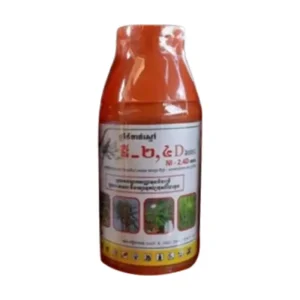
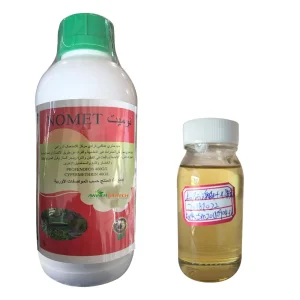
We offer complete white-label OEM and ODM capabilities. Options include small retail aluminum foil bags (5g to 1kg for WDG/WP), HDPE liquid bottles (100ml to 1L for SC/EC/SL), and heavy-duty industrial drums (200L or 1000L IBC tanks) complete with multi-lingual GHS-compliant labeling.
We recommend tank-mixing or block-rotating fungicides with different FRAC modes of action—such as pairing Pyraclostrobin 20% with Tebuconazole 40% WDG. Combining site-specific single-target actives with multi-site contact or systemic partners delays pathogen mutation and preserves chemical efficacy over successive growing cycles.
Awiner Biotech provides full regulatory support dossiers, including Certificate of Analysis (COA), Material Safety Data Sheets (MSDS), Stability Testing Reports, FAO Benchmark Compliance Data, and field efficacy trial results tailored for ministry registration across Asia, Africa, Europe, and the Americas.
 Awiner Biotech