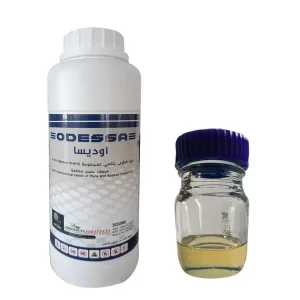
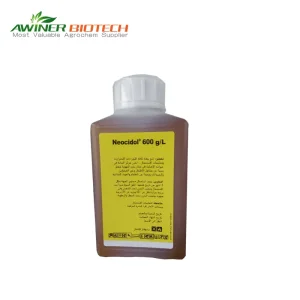
Rice (Oryza sativa) serves as the primary dietary staple for over 50% of the world's population. However, weed infestation remains the single most critical factor limiting optimum crop yield, causing estimated global yield losses of 15% to 35% annually if left unmanaged. As agricultural economies transition from manual weeding to mechanized and chemical management, the demand for high-efficiency chemical solutions produced by a reliable China rice field herbicide factory & manufacturer has expanded rapidly across Asia, South America, Africa, and the Middle East.
China has consolidated its position as the world's premier manufacturing powerhouse for agrochemical Active Ingredients (TC) and finished formulations (EC, SC, WDG, GR). Backed by robust chemical supply chains, extensive backward integration into basic petrochemicals, and state-of-the-art environmental management facilities, Chinese manufacturers supply over 70% of the technical-grade rice herbicides used globally.
The commercial shift toward direct-seeded rice (DSR) systems—driven by escalating labor costs and acute water scarcity—has fundamentally altered the global herbicide landscape. DSR eliminates the standing water layer that traditionally suppressed early weed growth in transplanted systems. Consequently, specialized pre-emergence and early post-emergence chemical programs have become mandatory to secure economic viability for rice growers globally.
Successful weed control in aquatic and semi-aquatic paddy ecosystems requires deep chemical expertise. Broad-spectrum single-agent controls are increasingly failing due to the proliferation of resistant biotypes. A leading manufacturer must provide precise, multi-target chemical formulations designed to counteract specific biochemical pathways in target weeds.
| Target Weed Category | Major Economically Damaging Species | Primary Chemical Class | Mode of Action (HRAC Group) | Recommended Chinese Factory Formulations |
|---|---|---|---|---|
| Grasses (Gramineae) | Echinochloa crus-galli, Leptochloa chinensis | Aryloxyphenoxypropionate / Synthetic Auxin | ACCase Inhibitor (Group 1) / HRAC 4 | Cyhalofop-butyl 200g/L EC, Quinclorac 50% WDG, Propanil 360g/L EC |
| Sedges (Cyperaceae) | Cyperus difformis, Fimbristylis miliacea | ="Sulfonylurea / Triazolopyrimidine | ALS / AHAS Inhibitor (Group 2) | Pyrazosulfuron-ethyl 10% WP, Penoxsulam 25g/L OD, Ethoxysulfuron 15% WDG |
| Broadleaf Weeds | Monochoria vaginalis, Ludwigia octovalvis | Phenoxy-carboxylic acid / Triazinone | Synthetic Auxins (Group 4) / Photosystem II | 2,4-D Dimethylamine 860g/L SL, MCPA-Sodium 80% WP, Bentazone 480g/L SL |
| Resistant Biotypes | ALS-Resistant Sorghum halepense & Gramineae | ="Isoxazolidinone / HPPD Inhibitor | Bleaching / Carotenoid Biosynthesis (Group 27) | Clomazone 480g/L EC, Mesotrione + Pyrazosulfuron Co-formulations |
Continuous reliance on single ALS-inhibiting herbicides has accelerated the natural selection of resistant mutations in barnyardgrass. OEM custom chemical blending capabilities from specialized Chinese factories enable the pre-mixing of distinct Modes of Action (e.g., combining ACCase inhibitors with HPPD inhibitors). This dual-action mechanism disrupts metabolic survival pathways, delaying resistance development while ensuring 98%+ bio-efficacy in flooded fields.
Utilizing high-speed bead-milling to achieve sub-micron particle sizing (D90 < 2.5 µm), ensuring exceptional dispersion stability, superior leaf adhesion, and reduced dosage requirements under tropical flood conditions.
Fluidized bed granulation technology guarantees zero dust exposure for operators, instant disintegration in hard water environments, and non-caking shelf stability for over two years in high-temperature warehouses.
Polymeric membrane microencapsulation provides controlled, sustained release of volatile active ingredients like Clomazone. This mitigates crop phytotoxicity while extending soil residual weed control up to 60 days.
Agronomic success with rice field herbicides hinges upon precision timing, water level control, and crop seeding methodologies. China's top agrochemical manufacturers develop specialized application protocols tailored to major global rice production zones:
In Direct-Seeded Rice, crop seeds and weed seeds germinate simultaneously. The recommended protocol involves a dual-stage "Seal & Kill" strategy:
Transplanted rice offers a crop height advantage over weeds. Mechanical or hand-transplanted paddies utilize broadcast granular formulations (e.g., Pyrazosulfuron-ethyl 0.75% + Benzobicyclon GR mixed with fertilizer) applied 3 to 7 days post-transplanting into standing water.
High humidity and rapid weed growth cycles (e.g., Mekong Delta, Indonesia) necessitate surfactants with superior rainfastness within 1 hour of application, alongside high thermal stability against active ingredient degradation.
In regions such as the Middle East and Central Asia, rapid evaporation rates require low-volatility solvent systems in EC formulations to prevent chemical drift and loss of active concentration.
The crop protection sector is undergoing rapid chemical and digital transformation. As regulatory standards tighten worldwide (e.g., EU Green Deal, FAO guidance), green manufacturing, bio-herbicides, and digital field integration define the roadmap for Chinese manufacturers.
Development of Ultra-Low Volume (ULV) formulations containing specialized anti-evaporation adjuvants and anti-drift polymers designed for precision agricultural drone spraying in fragmented rice paddies.
Deploying machine learning models to design novel bio-molecules with targeted crop safening parameters, significantly shortening active ingredient discovery phases from 10 years down to 36 months.
Commercialization of microbial fermentation metabolites and plant-derived allelochemicals that offer zero residual soil bioaccumulation and safe runoff into natural aquatic waterways.
Navigating international pesticide registrations and securing stable active ingredient supplies requires strong chemical manufacturing partnerships. China's integrated factories provide comprehensive OEM/ODM solutions:
Provision of complete 5-batch analysis reports, GLP toxicological data, sub-chronic toxicity studies, and environmental fate documentation required by ministries of agriculture for smooth product registration.
From 100ml Fluorinated HDPE bottles to 200L steel drums and water-soluble PVA bags, custom packaging options are engineered to withstand rigorous trans-oceanic shipping and regional climate extremes.
Rigorous Quality Assurance via batch-level High-Performance Liquid Chromatography (HPLC) and Gas Chromatography (GC) testing, accompanied by certified Certificates of Analysis (COA) for total batch traceability.
Awiner Biotech was founded in 2006, located in north of China—Shijiazhuang, Hebei Province. The city is close to our capital Beijing, with convenient transportation. Awiner Biotech is committed to research, produce, and distribute agrochemicals, mainly dealing with pesticides, herbicides, fungicides, plant growth regulators, and public health pesticides.
We conduct market inspections, analyze and solve problems directly for our customers, understand their on-the-ground product usage, and host client delegations at our advanced production facilities.
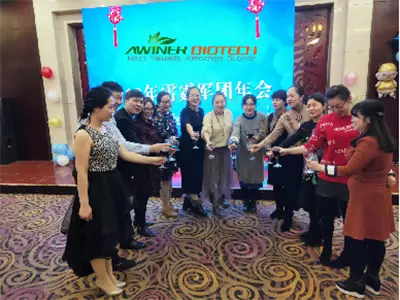
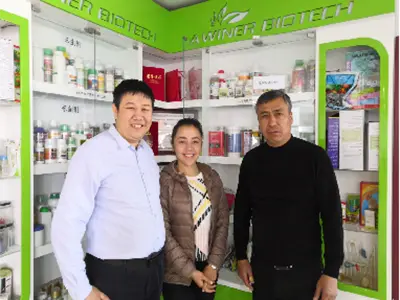
Up to now, we have won trusted customers and established robust distribution channels across over 30 countries globally. Our team actively participates in major agricultural exhibitions worldwide including events in Turkey, Iran, Pakistan, Nigeria, Russia, Cambodia, Malaysia, Uzbekistan, and beyond.
Cyhalofop-butyl is a highly selective post-emergence systemic ACCase inhibitor targeting annual grass weeds (such as Echinochloa crus-galli) with zero phytotoxicity to rice crops. Penoxsulam provides complementary broad-spectrum control over broadleaf weeds and sedges via ALS enzyme inhibition. Blending these two active ingredients offers complete spectrum control in a single spray application, reducing field labor costs.
Factories employ specialized heat-stable emulsifiers, high-grade organic solvents, and anti-crystallization surfactants. All export formulations undergo accelerated heat storage testing (54°C ± 2°C for 14 days) according to CIPAC MT 46.3 guidelines to ensure no phase separation, active degradation, or drop in emulsion stability occurs during tropical transit and storage.
Pretilachlor is a potent chloroacetanilide herbicide that inhibits cell division. Without a safener like Fenclorim, young germinating rice seedlings cannot metabolize the chemical quickly enough, leading to stunted root growth. Fenclorim selectively enhances glutathione S-transferase (GST) enzyme synthesis inside rice seedlings, instantly detoxifying Pretilachlor without affecting its potency against target weeds.
We provide full registration dossiers including ICAMA certificates, Certificates of Origin (COO), GLP-accredited acute toxicity data, environmental risk assessment reports, physical-chemical property sheets, certified Analytical Certificates (COA), and Material Safety Data Sheets (MSDS/SDS).
Standard OEM production cycles range from 15 to 25 days following label design approval and LC/TT confirmation. Bulk technical grade chemical synthesis (TC) combined with custom packaging design processes are managed via automated bottling lines to meet strict planting season timelines.
 Awiner Biotech