Explore our industrial-grade pesticide formulations manufactured under stringent international FAO/WHO standards.
Thiocyclam hydrogen oxalate (CAS No. 31895-21-3) represents a premium nereistoxin analogue insecticide class widely synthesized by top-tier Chinese chemical manufacturers. Designed for broad-spectrum management of chewing, sucking, and leaf-mining pests, this active ingredient plays a key role in global integrated pest management (IPM) strategies against resistant pest populations.
Thiocyclam hydrogen oxalate acts as a potent agonist at the nicotinic acetylcholine receptor (nAChR) within the central nervous system of insects. Upon uptake via contact or ingestion, the compound blocks synaptic transmission, leading to immediate rapid paralysis, cessation of feeding, and eventual mortality of targeted pests.
Chinese pesticide synthesis facilities offer various formulations tailored to target crops and spraying equipment:
| Formulation Type | Active Content | Appearance | Primary Application |
|---|---|---|---|
| Technical Grade (TC) | ≥ 90% - 95% | Off-white to yellowish crystalline powder | Raw Material for Formulation Manufacturing |
| Soluble Powder (SP) | 50% SP | Fine homogenous powder | Foliar Spray for Rice, Vegetables & Tea |
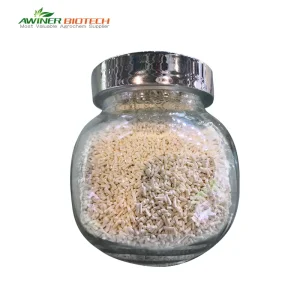
| Water Dispersible Granule (WDG) | 50% WDG / 70% WDG | Dustless cylindrical granules | Eco-friendly Aerial & High-volume Spraying |
Awiner Biotech was founded in 2006, located in the north of China—Shijiazhuang, Hebei Province. The city is close to our capital Beijing, with convenient transportation networks connecting directly to Tianjin and Qingdao deep-water ports.
Awiner Biotech is committed to research, production, and international distribution of advanced agrochemicals. Our comprehensive product portfolio deals with high-efficiency insecticides, herbicides, fungicides, plant growth regulators (PGR), and public health vector control pesticides.
Up to now, we have won trusted long-term corporate clients from: Iraq, Iran, Afghanistan, Pakistan, India, Libya, Syria, Turkey, Yemen, Ukraine, Russia, Kazakhstan, Uzbekistan, Chile, Bolivia, Mexico, Brazil, Paraguay, Nigeria, Djibouti, Rwanda, Somalia, Malaysia, Cambodia, Nepal, Myanmar, and beyond.
Exhibitions: We regularly participate in key international agrochemical and crop protection expos in Turkey, Iran, Pakistan, Nigeria, Russia, Cambodia, Malaysia, Uzbekistan, and South America.
Customer Market Surveys: Our senior agronomic engineers visit client countries to conduct thorough market inspections, analyze regional pest pressure, optimize field dosages, and resolve localized application challenges directly alongside our distributors.
China remains the world's leading chemical cluster for active ingredient (AI) synthesis and formulation scaling. Facilities located in northern chemical parks (including Hebei, Shandong, and Jiangsu industrial zones) deliver structural cost and quality efficiencies.
Direct access to core chemical precursors such as dimethylamine, carbon disulfide, and oxalic acid allows Chinese factories to control chemical reaction pathways efficiently, maintaining steady production cycles without supply disruptions.
High-tonnage continuous synthesis lines dramatically decrease unit conversion costs, allowing global importers and pesticide formulators to access multi-container shipments at competitive baseline rates.
Modernized factories operate with state-of-the-art biological and chemical wastewater treatment units, thermal oxidizers (RTO) for emissions control, ensuring uninterrupted production compliant with national environmental laws.
Thiocyclam hydrogen oxalate delivers superior broad-spectrum control across a wide range of temperate, sub-tropical, and tropical agro-ecosystems.
| Target Crop | Primary Target Pests | Recommended Dosage (a.i.) | Application Timing & Best Practices |
|---|---|---|---|
| Paddy Rice | Chilo suppressalis (Stem Borer), Cnaphalocrocis medinalis (Leaf Folder), Nilaparvata lugens (Planthopper) | 250 – 400 g/ha (50% SP) | Apply during early instar larval hatching phase. Maintain light water layer in paddy field for optimum systemic absorption. |
| Cruciferous Vegetables | Plutella xylostella (Diamondback Moth), Pieris rapae (Cabbage White Butterfly), Thrips tabaci | 300 – 450 g/ha (50% SP / WDG) | Rotate with diamides or spinosyns. Thorough coverage of upper and lower leaf surfaces recommended. |
| Tea Plantations | Empoasca flavescens (Tea Green Leafhopper), Tea Geometrid | 200 – 300 g/ha | Apply during peak nymph emergence. Respect pre-harvest interval (PHI) guidelines for tea plucking. |
| Potatoes & Solanaceous | Leptinotarsa decemlineata (Colorado Potato Beetle), Liriomyza trifolii (Leafminers) | 300 – 500 g/ha | Foliar application at first sign of mining damage. Translaminar action controls larvae inside leaf tissue. |
Due to its unique nereistoxin mode of action (IRAC Group 14), thiocyclam hydrogen oxalate acts as a critical rotational partner in regions experiencing resistance build-up against synthetic pyrethroids (IRAC 3A), neonicotinoids (IRAC 4A), and chlorantraniliprole (IRAC 28). Alternating application cycles mitigates target-site mutation risks.
Securing market authorization requires robust regulatory documentation and precise batch consistency. Leading Chinese pesticide export partners support international clients through complete technical dossier provisions.
We assist local distributors, agricultural ministries, and commercial importers in navigating complex regulatory frameworks across South America, Africa, the Middle East, and Central Asia:
To ensure zero degradation during ocean freight across varied climatic zones, strict international packaging protocols are implemented:
Direct answers to key commercial, technical, and regulatory questions for agrochemical procurement specialists.
Explore our expanded agrochemical portfolio for comprehensive global crop protection.
 Awiner Biotech