High-purity chemical and biological solutions engineered for global commercial farming, public health, and integrated pest management (IPM) compliance.
Deciphering biology, resistance vectors, and high-performance chemical strategies for large-scale agricultural enterprises.
The Two-Spotted Spider Mite (Tetranychus urticae Koch) represents one of the most economically damaging polyphagous pests worldwide, targeting over 1,100 plant species including greenhouse vegetables, tree fruits, cotton, ornamentals, and broad-acre crops. Characterized by its remarkable capacity to rapidly develop resistance to conventional chemical control measures, T. urticae poses a systemic challenge to global food security and commercial yield stability.
In modern agricultural economics, securing reliable, high-purity, and cost-effective miticide quotes from established Chinese chemical manufacturers is no longer merely a procurement task—it is a critical strategic component of Integrated Pest Management (IPM). As the world's leading chemical synthesis hub, China provides advanced formulation capabilities (SC, WDG, EC, EW, micro-encapsulation) combined with unmatched supply chain resilience.
Tetranychus urticae feeds by piercing leaf epidermal cells using its stylets and extracting cellular contents, leading to chlorophyll destruction, stomatal closure, disrupted transpiration, and eventual foliar necrosis. Under hot and dry microclimates (above 28°C), population growth expands exponentially. The rapid turnover of generations coupled with high fecundity accelerates the selection pressure for resistance mutations against single-site mode-of-action (MoA) acaricides.
Rotational chemical strategies designed by Chinese chemical engineers to overcome multi-drug resistance (MDR).
To avoid cross-resistance, China's advanced synthesis facilities produce multi-class active ingredients catering to distinct IRAC (Insecticide Resistance Action Committee) mode-of-action groups:
Combining ovicidal and adulticidal chemical agents guarantees immediate knockdown alongside long-lasting residual control (up to 30-45 days):
Modern Chinese SC (Suspension Concentrate) and WDG (Water Dispersible Granule) formulations integrate specialized organosilicon surfactants and nano-emulsifiers:
| Active Ingredient / Formulation | IRAC Group | Target Stage | Application Rate | Key Operational Advantage |
|---|---|---|---|---|
| Bifenazate 430g/L SC | Group 20B | Nymphs & Adults | 150 - 200 ml/ha | Safe for beneficial predatory mites (Phytoseiulus persimilis). |
| Etoxazole 110g/L SC | Group 10B | Eggs & Larvae | 100 - 150 ml/ha | Inhibits embryogenesis and larval molting; ultra-long residual. |
| Abamectin 5.4% EC | Group 6 | All Active Motile Stages | 200 - 300 ml/ha | High translaminar activity penetrating thick leaf cuticles. |
| Spirodiclofen 240g/L SC | Group 23 | Eggs, Larvae, Nymphs | 200 - 250 ml/ha | Blocks lipid biosynthesis; ideal for early-season preventive spraying. |
How automated chemical synthesis and rigorous quality assurance guarantee enterprise procurement efficiency.
Equipped with modern high-shear homogenizers and jet milling systems, Chinese formulation facilities produce ultra-fine Suspension Concentrates (SC) with particle sizes below 2.0 microns, ensuring zero nozzle clogging during high-volume drone or tractor boom spraying.
Every B2B miticide batch undergoes strict laboratory verification utilizing High-Performance Liquid Chromatography (HPLC), Gas Chromatography-Mass Spectrometry (GC-MS), and laser diffraction particle size analysis to comply strictly with FAO/WHO standards.
Located near major ocean transit hubs like Tianjin, Qingdao, and Shanghai, Chinese agrochemical suppliers offer rapid export clearance, custom UN-certified HAZMAT packaging (from 100ml HD-PE bottles to 1,000L IBC totes), and optimized freight logistics.
Transparent pricing structures, flexible minimum order quantities (MOQ), and customized OEM chemical synthesis.
When procuring bulk two-spotted spider mite control chemical formulations from China, international distributors, commercial plantations, and agrochemical importers must evaluate total cost of ownership (TCO). Procurement pricing depends on several critical parameters:
High-assay technical products (e.g., Bifenazate 98% TC, Abamectin 95% TC) dictate the base manufacturing cost. Suppliers with direct upstream chemical synthesis links provide stability against raw material market volatility.
Specialized co-formulations or micro-encapsulated suspensions (CS) demand advanced surfactant systems and stability testing, affecting per-liter or per-kilogram quotes while providing superior field performance.
Custom packaging ranging from multi-layer COEX bottles, fluorinated containers, to custom aluminum foil sachets with multi-language labels (English, Spanish, French, Arabic, Russian) tailored to regional market standards.
Empowering global partners with full technical dossiers, GLP reports, and regulatory documentation.
Navigating country-specific agrochemical registration requirements is vital for smooth market entry. Tier-1 Chinese suppliers provide comprehensive technical assistance, ensuring that commercial products comply with local Ministry of Agriculture guidelines across South America, the Middle East, Southeast Asia, Africa, and CIS regions.
Access complete Five-Batch Analysis, GLP Toxicity Data (Acute Oral, Dermal, Inhalation, Eye/Skin Irritation), Ecotoxicity Studies (Bees, Fish, Daphnia, Algae), and Environmental Fate Reports.
Every shipment is certified with batch-specific COAs, Material Safety Data Sheets (MSDS), Certificates of Origin (Form E, Form F, Embassy Attestation), and FAO standard chemical stability verifications.
Next-generation biopesticides, RNA interference (RNAi), and smart nano-formulations shaping spider mite control.
Research into double-stranded RNA (dsRNA) targeting essential metabolic genes of Tetranychus urticae promises species-specific control with zero residue, protecting beneficial organisms and natural predators completely.
Polymer-coated active ingredients trigger release in response to micro-environmental conditions (pH, humidity, solar radiation), extending field efficacy while reducing chemical application frequency by 30%.
Specialized low-drift, anti-evaporation solvent systems tailored for UAV aerial spraying systems, enabling ultra-low volume application across extensive farmland with high droplet retention.
A trusted global agrochemical pioneer dedicated to advanced research, production, and distribution.
Awiner Biotech was founded in 2006, located in north of China—Shijiazhuang, Hebei Province. The city is close to our capital Beijing, and transportation is convenient.
Awiner Biotech is committed to research, produce and distribute agrochemicals, mainly dealing with pesticides, herbicides, fungicides, plant growth regulators, and public health pesticides.
With state-of-the-art laboratory infrastructure, dynamic international trade teams, and rigid Quality Assurance protocols, Awiner Biotech delivers tailor-made chemical control solutions to protect agricultural yields worldwide.
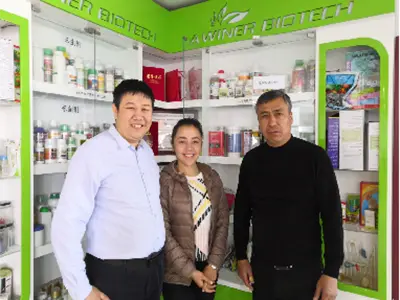
Up to now, we have won customers from Iraq, Iran, Afghanistan, Pakistan, India, Libya, Syria, Turkey, Yemen, Ukraine, Russia, Kazakhstan, Uzbekistan, Chile, Bolivia, Mexico, Brazil, Paraguay, Nigeria, Djibouti, Rwanda, Somalia, Malaysia, Cambodia, Nepal, Myanmar and so on.
Our countries participating in international agrochemical exhibitions include Turkey, Iran, Pakistan, Nigeria, Russia, Cambodia, Malaysia, Uzbekistan, and many other regional trade hubs.
We actively visit our customers' countries to conduct market inspections, analyze and solve field problems for them, understand their localized product usage, and invite global partners to visit our modern facilities.
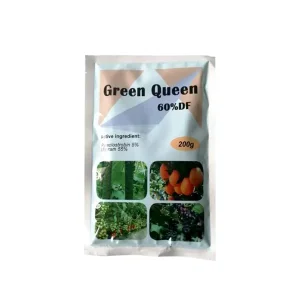
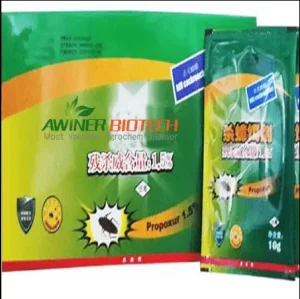
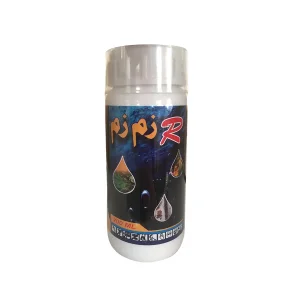
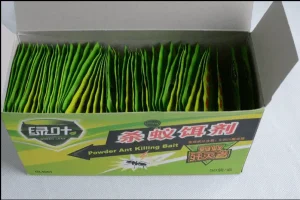
Explore our high-performance line of fungicides, insecticides, herbicides, and public health control agents.
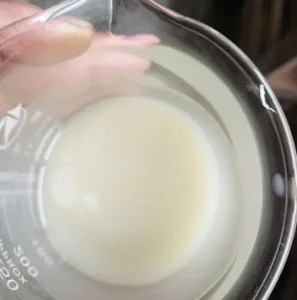
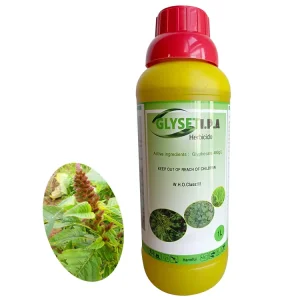
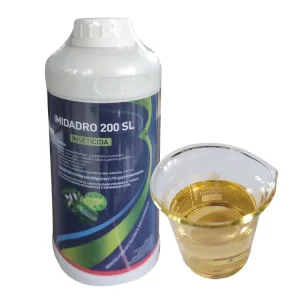
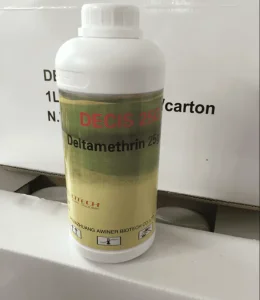
Addressing commercial inquiries regarding spider mite control quotes, factory capacities, and resistance management.
Two-spotted spider mites possess an exceptionally short life cycle and high reproductive rate, enabling rapid selection of genetic mutations. Resistance typically stems from target-site mutations (e.g., in the PSST subunit of mitochondrial complex I or glutamate-gated chloride channels) and detoxification enzyme overexpression (cytochrome P450 monooxygenases, glutathione S-transferases). We recommend rotating active ingredients across different IRAC groups (such as Bifenazate, Spirodiclofen, and Etoxazole).
B2B buyers can submit inquiries specifying target active ingredients, required concentration (e.g., Bifenazate 240g/L SC vs 50% WDG), preferred packaging format (bulk 200L drums or customized retail bottles), and destination port. Quotes are typically issued under standard INCOTERMS such as FOB, CIF, or CFR within 24 hours.
Standard MOQs for technical material (TC) typically start at 500 kg, while liquid formulations (SC, EC, EW) generally require a minimum of 1,000 Liters. For customized retail packaging with localized labeling, MOQs depend on container volume (e.g., 5,000 units for 1L bottles; 10,000 units for 100ml bottles).
Yes, specific selective acaricides such as Bifenazate and Hexythiazox demonstrate high selectivity toward phytophagous mites while maintaining low toxicity to predatory mites (e.g., Phytoseiulus persimilis, Neoseiulus californicus) and pollinators (Apis mellifera), making them ideal for IPM integration.
We supply comprehensive technical packages including Analytical Certificates of Analysis (COA), Material Safety Data Sheets (MSDS), Stability Testing Reports under tropical zones IVb conditions, Five-Batch Analysis, GLP Ecotoxicity & Mammalian Toxicology summaries, and Certificates of Origin.
Our SC and EC formulations are engineered with high-purity emulsifiers and stabilizing agents, guaranteeing a minimum shelf-life of 2 years under standard warehouse conditions (stored between 0°C and 35°C in sealed original packaging).
 Awiner Biotech