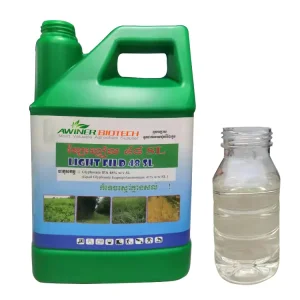
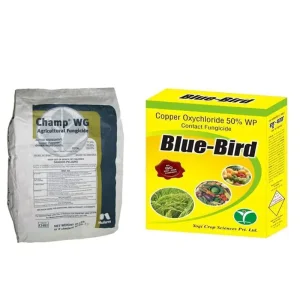
Certified global export solutions engineered for high nymphicidal, adulticidal, and ovicidal action against sucking pests and resistant weeds.
The global production of Solanum lycopersicum (tomato) exceeds 180 million metric tons annually, serving as a cornerstone of both fresh-market horticulture and industrial processing. However, whitefly vectors—specifically the sweetpotato whitefly (Bemisia tabaci) and the greenhouse whitefly (Trialeurodes vaporariorum)—represent one of the most persistent biotic constraints to yield optimization globally. Beyond direct sap depletion, whiteflies act as high-efficiency vectors for devastating phytopathogenic viruses, primarily Tomato Yellow Leaf Curl Virus (TYLCV), Tomato Chlorosis Virus (ToCV), and Tomato Infectious Chlorosis Virus (TICV).
China has solidified its position as the world's premier manufacturing powerhouse for chemical crop protection active ingredients (AIs) and advanced formulation technology. Sourcing whitefly control insecticide for tomato suppliers in China offers international agricultural distributors, commercial plantation conglomerates, and formulators unparalleled access to cost-effective, scalable, and highly stabilized pesticide formulations. As resistance patterns accelerate globally due to mono-cropping and thermal stress, Chinese agrochemical manufacturers have pivoted toward multi-site, multi-mode-of-action (MoA) combined solutions.
Strategic Agronomic Insight: Whitefly management requires moving away from single-agent chemical sprays toward integrated chemical-biochemical frameworks. Sourcing directly from verified Chinese suppliers allows formulators to secure high-purity technical AIs (Tech 95%+ grade) and custom SC, WDG, and ME formulations optimized for specific regional microclimates.
From an international trade perspective, the supply chain matrix for tomato insecticides involves stringent regulatory parameters. Formulators and suppliers in China are increasingly adopting FAO/WHO specifications, ISO 17025 laboratory accreditations, and full dossier support (GLP toxicology, ecotoxicology, and environmental fate studies) to facilitate rapid registration across the European Union, Latin America (LATAM), the Middle East and Africa (MEA), and Southeast Asia.
Effective whitefly eradication requires a sophisticated understanding of pest neurophysiology and metabolic resistance mechanisms. Bemisia tabaci has evolved distinct biotypes, most notably the B biotype (Middle East-Asia Minor 1) and the highly resistant Q biotype (Mediterranean). The Q biotype exhibits elevated detoxification enzyme expression (cytochrome P450 monooxygenases, glutathione S-transferases), making single-dose neonicotinoid applications ineffective when used in isolation.
To overcome metabolic resistance, top China suppliers engineered dynamic combination formulations that blend systemic acropetal xylem transport with localized translaminar movement. The table below details the target chemistry utilized in professional-grade tomato whitefly management.
| Active Ingredient (AI) | IRAC Group | Primary Mode of Action | Target Life Stage | Translaminar / Systemic | Resistance Risk |
|---|---|---|---|---|---|
| Imidacloprid / Thiamethoxam | 4A Neonicotinoid | Nicotinic acetylcholine receptor (nAChR) competitive modulators | Nymphs, Adults | High Xylem Systemic | High (Biotype Q) |
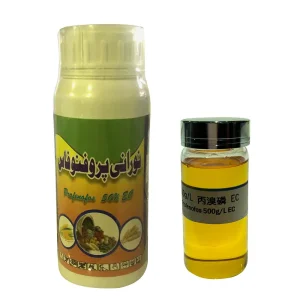
| Pymetrozine | 9B Pyridine Azomethine | Chordotonal organ TRPV channel modulators (Stops feeding) | Nymphs, Adults | Translaminar | Low to Moderate |
| Spirotetramat | 23 Tetramic Acid | Acetyl CoA carboxylase (ACC) inhibition (Lipid biosynthesis) | Juveniles, Nymphs, Ovicidal | True Two-Way Phloem/Xylem | Low |
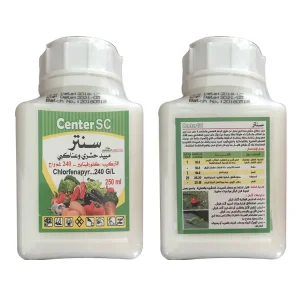
| Chlorfenapyr | 13 Pyrrole | Uncoupling of oxidative phosphorylation via mitochondrial disruption | Nymphs, Adults | Translaminar Contact | Low (Rotational Partner) |
| Abamectin | 6 Avermectin | Glutamate-gated chloride channel (GluCl) allosteric modulators | Nymphs, Mites | Translaminar | Moderate |
| Nitenpyram | 4A Neonicotinoid | Rapid knock-down nAChR binding agonist | Adults (Fast Knockdown) | Systemic Contact | Moderate |
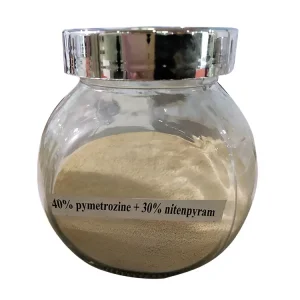
Combining active ingredients with non-overlapping biochemical targets is the gold standard for tomato crop protection. For example, premixing Pymetrozine (IRAC 9B) with Nitenpyram (IRAC 4A) delivers an immediate dual-action punch: Nitenpyram provides swift adult knockdown within 15–30 minutes of contact, while Pymetrozine causes irreversible paralysis of the whitefly's salivary pump mechanisms, preventing virus transmission even before pest mortality occurs.
Modern China suppliers have transitioned from toxic emulsifiable concentrates (EC) to eco-friendly, highly bioavailable target delivery systems.
Milled to sub-micron particle sizes (1–3 microns), SC formulations like Chlorfenapyr 36% SC ensure optimal leaf surface coverage, superior rainfastness, and minimal phytotoxicity on delicate tomato blossoms.
Dust-free, highly soluble solid formulations such as Tribenuron-methyl 75% WDG and custom whitefly WDG premixes offer reduced packaging weight, zero solvent VOC emissions, and extended shelf-life stability.
Polymeric shell microencapsulation shields active molecules from ultraviolet degradation under high light environments, providing controlled linear release over 14 to 21 days.
Whitefly management strategies must be tailored dynamically to climatic variables, agricultural infrastructure, and regional strain resistance profiles. China chemical suppliers work hand-in-hand with overseas agronomic consultants to formulate localized protocols.
In enclosed greenhouse ecosystems, whitefly populations explode exponentially due to controlled thermal parameters and the absence of natural predators. Spray programs must combine low-residual translaminar compounds with biological control agents (e.g., Encarsia formosa parasitic wasps or Amblyseius swirskii predatory mites).
Open-field environments in regions like Brazil, Mexico, India, and Nigeria face continuous migratory pressure from adjacent crops (e.g., cotton, soybean). High ambient temperatures accelerate the whitefly life cycle from egg to adult to under 14 days.
As global environmental regulations tighten around conventional synthetic chemical pesticides, China's crop protection sector is undergoing rapid technological restructuring. The future of whitefly control in tomato production centers on three core pillars:
Development of sequence-specific double-stranded RNA (dsRNA) bio-insecticides targeting essential whitefly genes (such as v-ATPase), delivering near-zero non-target toxicity to honeybees and beneficial insects.
Polymeric nanoparticles engineered for targeted release inside the acidic gut environment of phloem-feeding insects, dramatically reducing chemical application rates per hectare by up to 40%.
Formulation of ultra-low volume (ULV) spray mixtures with anti-evaporation and drift-reduction adjuvants designed specifically for autonomous agricultural drone spraying platforms.
Delivering global agronomic growth solutions backed by rigorous laboratory testing, state-of-the-art synthesis lines, and international regulatory dossiers.
Awiner Biotech was founded in 2006, located in north of China—Shijiazhuang, Hebei Province. The city is close to our capital Beijing, and transportation is highly convenient. Awiner Biotech is committed to research, produce, and distribute agrochemicals. We mainly deal with pesticides, herbicides, fungicides, plant growth regulators, and public health pesticides.
With state-of-the-art analytical equipment including High-Performance Liquid Chromatography (HPLC), Gas Chromatography (GC), and particle size analyzers, every batch of insecticide leaving our facilities undergoes strict quality verification to ensure compliance with FAO standards.
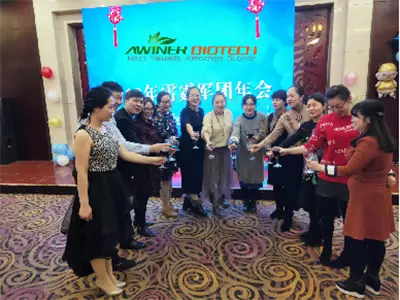
Up to now, we have won customers across world regions including: Iraq, Iran, Afghanistan, Pakistan, India, Libya, Syria, Turkey, Yemen, Ukraine, Russia, Kazakhstan, Uzbekistan, Chile, Bolivia, Mexico, Brazil, Paraguay, Nigeria, Djibouti, Rwanda, Somalia, Malaysia, Cambodia, Nepal, Myanmar, and so on.
Our commitment to custom synthesis, flexible packaging options (from 10mL ampoules to 200L drums), and quick regulatory support has earned us long-term partnerships with leading agrochemical distributors worldwide.
Exhibitions: Our countries participating in agrochemical exhibitions include Turkey, Iran, Pakistan, Nigeria, Russia, Cambodia, Malaysia, Uzbekistan, etc.
Customer Market Survey: We go to the customer's country to conduct market inspections, analyze and solve agronomic problems for them, understand their product usage under real field conditions, and regularly host international client delegations at our Shijiazhuang manufacturing facilities.

Commercial and agronomic guidance for B2B buyers, importers, and agricultural engineers.
For populations exhibiting high resistance to traditional neonicotinoid insecticides (such as Imidacloprid), switching to IRAC Group 9B (Pymetrozine), IRAC Group 13 (Chlorfenapyr), or IRAC Group 23 (Spirotetramat) is highly recommended. Premixing Chlorfenapyr 36% SC or Pymetrozine + Nitenpyram provides immediate knockdown and disrupts metabolic detox channels.
Whiteflies act as persistent vectors for Tomato Yellow Leaf Curl Virus (TYLCV). Insecticides with fast feeding-cessation mechanisms (such as Pymetrozine) paralyze the stylet within minutes, preventing the insect from injecting viral particles into the plant vascular tissue during feeding probes, even before full mortality occurs.
Leading Chinese manufacturers like Awiner Biotech provide comprehensive regulatory dossier support, including Certificates of Analysis (COA), ICAMA registration certificates, GLP-accredited toxicology reports, environmental fate data, and FAO-standard analytical methodology reports necessary for ministry approval in importing countries.
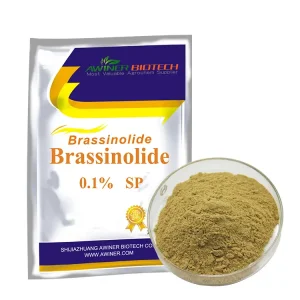
Yes, most suspension concentrate (SC) and water dispersible granule (WDG) formulations are tank-compatible with copper fungicides (e.g., Copper Oxychloride 50% WP) and plant growth regulators (e.g., Brassinolide 0.1% SP or Gibberellic Acid GA3). However, a jar compatibility test and pH verification (ideal spray pH: 5.5 to 6.5) are strongly advised prior to commercial field application.
Standard export lead time is 20 to 30 days post-order confirmation, covering bottle molding, chemical blending, label printing, and ICAMA clearance. MOQs typically range from 1,000 Liters for specialized liquid SC/EC formulations to 500 kg for high-concentration WDG powders.
Explore our full spectrum of synthesized pesticides, broad-spectrum herbicides, systemic fungicides, and biological regulators.
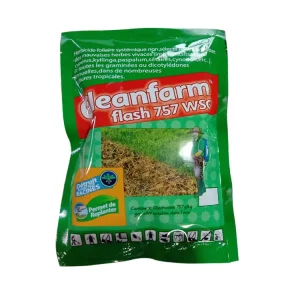
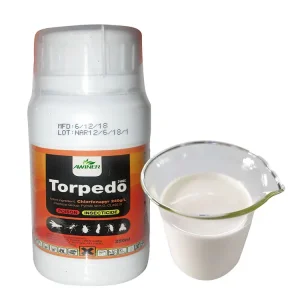
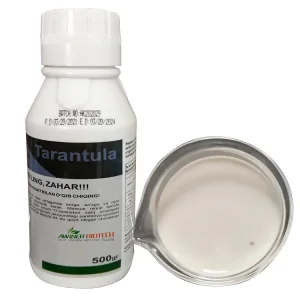
 Awiner Biotech