High-purity active ingredients, advanced formulations, and verified technical-grade agrochemicals for bulk global distribution.
Strategic analysis of active ingredient procurement, chemical synthesized solutions, and crop protection economic frameworks.
The contemporary global agricultural ecosystem faces an unprecedented dual challenge: maximizing yield per hectare to feed a projected world population of 9.7 billion by 2050, while simultaneously adhering to increasingly stringent environmental, toxicological, and Maximum Residue Limit (MRL) parameters set by regulatory authorities such as the EU EFSA, US EPA, and FAO/WHO joint meetings on pesticide residues (JMPR). In this high-stakes environment, enterprise-level procurement of wholesale bulk insecticides for agriculture has shifted from simple transactional buying to strategic chemical supply chain engineering.
Modern broad-spectrum and selective insecticides are the bedrock of Integrated Pest Management (IPM) systems worldwide. From broad-acre row crops (soybean, maize, wheat) across South America to high-value horticulture and greenhouse environments in the Mediterranean and Central Asia, the precise selection of active ingredients (AIs) and advanced formulation chemistry dictates farm economic viability. Enterprise buyers, national distributors, and institutional tender boards require transparent pricelists, rigid quality control standards, and verified factory origin metrics to mitigate supply chain volatility and chemical resistance build-up.
Understanding the mode of action (MOA) classification categorized by the Insecticide Resistance Action Committee (IRAC) is essential for commercial procurement managers structuring multi-year procurement programs:
How Hebei and Northern China agrochemical synthesis clusters power the global bulk insecticide supply chain.
China synthesizes over 70% of the world's agrochemical technical material (TC). Factories located in industrial hubs like Shijiazhuang, Hebei Province benefit from immediate proximity to basic chemical feedstocks (chlor-alkali, aromatic intermediates, heterocyclic compounds), minimizing logistics bottlenecks and internal freight tariffs.
Modern Chinese factories have transitioned from basic Emulsifiable Concentrates (EC) to high-efficiency, eco-friendly formulations such as Water Dispersible Granules (WDG), Suspension Concentrates (SC), Microcapsule Suspensions (CS), and Emulsions in Water (EW). This lowers VOC emissions while increasing biological efficacy.
Leading manufacturers maintain state-of-the-art HPLC and GC testing laboratories to ensure purity tolerances within ±0.5% of declared concentrations. Furthermore, full GLP dossier support (dossier packages, FAO specifications, stability reports) is provided for seamless overseas registration.
Enterprise reference guide for formulation physical properties, targeted pest spectra, and global application norms.
| Active Ingredient | Formulation Types | Target Pests / Scenarios | Mode of Action (IRAC) | Standard Bulk Packaging |
|---|---|---|---|---|
| Alpha-Cypermethrin | 5% EC, 5% WP, 5% EW, 10% EC, 25% EC | Biting & chewing insects, Lepidoptera, Coleoptera in cereals & cotton | Sodium channel modulators (Group 3A) | 200L UN Steel Drums, 1L COEX Bottles |
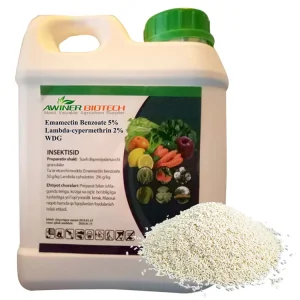
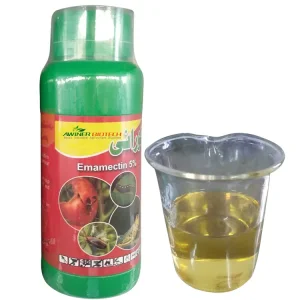
| Emamectin Benzoate | 2% EC, 5% WDG, 5% SG | Plutella xylostella, Helicoverpa armigera, Spodoptera frugiperda | Glutamate-gated chloride channel allosteric modulators (Group 6) | 25kg Fibre Drums, 1kg Aluminium Foil Bags |
| Imidacloprid | 20% SL, 35% SC, 70% WDG, 600g/L FS | Sucking insects, Aphids, Whiteflies, Thrips, Rice Planthoppers | Nicotinic acetylcholine receptor (nAChR) competitive modulators (Group 4A) | 200L HDPE Drums, 20L Fluorinated HDPE Containers |
| Fipronil | 0.05% GR, 50g/L SC, 80% WDG | Soil insects, Termites, Rice Stem Borers, Public Health pests | GABA-gated chloride channel blockers (Group 2B) | 25kg Woven Bags, 500g Custom Cartons |
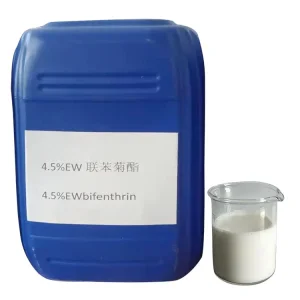
| Permethrin + Bifenthrin | 4.5% EW, 10% EC, 20% EC | Broad-spectrum agricultural & public health pest control (Mosquitoes, Flies) | Sodium channel modulators (Group 3A) | 1000L IBC Totes, 200L Steel Drums |
| Lambda-Cyhalothrin + Thiamethoxam | 15% ZC, 247g/L SC, 10% WDG | Greenhouse pests, Stink bugs, Foliar feeding beetles, Aphids | Dual Mode of Action (Group 3A + Group 4A) | 1L Custom Branded Bottling, 5L Jugs |
Tailoring active ingredient selections to specific agronomic microclimates and modern technological shifts.
In regions such as Brazil, Argentina, Indonesia, and Vietnam, high humidity and continuous cropping cycles create rapid pest generation turnovers. High-volume systemic and contact combination insecticides—such as Lambda-Cyhalothrin + Thiamethoxam or Emamectin Benzoate 5% WDG—are essential to suppress fall armyworm (Spodoptera frugiperda) and stink bug complexes. Bulk pricing efficiency is paramount here, as application frequencies can reach 6 to 10 passes per growing season.
Commercial farming operations in Egypt, Iraq, Saudi Arabia, and Pakistan face extreme ambient temperatures and solar radiation, which degrade active ingredients via photolysis. Formulations must incorporate specialized UV stabilizers and anti-evaporation surfactants. Soluble Concentrates (Imidacloprid 20% SL) and Granular formulations (Fipronil 0.05% GR) are favored for drip irrigation chemigation, minimizing chemical breakdown while protecting root structures against soil-dwelling larvae.
Controlled-environment agriculture demands targeted solutions with low plant phytotoxicity and minimal residue carryover. Micro-emulsions (ME) and Emulsions in Water (EW), like Permethrin-Bifenthrin 4.5% EW, minimize solvent toxicity to leaves while ensuring rapid pest knock-down without leaving unsightly chemical rings on fruits and vegetables destined for European or regional export markets.
The global rapid adoption of Agricultural Unmanned Aerial Vehicles (UAVs / Drones) for crop spraying is reshaping chemical delivery requirements. Drone spraying utilizes Ultra-Low Volume (ULV) water quantities (typically 10-20 liters per hectare vs. 300-500 liters for traditional tractor rigs). This requires bulk insecticides to possess zero nozzle-clogging particulates, exceptional anti-foaming capabilities, high dispersibility, and specialized drift-control agents.
Established manufacturing leadership, international trade presence, and customer market research capabilities.
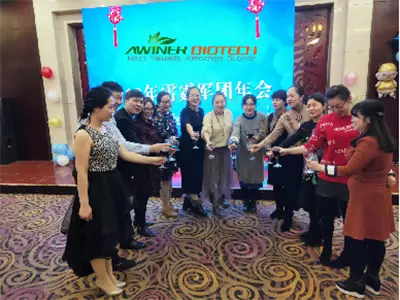
Awiner Biotech was founded in 2006, located in the north of China—Shijiazhuang, Hebei Province. The city is close to our capital Beijing, with convenient logistics and export transportation access. Awiner Biotech is committed to researching, producing, and distributing agrochemicals worldwide, mainly dealing with high-performance insecticides, herbicides, fungicides, plant growth regulators (PGR), and public health pest control solutions.
Up to now, Awiner Biotech has won long-term customers and government distribution contracts across dozens of nations, including: Iraq, Iran, Afghanistan, Pakistan, India, Libya, Syria, Turkey, Yemen, Ukraine, Russia, Kazakhstan, Uzbekistan, Chile, Bolivia, Mexico, Brazil, Paraguay, Nigeria, Djibouti, Rwanda, Somalia, Malaysia, Cambodia, Nepal, Myanmar, and beyond.
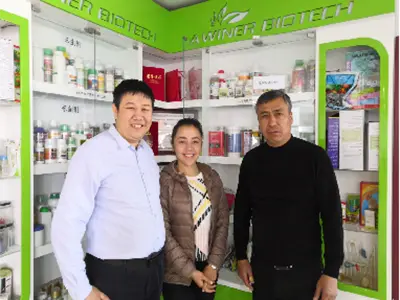
We regularly participate in premier global agrochemical exhibitions in countries including Turkey, Iran, Pakistan, Nigeria, Russia, Cambodia, Malaysia, and Uzbekistan. Furthermore, our technical teams conduct localized customer market surveys—inspecting field application conditions, analyzing pest resistance issues on-site, and hosting international client visits at our manufacturing facilities.
Direct answers regarding order specs, minimum quantities, custom packaging, and international chemical export compliance.
Explore our complete spectrum of systemic pesticides, biological growth regulators, fungicides, and specialized public health chemicals.
 Awiner Biotech