Explore our high-performance agrochemical solutions manufactured to stringent international quality standards, including wettable powders, suspension concentrates, and water-dispersible granules.
Decoding the chemical mechanism, global market shifts, and industrial significance of Benzoylurea Insect Growth Regulators.
Chlorbenzuron operates as a selective benzoylphenylurea insect growth regulator (IGR). Unlike neurotoxic insecticides that target acetylcholinesterase or GABA receptors, Chlorbenzuron disrupts chitin biosynthesis in larvae during ecdysis (molting), rendering the cuticle fragile and preventing successful metamorphosis.
In global agricultural stewardship, Chlorbenzuron Wettable Powder (WP) offers an exceptional safety profile toward non-target organisms, including adult beneficial pollinators (Apis mellifera), predatory mites, and parasitic wasps. This selectivity positions it as a pillar for integrated pest management (IPM) programs.
Widespread insect resistance against synthetic pyrethroids and organophosphates has accelerated demand for alternative modes of action. Chlorbenzuron WP provides a crucial rotation partner (IRAC Group 15), effectively controlling resistant populations of Lepidoptera and Coleopterous pests.
Wettable Powder (WP) formulations remain one of the most reliable, cost-effective, and shelf-stable transport modes for active ingredients like Chlorbenzuron. By utilizing ultra-fine jet-milling technology and advanced surfactant systems, modern Chlorbenzuron WP guarantees rapid wet-out, superior dispersion in spray tanks, and tenacity on foliar surfaces even under subtropical rainfall conditions.
Enterprise chemical specifications, active ingredient purity matrix, and CIPAC testing parameters for Chlorbenzuron WP.
| Technical Parameter | Standard Wholesale Specification | Testing Protocol / CIPAC Standard | Quality Assurance Significance |
|---|---|---|---|
| Active Ingredient Purity | Chlorbenzuron Technical ≥ 98.0% | HPLC - Internal Standard Method | Ensures high biological efficacy per gram of finished WP formulation. |
| Formulation Active Content | 25% WP, 50% WP (Customized) | CIPAC MT 177 / Analytical Assay | Precise active loading for consistent field application rates. |
| Suspensibility Rate | ≥ 85.0% after thermal stability | CIPAC MT 184 | Guarantees uniform dispersion in large capacity agricultural sprayers. |
| Wetting Time | ≤ 45 seconds (without agitation) | CIPAC MT 53.3.1 | Prevents clumping during rapid commercial tank mixing. |
| Particle Size Distribution | 98% pass through 45 µm (325 mesh) | CIPAC MT 59.3 Wet Sieving | Maximizes foliar coverage and optimizes digestive intake by target pests. |
| Persistent Foaming | Max 25 mL after 1 minute | CIPAC MT 47.2 | Ensures efficient operation of mechanized tractor spray booms and aerial drones. |
| pH Range (1% Aqueous) | 6.0 - 8.5 | CIPAC MT 75.3 | Protects active molecule from alkaline hydrolysis and prevents tank corrosion. |
| Accelerated Storage Stability | Stable at 54°C ± 2°C for 14 days | CIPAC MT 46.3 | Verifies 2-year shelf life under tropical and equatorial storage conditions. |
The efficacy of Chlorbenzuron WP is heavily governed by particle topography and carrier composition. As a leading manufacturer, our industrial facilities utilize air jet micronization to achieve an average particle size ($D_{90}$) below 5 micrometers.
Furthermore, our formulation incorporates bio-based lignosulfonate dispersants and synthetic naphthalene sulfonate wetting agents. This precise blend prevents irreversible particle agglomeration, even when stored under elevated ambient temperatures and high humidity typical of global export shipping routes.
Analyzing macroeconomic factors, regional consumption patterns, and supply chain demands across key agricultural corridors.
Global forestry sectors in Eastern Europe and CIS nations heavily rely on Chlorbenzuron WP for controlling canopy-defoliating pests like *Lymantria dispar* (Spongy Moth) and *Hyphantria cunea*. Its long residual activity on foliage minimizes re-application cycles over vast acreage.
In South American and Mediterranean fruit growing regions, Chlorbenzuron WP is extensively utilized to manage *Cydia pomonella* (Codling Moth) in apple and pear orchards, preventing larval penetration into fruit flesh without disturbing natural mite predators.
Beyond agricultural crops, specialized formulations of Chlorbenzuron WP are deployed in municipal standing water treatment programs across Africa and South Asia to disrupt mosquito larval development (*Diptera: Culicidae*), interrupting vector transmission of malaria and dengue.
In major cotton-producing belts including India, Pakistan, and Brazil, Chlorbenzuron WP acts as a fundamental chemical barrier against *Spodoptera frugiperda* (Fall Armyworm) and *Helicoverpa armigera*, safeguarding yields under heavy pest pressure.
Integrating robust chemical synthesis, international compliance, and localized customer support.
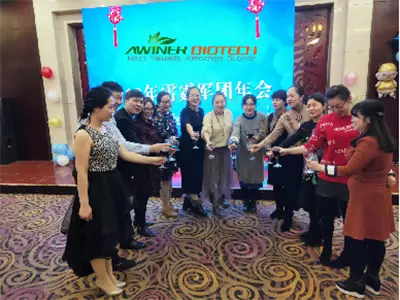
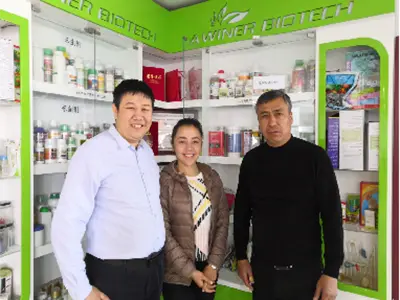
Awiner Biotech was founded in 2006, located in the north of China - Shijiazhuang, Hebei Province. The city is close to our capital Beijing, with highly convenient transportation infrastructure connecting directly to major commercial ports like Tianjin Port.
Awiner Biotech is committed to research, produce, and distribute agrochemicals worldwide. We mainly deal with high-grade insecticides, herbicides, fungicides, plant growth regulators, and public health pesticides, backed by automated processing lines and advanced QC laboratories.
Up to now, we have won trusted long-term commercial partners across more than 25 countries and regions, including: Iraq, Iran, Afghanistan, Pakistan, India, Libya, Syria, Turkey, Yemen, Ukraine, Russia, Kazakhstan, Uzbekistan, Chile, Bolivia, Mexico, Brazil, Paraguay, Nigeria, Djibouti, Rwanda, Somalia, Malaysia, Cambodia, Nepal, Myanmar, and beyond.
Our company actively participates in premier chemical and agricultural expos across the globe. Our target exhibition countries include Turkey, Iran, Pakistan, Nigeria, Russia, Cambodia, Malaysia, Uzbekistan, and more, establishing strong direct-factory relationships with regional distributors.
We conduct localized market inspections directly in our customers' host countries. We analyze local soil conditions, crop species, and climate variables, working hand-in-hand with farm managers to troubleshoot efficacy challenges and evaluate real-world product usage.
To support localized brand building, Awiner Biotech provides comprehensive OEM packaging services. From 100g water-soluble foil bags to 25kg bulk fiber drums with multi-language GHS warning labels, we tailor physical packaging to fit your regional regulatory mandates.
Standardized dosing protocols, target pest spectra, and application timing for maximum crop protection efficacy.
| Target Crop System | Primary Target Pests | Recommended Dosage (Chlorbenzuron 25% WP) | Optimal Application Timing & Technical Method |
|---|---|---|---|
| Apple, Pear & Peach Orchards | Codling Moth (*Cydia pomonella*), Leafminers (*Lithocolletis* spp.) | 30 - 40 g / 100 L water (1500 - 2000x Dilution) | Foliar spray during peak egg-laying phase prior to larval hatching. Ensure thorough canopy wetting. |
| Forestry & Ornamental Trees | Spongy Moth (*Lymantria dispar*), Fall Webworm (*Hyphantria cunea*) | 150 - 250 g / Hectare (Ultra-Low Volume / Tractor) | Apply early in 1st to 2nd larval instar stage. Air-assisted sprayers recommended for tall forest canopies. |
| Cotton Field Crops | Cotton Leafworm (*Prodenia litura*), Armyworms (*Spodoptera* spp.) | 200 - 300 g / Hectare | Apply upon initial detection of egg masses or young larvae. Repeat after 10-14 days if pressure persists. |
| Cruciferous Vegetables | Diamondback Moth (*Plutella xylostella*), Cabbage Caterpillar | 20 - 35 g / 100 L water | Tank-mix with recommended non-alkaline wetting agents. Ensure complete coverage of lower leaf surfaces. |
| Mosquito Vector Control | Mosquito Larvae (*Culex* spp., *Anopheles* spp.) | 0.05 - 0.1 g / m² of water surface | Direct application to breeding sites, stagnant drainage channels, and municipal marshlands. |
Tank-Mixing Precautions: Chlorbenzuron WP is fully compatible with most neutral and slightly acidic insecticides, fungicides, and foliar fertilizers. However, do not combine Chlorbenzuron WP with highly alkaline compounds such as Bordeaux mixture, Lime Sulfur, or strongly alkaline foliar nutrients, as alkaline conditions cause rapid chemical degradation of benzoylurea compounds.
Streamlining international pesticide registration with complete GLP analytical documentation and regulatory compliance.
We provide global distributors with comprehensive GLP-accredited data packets including 5-batch analysis, physical/chemical characterization, acute/chronic toxicology reports, and environmental fate studies required by Ministries of Agriculture.
Chlorbenzuron degrades naturally in soil through microbial activity, with a typical half-life ($DT_{50}$) ranging from 7 to 21 days depending on soil temperature and organic matter content. Bioaccumulation risk in aquatic vertebrates is minimal when applied per label directives.
All bulk exports include multi-lingual Safety Data Sheets (SDS) adhering to GHS Rev. 8 regulations, Certificate of Analysis (COA) per batch, and customized weather-resistant container labeling for seamless customs clearance.
Pioneering the evolution of chitin synthesis technology for global agricultural sustainability.
Enhancing carrier matrix technologies using eco-friendly diatomaceous earth and synthetic silicates to eliminate dust hazards, decrease wetting times to under 30 seconds, and ensure 90%+ suspensibility rates.
Transitioning traditional WP products into dust-free WDG and liquid SC formulations, increasing worker safety, improving measuring convenience, and optimizing automated aerial spray drone compatibility.
Developing controlled-release microcapsules that shield the active Chlorbenzuron molecule from UV breakdown while engineering synergistic co-formulations with rapid knockdown agents (e.g., Emamectin Benzoate, Indoxacarb) for immediate pest cessation.
Integrating plant-derived fatty acid adjuvants directly into technical formulations to boost leaf cuticle penetration and rainfastness within 30 minutes of spray application.
Expert answers regarding technical procurement, chemical behavior, custom synthesis, and international shipping.
Browse additional high-purity biological insecticides, systemic fungicides, and vector control products in our global export inventory.
 Awiner Biotech