Direct B2B Factory Supply with Industry-Leading Active Purity & Optimized Bioavailability
Cyprodinil (CAS No. 121552-61-2) represents one of the most critical broad-spectrum, systemic fungicides within the anilino-pyrimidine chemical class (FRAC Code 9). Engineered specifically for high-value horticultural operations, Cyprodinil serves as a primary line of defense against devastating fungal pathogens in commercial apple production, most notably Venturia inaequalis (Apple Scab), Botrytis cinerea (Gray Mold/Storage Rot), and Monilinia spp. (Brown Rot).
Unlike triazole or strobilurin chemistries, Cyprodinil operates through a distinct biochemical mechanism: the disruption of methionine biosynthesis within fungal cells. By inhibiting the enzyme cystathionine beta-lyase, Cyprodinil effectively halts the secretion of fungal enzymes essential for host tissue penetration and intracellular hyphal expansion. This unique target mechanism renders Cyprodinil an indispensable component of modern Integrated Pest Management (IPM) strategies, particularly for breaking cross-resistance loops established by multi-generational exposures to QoI (Quinone Outside Inhibitors) and DMI (Demethylation Inhibitors) classes.
| Chemical Property | Technical Value / Specification | Agronomic Significance |
|---|---|---|
| Active Ingredient | Cyprodinil (4-cyclopropyl-6-methyl-N-phenylpyrimidin-2-amine) | Targeted anilino-pyrimidine fungicide |
| FRAC Classification | Group 9 (Methionine Biosynthesis Inhibitor) | Key anti-resistance rotation tool |
| Solubility in Water | 13 mg/L (at pH 7, 20°C) | Optimal lipophilic balance for cuticular penetration |
| Vapor Pressure | 5.1 × 10⁻⁴ Pa (25°C) | Low volatility ensures minimal atmospheric drift |
| Formulation Offerings | 50% WDG, 75% WDG, 30% SC, 50% TC | Adaptable for commercial orchard sprayer systems |
The global demand for high-purity wholesale Cyprodinil formulations has witnessed sustained structural growth, driven by intensifying climate variability, stringent maximum residue limits (MRLs) across importing nations, and the rising consumer demand for premium grade, blemish-free fruit. Modern apple production in regions such as the Pacific Northwest (USA), South Tyrol (Italy), Poland, Chile, and the Shaanxi/Shandong provinces of China requires plant protection chemistries that deliver high efficacy at low dose rates while maintaining benign environmental profiles.
Commercial apple growers face dual pressure: managing severe early-season ascospore releases of Venturia inaequalis during cool, rainy spring weather, and preventing latent post-harvest decay caused by Botrytis and Penicillium during extended cold storage. Cyprodinil thrives precisely in these microclimatic windows. Because its biological activity remains uninhibited at temperatures as low as 5°C to 10°C—where triazoles often exhibit reduced mobility and slower systemic uptake—Cyprodinil has become the gold standard for early-season scab control from green tip to pink bud stages.
Fruit exporters targeting the European Union, UK, North America, and Japan face rigorous toxicological scrutiny. B2B buyers mandate Cyprodinil raw materials with negligible heavy-metal traces and ultra-low levels of synthesis impurities (such as unreacted intermediate aromatic amines) to ensure compliance with stringent international food safety standards.
To combat fungal resistance build-up, international agricultural distribution channels are shifting away from single-site solo formulations toward pre-mixed solutions. Blends such as Cyprodinil + Fludioxonil or Cyprodinil + Difenoconazole offer dual modes of action, broadening spectrum coverage while safeguarding chemical longevity.
As global supply chains demand greater transparency, competitive pricing, and environmental compliance, China's advanced agrochemical sector has transformed via "Industry 4.0" smart manufacturing paradigms. Modern Chinese synthesis facilities have evolved far beyond basic batch processing, incorporating real-time Distributed Control Systems (DCS), automated continuous-flow reactors, and enclosed green micro-channel synthesis setups.
Key chemical synthesis pathways for Cyprodinil rely on the efficient, multi-step condensation of 2-amino-4-methyl-6-cyclopropylpyrimidine with specialized phenyl derivatives. Chinese chemical industrial complexes located in chemical parks with centralized environmental treatment capabilities guarantee uninterrupted material flow, raw material security, and cost efficiency that cannot be matched by regional secondary formulators.
By migrating from batch reactors to continuous micro-reactors, modern Chinese facilities maintain precise thermal controls during cyclization reactions. This leads to higher batch-to-batch consistency, reduced isomer impurities, and higher overall active content (98%+ TC).
State-of-the-art Chinese chemical parks operate under strict national green manufacturing standards. Thermal oxidizers (RTO) for VOC reduction and advanced MVR (Mechanical Vapor Recompression) crystallization for wastewater management ensure zero-stop manufacturing cycles during peak production seasons.
Integrated supply networks situated near major northern commercial hubs (such as Tianjin and Qingdao ports) facilitate seamless containerized shipping, custom packaging lines, and rapid clearance schedules for B2B distributors globally.
To maximize return on investment and maintain target yield performance, commercial orchard managers must align Cyprodinil spray applications with regional climate dynamics and crop phenology stages. The systemic action of Cyprodinil provides critical flexibility during periods when unpredictable rain prevents timely contact fungicide reapplication.
In high-humidity, cool-temperature spring conditions (typical of North America, Northern Europe, and East Asia), ascospore maturation peaks between green tip and petal fall. Cyprodinil 50% WDG or 75% WDG applied at rates of 300–400g/ha delivers robust protection. Its rapid leaf tissue absorption (rainfast within 2 hours) ensures that incoming rainfall does not wash away the protective barrier.
Late-season application targets latent fungal infections that cause post-harvest storage loss (Botrytis cinerea and Penicillium expansum). Spraying Cyprodinil 14 to 21 days prior to harvest reduces storage rot incidence by up to 92%, significantly extending shelf-life during trans-oceanic container shipment of fresh apples.
The field efficacy of Cyprodinil formulations depends heavily on physical delivery systems. High-grade Water Dispersible Granules (WDG) manufactured via fluid-bed spray granulation offer superior physical properties compared to standard wettable powders (WP).
Awiner Biotech was founded in 2006, located in north of China-Shijiazhuang, Hebei Province. The city is close to our capital Beijing, transportation is convenient. Awiner Biotech is committed to research, produce and distribute agrochemicals, mainly dealing with pesticides, herbicides, fungicides, plant growth regulators, and public health pesticides.
With state-of-the-art laboratory testing facilities, continuous quality control protocols, and dedicated global export teams, Awiner Biotech provides B2B clients with comprehensive OEM/ODM formulation services, customized packaging solutions, and full regulatory registration support.
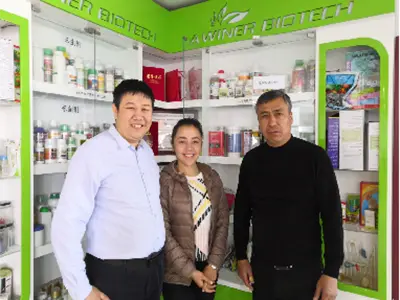
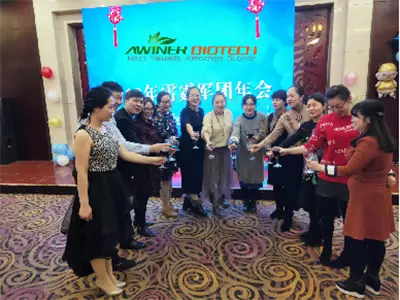
Up to now, we have won customers from Iraq, Iran, Afghanistan, Pakistan, India, Libya, Syria, Turkey, Yemen, Ukraine, Russia, Kazakhstan, Uzbekistan, Chile, Bolivia, Mexico, Brazil, Paraguay, Nigeria, Djibouti, Rwanda, Somalia, Malaysia, Cambodia, Nepal, Myanmar and so on.
Our countries participating in international agrochemical exhibitions include Turkey, Iran, Pakistan, Nigeria, Russia, Cambodia, Malaysia, Uzbekistan, and many others, building strong long-term industrial partnerships.
We routinely conduct on-site market inspections in customer countries, analyzing crop protection problems, monitoring product performance in distinct microclimates, and welcoming global client delegations to our manufacturing hubs.
Direct Guidance from Agrochemical Engineers and B2B Sourcing Specialists
Comprehensive Crop Protection Tools for Professional Importers & Distributors
 Awiner Biotech