Direct-from-factory crop protection solutions, public health formulations, and specialized active ingredients engineered for high-potency pest management.
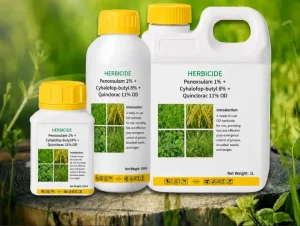
Addressing the escalating threat of vector-borne phytopathogens and biotype-specific pesticide resistance across high-value agricultural economies.
Whiteflies (predominantly Bemisia tabaci and Trialeurodes vaporariorum) represent one of the most economically devastating sap-sucking agricultural pests globally. Beyond direct yield losses caused by phloem sap extraction and honeydew accumulation (which incites black sooty mold growth), whiteflies act as vectors for over 100 plant viruses, including Tomato Yellow Leaf Curl Virus (TYLCV), Cassava Brown Streak Virus (CBSV), and Cotton Leaf Curl Virus (CLCuV).
The displacement of indigenous whitefly populations by aggressive biotypes—specifically Biotype B (MEAM1) and Biotype Q (MED)—has transformed whitefly management into a high-complexity chemical engineering challenge. Biotype Q exhibits extraordinary metabolic detoxifying capabilities against traditional neonicotinoids and organophosphates, necessitating precise multi-site tank mixes and systemic rotated modes of action.
Global agricultural procurement directors require supply chain agility: high-purity active ingredient (AI) concentrates, customizable water-dispersible granules (WDG), soluble liquid (SL) formulations, and micro-encapsulated suspensions (CS) that penetrate dense crop canopies while minimizing phytotoxicity and environmental runoff.
Chemical Mode of Action (MoA) matrix for effective vector control and anti-resistance strategy development.
| Active Ingredient Class | Representative AIs | IRAC Code | Primary Target Stage | Systemic / Translaminar Profile |
|---|---|---|---|---|
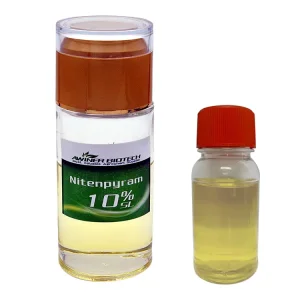
| Neonicotinoids | Imidacloprid, Thiamethoxam, Nitenpyram | Group 4A | Adults & Nymphs | Strong Systemic & Acropetal Translocation |
| Ketoenols / Tetronic Acid | Spirotetramat | Group 23 | Nymphs & Fecundity Reduction | True Two-Way Systemic (Xylem & Phloem) |
| Insect Growth Regulators (IGR) | Pyriproxyfen, Buprofezin | Group 7C / 16 | Eggs & Young Nymphs | Translaminar & Contact Suppressive |
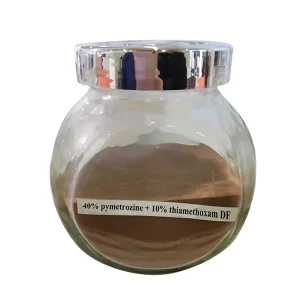
| Pyridine Azomethines | Pymetrozine | Group 9B | Adult Feeding Stop | Systemic Feeding Blocker |
| Chordotonal Organ Modulators | Flonicamid | Group 29 | Adults & Nymphs | Translaminar & Rapid Anti-Feeding |
Modern formulations utilize oil-in-water nano-emulsions (EW) and micro-encapsulated suspensions (CS) that enhance canopy adhesion and leaf cuticle penetration. Reduced droplet size increases effective contact surface area by up to 300%, maximizing mortality rate even under high-temperature conditions.
Integrating entomopathogenic fungi such as Beauveria bassiana and Verticillium lecanii with sub-lethal chemical doses disrupts whitefly cuticle integrity. This dual-action mechanism prevents target site mutation resistance and extends formulation field persistence.
Tailored pesticide deployment frameworks tailored for micro-climates, agronomic crop structures, and regional pest pressure profiles.
Primary Crops: Tomato, Bell Pepper, Cucumber.
Challenge: High year-round temperatures accelerating whitefly life cycle (egg to adult in <15 days) and intense Biotype Q selection pressure.
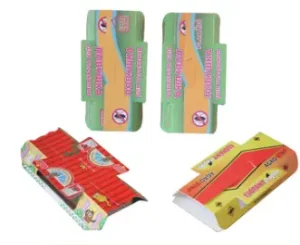
Recommended Solution: Alternating Spirotetramat 22.4% SC with Pymetrozine 50% WDG, integrated with yellow sticky bio-monitoring cards and low-volume thermal fogging equipment for full leaf undersurface coverage.
Primary Crops: Soybeans, Cassava, Solanaceous Vegetables.
Challenge: Heavy rainfall wash-off, rapid canopy growth, and severe viral transmission risks (Begomoviruses).
Recommended Solution: Systemic soil drench using Thiamethoxam 25% WDG during transplanting, followed by foliar application of Nitenpyram 10% SL augmented with organosilicone penetrating surfactants for rainfastness.
Primary Crops: Cotton, Cucurbits, Pulses.
Challenge: Broad-acre coverage requirements, high resistance to organophosphates, and economic constraints of smallholder growers.
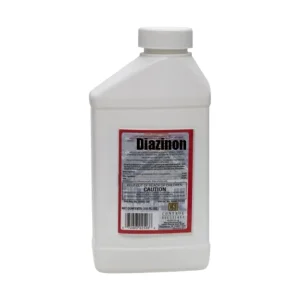
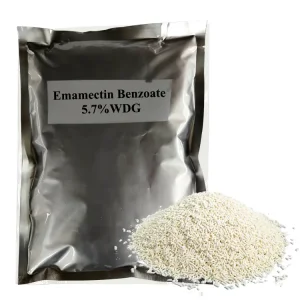
Recommended Solution: Cost-effective combination mixtures such as Pyriproxyfen + Diazinon or Emamectin Benzoate blends, optimized for low-volume ultra-low volume (ULV) backpack or drone spraying systems.
Why global agricultural enterprises partner with top-tier Chinese manufacturers for bulk agrochemical synthesis and custom formulation.
China's complete chemical industrial infrastructure guarantees seamless backward integration—from basic petro-chemical intermediates to technical grade active ingredients (TC). This eliminates supply bottlenecks and ensures price stability for international B2B buyers during global market shifts.
State-of-the-art automated fluid-bed granulation for WDG, high-shear emulsification for EC/SC, and precision powder blending for WP allow scalable production runs from 1,000-liter commercial batches to multi-ton container shipments with rigid batch-to-batch consistency.
Advanced waste-water processing, VOC capture systems, and carbon-neutral manufacturing initiatives ensure total compliance with international environmental standards, safeguarding long-term supply agreements against regulatory shutdowns.
Awiner Biotech was founded in 2006, located in north of China-Shijiazhuang, Hebei Province. The city is close to our capital Beijing, transportation is convenient. Awiner Biotech is committed to research, produce and distribute agrochemicals. mainly deal with pesticides, herbicides, fungicides, plant growth regulator and public health pesticides.
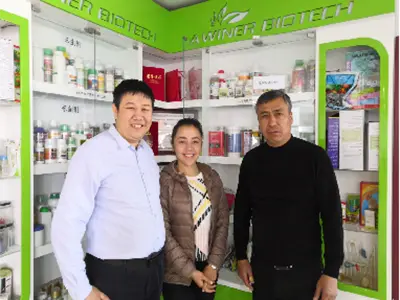
Our countries participating in the exhibition are Turkey, Iran, Pakistan, Nigeria, Russia, Cambodia, Malaysia, Uzbekistan, etc. We actively engage with local distributors to tailor formulations to specific regional agronomic conditions.
We go to the customer's country to conduct market inspections, analyze and solve problems for them, understand their product usage, and customers will also visit us to conduct technical and quality audits.
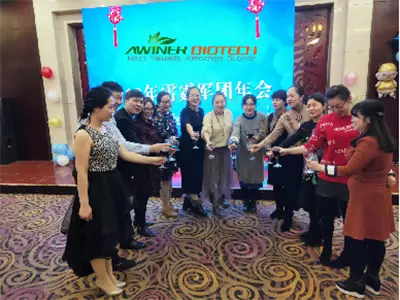
Full compliance documentation and custom packaging for registration in destination countries.
Every commercial shipment comes verified against FAO/WHO analytical parameters. Full HPLC/GC spectrum analysis guarantees technical purity, active concentration, suspension percentage, and emulsion stability under hard-water tests.
We provide comprehensive GLP toxicological, environmental fate, and efficacy test data to assist international partners in securing fast-track Ministry of Agriculture product registrations across South America, Africa, and Eurasia.
From 10ml ampoules, 100ml HDPe bottles to 200L steel drums and customized multi-layer aluminum foil bags (100g to 1kg), we provide complete multilingual label design compliant with GHS hazard communication rules.
Expert answers regarding chemical stability, resistance mitigation, order logistics, and customized formulations.
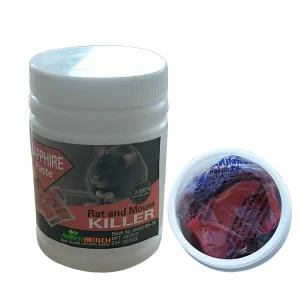
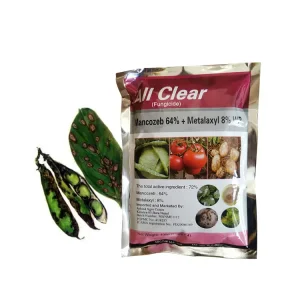
Explore our comprehensive lineup of targeted insecticides, herbicides, rodenticides, and fungicides engineered for enterprise agriculture.
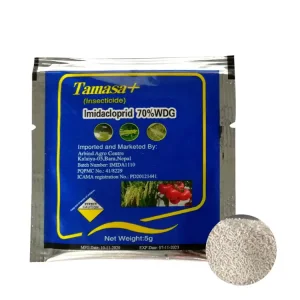
 Awiner Biotech