Engineered for cold climate adaptiveness, rapid cell division, and high stress recovery in Moscow Oblast and Central Federal District commercial operations.
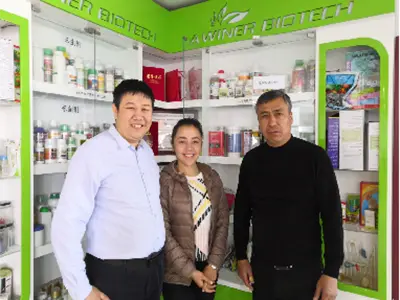
Founded in 2006 in Shijiazhuang, Hebei Province—adjacent to China’s primary logistical hubs with streamlined export channels to Moscow—Awiner Biotech has evolved into a global titan in fine agrochemical synthesis. Our state-of-the-art facilities specialize in high-efficacy Plant Growth Regulators (PGRs), selective herbicides, insecticides, and biostimulants engineered specifically to withstand rigorous environmental stressors.
Our commitment to the Russian Federation and Moscow Oblast markets spans over a decade. By maintaining strict alignment with GOST standards and State Registration protocols overseen by Rosselkhoznadzor, Awiner Biotech supplies commercial greenhouse complexes (Teplitsa clusters), extensive cereal farms, and regional agro-distributors with chemically stabilized formulations guaranteed for long-distance transport and low-temperature storage stability.
Moscow Regional Infrastructure Support: Direct logistical routes from synthesis facilities to White Dacha and South Gate distribution hubs, providing guaranteed bulk supply chains for Moscow, Tula, Ryazan, and Kaluga agricultural corridors.
An operational whitepaper on stress-mitigation chemistry in high-latitude protected horticulture and cereal production.
Moscow Oblast houses some of Eastern Europe's largest glasshouse complexes (Dmitrov, Kashira, and Voskresensk zones). Maximizing PAR (Photosynthetically Active Radiation) conversion under short daylight regimes requires precision hormones like Cytokinin 6-BA and Natural Brassinolide to prevent flower drop and stimulate fruit setting during autumn-winter cycles.
Spring late frosts and abrupt temperature drops represent primary yield threats for winter wheat, rape, and sugar beet in the Central Federal District. Application of exogenous S-Abscisic Acid (S-ABA) and Brassinolides regulates stomatal closure and boosts proline accumulation, lowering cellular freezing points.
High nitrogen fertilization coupled with rapid spring thaw creates rank growth in winter cereals. Formulations containing Paclobutrazol (PP333) inhibit gibberellin biosynthesis, shortening internode length, expanding stem wall thickness, and strengthening root anchoring to eliminate mechanical lodging.
In high-latitude agricultural ecosystems such as the Moscow region, crops face compounding physiological stresses: insufficient growing degree days (GDD), low ambient light intensities, sudden cold fronts, and soil compaction. Utilizing specific chemical plant growth regulators provides precise biochemical switches to modulate plant architecture and physiological performance.
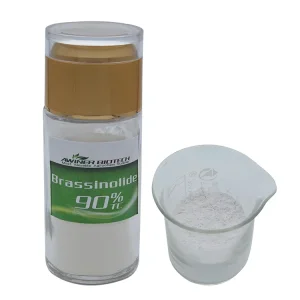
Brassinolides act as master regulators of plant growth. At the cell surface, brassinosteroids bind to the BRI1 receptor kinase, initiating a signaling cascade that inactivates the BIN2 kinase. This enables the transcription factors BZR1 and BES1 to activate genes responsible for cell elongation, vascular differentiation, and stress resistance. In northern climates, brassinosteroid application improves Rubisco activity during low-temperature photosynthesis and triggers anti-oxidative enzyme systems (Superoxide Dismutase, Peroxidase, Catalase) to scavenge reactive oxygen species (ROS) induced by frost.
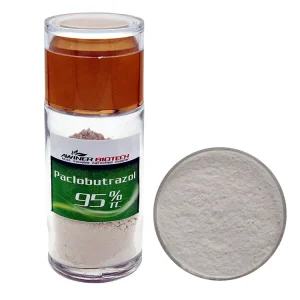
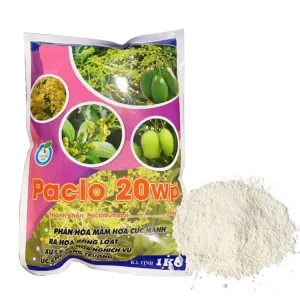
Paclobutrazol functions as a synthetic antagonist of gibberellin biosynthesis. It specifically inhibits the cytochrome P450-dependent enzyme ent-kaurene oxidase, preventing the conversion of ent-kaurene to ent-kaurenoic acid. By suppressing sub-apical meristem elongation, plants treated with Paclobutrazol exhibit condensed internodes, darker green foliage (due to elevated chlorophyll density per unit area), and increased phytosterols that bolster cell membrane stability against environmental stress.
| Active Ingredient | Chemical Class | Target Mechanism in Moscow Climate | Primary Crop Application | Recommended Formulations |
|---|---|---|---|---|
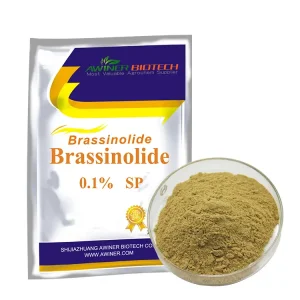
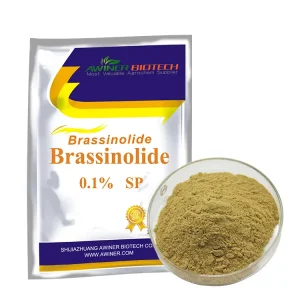
| Brassinolide | Steroidal Phytohormone | ROS scavenging, photosynthetic recovery, cold resilience | Greenhouse Tomatoes, Cucumbers, Wheat | 0.1% SP, 90% TC |
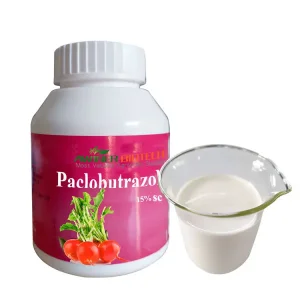
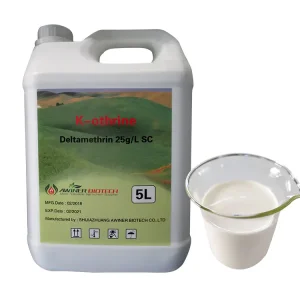
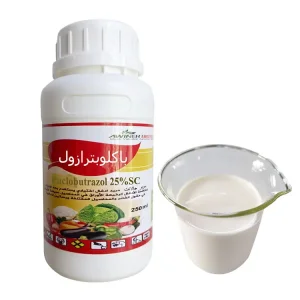
| Paclobutrazol | Triazole Retardant | Gibberellin inhibition, stem thickening, anti-lodging | Winter Wheat, Rapeseed, Turfgrass | 15% SC, 25% SC, 25% WP |
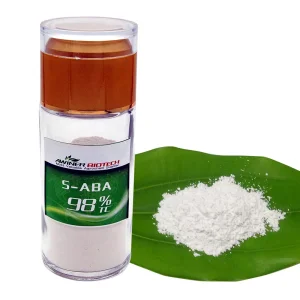
| S-Abscisic Acid (S-ABA) | Sesquiterpene | Stomatal conductance control, transpiration reduction | Transplant Seedlings, Orchards, Grains | 98% TC, Soluble Powders |
| 6-Benzylaminopurine (6-BA) | Adenine Cytokinin | Lateral bud promotion, senescent delay, cell division | Tea, Tobacco, Greenhouse Vegetables | 2% SP, 98% TC |
| Thidiazuron (TDZ) | Phenylurea Cytokinin | Defoliation, ethylene activation, uniform maturity | Cotton, Nursery Stock, Greenhouse Floriculture | 50% WP, 95% TC, 97% TC |
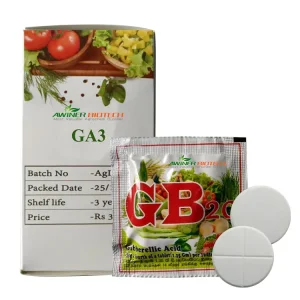
| Gibberellic Acid (GA3) | Diterpenoid Acid | Seed dormancy breakage, rapid early vigor in cold soils | Corn, Barley, Vegetables, Malting Grains | SP, TB, Liquid Concentrates |
S-Abscisic Acid is the primary signaling hormone regulating drought and cold responses. Upon sensing thermal stress, S-ABA induces rapid influx of calcium ions into guard cells, driving potassium and anion efflux, causing stomatal closure within minutes. This rapid response conserves tissue hydration during dry freeze events in Moscow late autumn. Furthermore, S-ABA upregulates Late Embryogenesis Abundant (LEA) proteins, which safeguard cellular enzymes from freezing-induced denaturation.
Tailored chemical protocols developed for specific commercial cultivation environments in Central Russia.
Challenge: Low natural ambient radiation between October and March leads to weak vegetative growth, poor pollen viability, and fruit abortion in greenhouse tomatoes and cucumbers.
Solution Protocol: Foliar application of 6-BA (2% SP) combined with Brassinolide 0.1% SP at pre-bloom stage. This treatment stimulates cell division in floral primordia, improves pollen tube elongation under low temperatures, and enhances assimilate sink strength, resulting in a 14–22% increase in early-harvest marketability.
Challenge: Unpredictable autumn thaws followed by sharp temperature drops can freeze crown tissue before snow cover forms.
Solution Protocol: Seed treatment or early tiller application with Paclobutrazol 25% SC combined with low concentrations of S-ABA. The treatment reduces shoot height, expands root diameter, increases root-to-shoot biomass ratio, and raises soluble sugar concentrations in the crown tissue by over 30%, ensuring high winter survival rates.
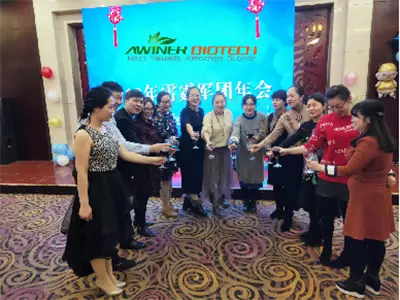
Navigating the regulatory landscape of the Eurasian Economic Union (EAC) requires strict chemical batch consistency, full spectroscopic trace analysis, and complete Safety Data Sheet (SDS) alignment in Russian language formats.
High-purity active ingredients and custom formulations available for immediate export to Moscow logistics centers.
Innovations in micro-encapsulation, nano-emulsions, and synergistic phytohormone complexes for extreme climate resilience.
Developing sub-100nm polymeric carrier particles for active ingredients like Paclobutrazol and S-ABA. Nano-encapsulation prevents photochemical degradation under intense artificial greenhouse lighting and ensures systemic translocation across thick leaf cuticles during low-temperature periods.
Integrating natural brassinosteroids with seaweed extracts (Ascophyllum nodosum) and humic-fulvic matrices. This biological-chemical dual-action complex boosts root rhizosphere signaling while stimulating cellular stress protection mechanisms.
Phasing out traditional organic solvents in favor of advanced Water-Dispersible Granules (WDG). Eliminating volatile organic compounds (VOCs) improves storage stability during severe freezing cycles without loss of suspension rate or chemical degradation.
Addressing technical tank-mix compatibility, regulatory documentation, and logistical execution.
Request technical dossiers, factory-direct pricing quotes, or custom batch synthesis samples today. Our agronomic export engineers are ready to support your commercial requirements.
 Awiner Biotech