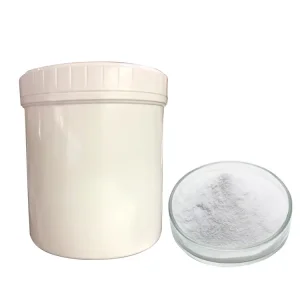
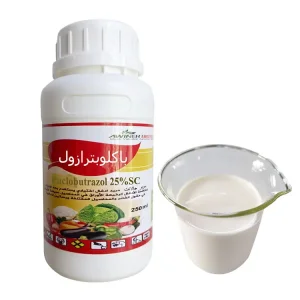
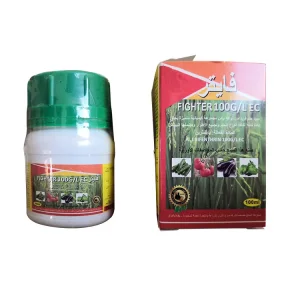
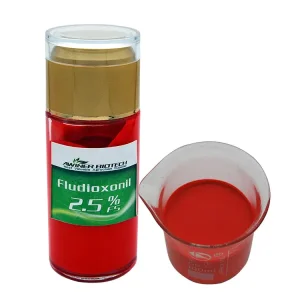
High-potency growth regulators tailored for regional yield maximization, banana lodging control, and stress recovery.
Technical Sourcing Guide for Agribusinesses, Large-Scale Farmers, and Agrochemical Importers across the Ankole Sub-Region.
Mbarara serves as the principal commercial, logistics, and agricultural hub for Western Uganda. Positioned along the Northern Corridor at an elevation of approximately 1,478 meters above sea level, the Ankole sub-region exhibits a bimodal rainfall pattern combined with tropical highland climatic conditions. Agriculture is the economic foundation of Mbarara, dominated by high-value cash and food crops including cooking bananas (Matooke - Musa acuminata), Robusta and Arabica coffee, commercial tea estates in adjacent highland belts (such as Igara and Buhweju), passion fruit, solanaceous vegetables (tomatoes, peppers), and maize.
However, modern commercial farming in Mbarara faces critical physiological and environmental bottlenecks:
To overcome these chemical and physiological constraints, progressive agricultural producers, outgrower schemes, and distributor networks across Mbarara are rapidly deploying modern Plant Growth Regulators (PGRs). PGRs act as targeted metabolic orchestrators, regulating endogenous hormonal pathways to optimize canopy architecture, enhance nutrient allocation, and fortify cellular drought resilience.
Plant Growth Regulators distributed throughout Mbarara are classified by their bio-chemical modes of action, synthesis pathways, and target plant tissue responses. Understanding these underlying mechanisms is essential for field agronomists and procurement officers matching active ingredients to crop growth stages.
| Active Ingredient | Chemical Class | Primary Mode of Action | Target Agronomic Effect | Key Crop Applications in Mbarara |
|---|---|---|---|---|
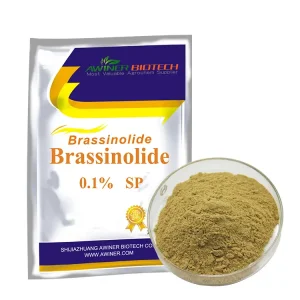
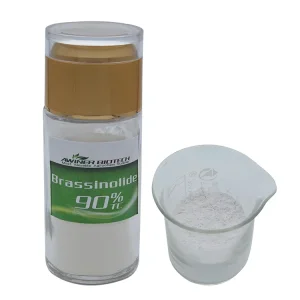
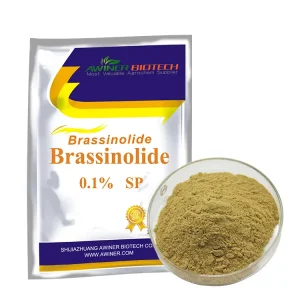
| Natural Brassinolide (0.1% SP, 90% TC) | Brassinosteroid | Promotes cell elongation & division, activates stress-protective enzymes (SOD, CAT, POD). | Drought/frost tolerance, rapid chemical injury recovery, pollen tube viability. | Coffee blossom enhancement, Matooke drought survival, Tomato fruit set. |
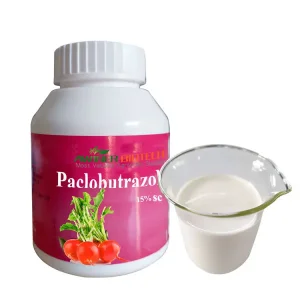
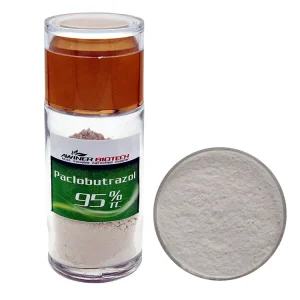
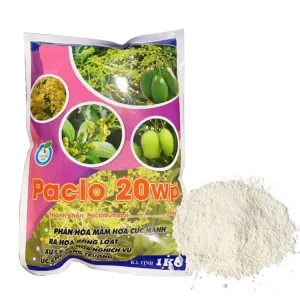
| Paclobutrazol (15% SC, 25% SC, 20% WP) | Triazole Derivative | Inhibits ent-kaurene oxidase, blocking gibberellin biosynthesis; stimulates ABA synthesis. | Pseudostem shortening, leaf thickening, anti-lodging, root-to-shoot balance. | Matooke stem fortification, fruit tree canopy control, ornamental compact growth. |
| 6-Benzylaminopurine / 6-BA (2% SP, 98% TC) | Cytokinin | Stimulates lateral cell division, delays chlorophyll degradation, breaks apical dominance. | Accelerated tea flush shooting, lateral branching in coffee, post-harvest senescence delay. | Commercial Tea estates (Buhweju/Igara), Passion fruit branching, Tissue culture. |
| Thidiazuron / TDZ (50% WP, 95% TC) | Phenylurea Cytokinin | High-potency cytokinin mimic; induces endogenous ethylene synthesis at higher rates. | Defoliation (harvest prep), callus induction in banana tissue culture, adventitious shoot emergence. | Banana tissue tissue micropropagation laboratories, Cotton defoliation. |
| Indole-3-Butyric Acid / IBA (98% TC) | Synthetic Auxin | Initiates adventitious root primordia development, enhances root vascular differentiation. | Rapid rooting in vegetative cuttings, transplant establishment, root mass expansion. | Tea vegetative propagation (VP) nurseries, Coffee seedling root dipping. |
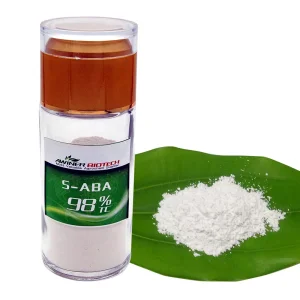
| S-Abscisic Acid / S-ABA (98% TC) | Sesquiterpenoid | Controls stomatal aperture, regulates osmotic pressure, induces seed/bud dormancy. | Transpiration minimization during dry spells, anti-transpirant stress barrier. | High-value horticulture during dry seasons, nursery stress mitigation. |
| Gibberellic Acid / GA3 (SP, Tab) | Diterpenoid Acid | Promotes stem cell elongation, activates alpha-amylase enzyme synthesis. | Breaks dormancy, increases fruit size, accelerates vegetative flush. | Vegetables, Citrus size uniformity, Seedling emergence speed. |
Demonstrated manufacturing excellence and compliance standards supporting agricultural inputs in East Africa.
Challenge: Matooke plants in heavy rainfall and high wind conditions suffer from stalk breakage (lodging), leading to up to 40% loss in harvestable bunches across Rwampara and Kashari districts.
PGR Protocol: Soil drench or foliar application of Paclobutrazol 15% SC / 25% SC at 1.5 - 2.5 mL per stool during the early vegetative sucker development stage. Paclobutrazol suppresses excessive internode elongation while increasing pseudostem girth and leaf chlorophyll density.
Synergy Treatment: Spray Natural Brassinolide 0.1% SP at 10 g/ha combined with soluble micronutrients during fruit bunch emergence to accelerate fruit finger fill and reduce physiological tip breakdown.
Challenge: Tea estates in neighboring Buhweju and Igara regions experience delayed shoot flushing during seasonal moisture shifts, impacting factory processing capacity.
PGR Protocol: Foliar application of 6-Benzylaminopurine (6-BA) 2% SP at 200–300 ppm (parts per million) diluted in water, applied 10–14 days post-heavy plucking. 6-BA stimulates latent axillary buds on the plucking table, forcing uniform, synchronized two-leaves-and-a-bud flush cycles.
Nursery Rooting: Treat tea VP vegetative cuttings with Indole-3-Butyric Acid (IBA) 98% TC quick-dip solution (1,000–2,000 ppm) to ensure 95%+ adventitious root formation in nursery beds.
Challenge: Irregular dry spells lead to multiple erratic flowering waves in Robusta and Arabica coffee, causing uneven ripening and high labor costs during harvesting.
PGR Protocol: Spray Gibberellic Acid (GA3) combined with S-Abscisic Acid (S-ABA 98% TC) prior to the onset of primary rainy seasons to synchronize flower bud development. Post-set application of Brassinolide minimizes berry drop during mid-season dry dry spells.
Challenge: High ambient daytime temperatures in Mbarara peri-urban market gardens result in blossom abortion in tomatoes, sweet peppers, and passion fruit vines.
PGR Protocol: Apply Cytokinin 6-BA combined with low-concentration Brassinolide 0.1% SP during early flowering. This combination enhances cell division in flower receptacles, ensuring fruit set under heat-stress conditions and expanding fruit wall thickness.
Agrochemical procurement in Uganda is regulated under strict national and regional frameworks to ensure food safety, environmental protection, and product integrity. Importers, wholesalers, and farm enterprises in Mbarara must align with mandatory regulatory requirements:
The agricultural input sector in Mbarara is transitioning from reactive crop protection toward proactive metabolic plant performance management. Future technology trends include:
Technical and Procurement Guidance for Mbarara Farmers, Agribusinesses & Chemical Distributors
Explore our complete portfolio of high-purity PGR products available for bulk order and wholesale distribution in Mbarara.
Awiner Biotech was founded in 2006, located in north of China-Shijiazhuang, Hebei Province. The city is close to our capital Beijing, transportation is convenient. Awiner Biotech is committed to research, produce and distribute agrochemicals. mainly deal with pesticides, herbicides, fungicides, plant growth regulator and public health pesticides.
Up to now, we have win customers from Iraq, Iran, Afghanistan, Pakistan, India, Libya, Syria, Turkey, Yemen, Ukraine, Russia, Kazakhstan, Uzbekistan, Chile, Bolivia, Mexico, Brazil, Paraguay, Nigeria, Djibouti, Rwanda, Somalia, Malaysia, Cambodia, Nepal, Myanmar and so on.
Our countries participating in the exhibition are Turkey, Iran, Pakistan, Nigeria, Russia, Cambodia, Malaysia, Uzbekistan, etc. We consistently connect with regional distributors to deliver high-quality crop protection solutions.
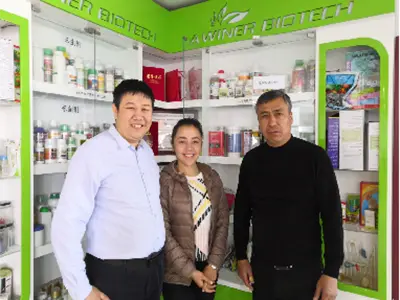
We go to the customer's country to conduct market inspections, analyze and solve problems for them, understand their product usage, and customers will also visit us for long-term strategic partnership development.
Contact our agronomic chemical technical team today for direct factory quotes, customized OEM formulations, and bulk supply to Mbarara & East Africa.
Send Inquiry Now Awiner Biotech