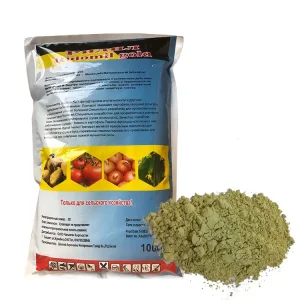
Explore our specialized crop protection catalog engineered for high thermal stability, optimal absorption, and superior field efficacy.
Analyzing global supply chain shifts, chemical defoliation biochemistry, and the commercial necessity of defoliants in modern precision farming.
As global cotton cultivation transitions rapidly toward machine-picked harvesting, the role of chemical harvest aids—specifically defoliants and boll openers—has transformed from an optional practice to an absolute operational requirement. Cotton plants (*Gossypium hirsutum*) are naturally indeterminate perennials grown as annuals, retaining dense green foliage late into the season. Left untreated, remaining leaves introduce trash content, stain fiber with green chlorophyll, increase trash dockage penalties at the gin, and trap moisture that leads to boll rot (*Diplodia*, *Fusarium* spp.).
"Chemical defoliation is not merely leaf removal; it is an engineered physiological maturation process designed to optimize lint grade, reduce moisture content below 12%, and maximize picker efficiency."
Leading cotton-producing regions including China's Xinjiang Autonomous Region, the US Cotton Belt, the Brazilian Cerrado, and Central Asian basins require high-purity defoliants such as Thidiazuron (TDZ), Diuron, Ethephon, and Cyclanilide combinations. A sourcing partnership with an established China cotton defoliant manufacturer provides global importers, distributors, and farm conglomerates with scale advantages, supply security, and customized formulation profiles adapted to localized thermal windows.
Combining synthetic chemistry expertise, modern formulation facilities, and worldwide regulatory export capabilities since 2006.
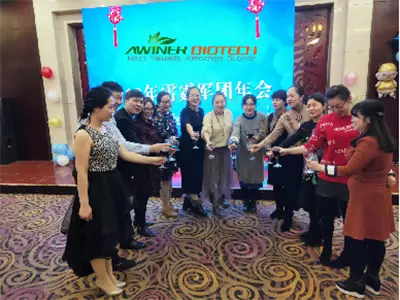
Founded in 2006, Awiner Biotech is headquartered in Shijiazhuang, Hebei Province, northern China. Located in proximity to Beijing with seamless access to Tianjin Seaport, Awiner Biotech has evolved into a premier manufacturer and exporter of comprehensive crop protection solutions. We specialize in researching, formulating, and customizing agrochemicals including defoliants, insecticides, herbicides, fungicides, public health formulations, and plant growth regulators (PGRs).
Over nearly two decades of continuous expansion, Awiner Biotech has built an international operational framework engineered to handle complex regulatory filings, custom bottle blow-molding, co-formulation chemistry, and full logistical support.
Strict quality control protocols governing active ingredient active assay, emulsification stability, and cold-storage retention.
Capabilities across SC, EC, WDG, SL, WP, and SP, optimizing droplet retention and rainfastness under variable weather conditions.
Up to now, Awiner Biotech has secured longstanding partnerships and supply agreements with agricultural distributors, farm syndicates, and government tenders across diverse geographies:
Active Export Footprint: Iraq, Iran, Afghanistan, Pakistan, India, Libya, Syria, Turkey, Yemen, Ukraine, Russia, Kazakhstan, Uzbekistan, Chile, Bolivia, Mexico, Brazil, Paraguay, Nigeria, Djibouti, Rwanda, Somalia, Malaysia, Cambodia, Nepal, Myanmar, and beyond.
Our commitment extends beyond factory production. Awiner Biotech's technical teams conduct direct in-country market surveys, evaluating climate interactions, sprayer nozzle physics, and crop canopy density to provide tailored solutions for local farmers.
Understanding abscission zone activation, ethylene synthesis, and hormonal balance modification for targeted leaf drop.
Thidiazuron acts as a potent phenylurea plant growth regulator displaying strong cytokinin-like activity. Upon foliar absorption, TDZ triggers localized synthesis of endogenous ethylene while inhibiting auxin transport from leaf blades to petioles. This hormonal shift activates hydrolytic enzymes (cellulase and polygalacturonase) in the petiole abscission layer, resulting in clean leaf drop without causing desiccation or leaf freezing.
Diuron, a substituted urea photosystem II (PSII) inhibitor, is frequently co-formulated with TDZ (e.g., TDZ 500g/L + Diuron 250g/L SC or TDZ 360g/L + Diuron 180g/L SC). At low dosage rates, Diuron induces mild oxidative stress within leaf chloroplasts, accelerating TDZ uptake and enhancing defoliation performance under lower ambient temperature regimes (down to 16°C–18°C).
Ethephon (2-chloroethylphosphonic acid) releases ethylene directly into plant tissue upon absorption. When applied to mature cotton crops (at >60-70% open bolls), Ethephon accelerates carpel wall drying, boll opening, and uniform lint exposure. Combining defoliants with Ethephon ensures single-pass field efficiency prior to machine picking.
| Active Ingredient Combination | Formulation Type | Primary Action Mechanism | Optimal Temp Range | Target Application Timing |
|---|---|---|---|---|
| Thidiazuron 500 g/L | SC (Suspension Concentrate) | Hormonal abscission zone stimulation; zero foliage desiccation | 20°C – 35°C | 60% Open Bolls; 14-21 days pre-harvest |
| Thidiazuron 360g/L + Diuron 180g/L | SC / WP | Dual action: PSII stress + ethylene stimulation; low-temp tolerant | 16°C – 30°C | 50-60% Open Bolls; cool autumn conditions |
| Ethephon 480 g/L SL | SL (Soluble Concentrate) | Direct ethylene liberation; boll opening & tissue drying | 18°C – 32°C | Co-applied with TDZ for single-pass maturation |
| Cyclanilide + Ethephon | SC / EC | Auxin transport inhibition + ethylene release; apical control | 15°C – 30°C | High-density foliage under heavy irrigation |
Operational best practices for diverse climate zones, machinery platforms, and precision spray management.
Cotton defoliation is not a one-size-fits-all chemical operation. Success depends heavily on ambient microclimates, plant vigor, nitrogen status, and spraying hardware. Awiner Biotech works closely with regional procurement partners to adapt formulations and tank-mix instructions:
Recommended Droplet VMD: 150 – 220 Microns
Flight Altitude: 2.5 – 3.5 meters above canopy top
Working Speed: 4.5 – 6.0 m/s
Adjuvant Strategy: Add 0.1%-0.2% v/v Non-Ionic Organosilicone Surfactant to reduce surface tension and accelerate cuticular penetration within 2 hours of application.
Understanding commercial pricing structure, active ingredient sourcing, packaging options, and bulk shipment logistics.
Technical grade active ingredient pricing (e.g., Thidiazuron 98% TC, Diuron 98% TC) forms the baseline of formulation quotes. Raw material synthesis costs correlate with basic chemical precursor availability (such as phenyl isocyanate intermediates) and environmental compliance standards in chemical industrial parks.
Premium suspension concentrates (SC) utilize advanced polymeric dispersants and anti-freezing agents that prevent crystallization, particle agglomeration, and layer separation during multi-year storage. Higher-grade adjuvants increase formulation stability and rainfastness, reflecting in wholesale quotation tiers.
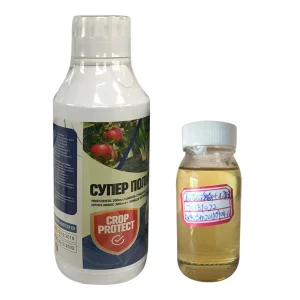
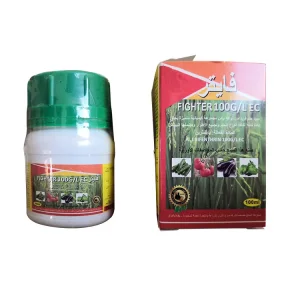
Options range from 200L HDPE drums and 1000L IBC totes for industrial agricultural estates to 100mL, 500mL, and 1L fluorinated bottles with customized IML (In-Mold Labeling) or high-barrier shrink sleeves designed to pass localized import regulations and UN dangerous goods (DG) packaging standards.
Providing global partners with complete GLP data packages, ISO certifications, and field-proven reliability.
Navigating Ministry of Agriculture pesticide registration requirements can present significant market entry barriers. Awiner Biotech supports our international distributors by providing comprehensive technical documentation, including:
As part of our commitment to local support, Awiner Biotech's agronomic engineers regularly travel to client markets across the Middle East, Central Asia, South America, and Africa. We conduct field trial assessments, troubleshoot application issues, host farmer education seminars, and refine formulation specifications based on regional feedback.
Combining bio-based surfactants, AI remote sensing imagery, and temperature-activated formulation technology.
Integration of NDVI (Normalized Difference Vegetation Index) satellite mapping and drone imagery allows mega-farms to calculate exact leaf density matrices. This enables variable-rate application (VRA) of defoliants, spraying only the dosage required for specific field zones and reducing chemical usage by 15-25%.
Awiner Biotech is actively researching micro-encapsulated formulations for harvest aids. Micro-encapsulation protects volatile active ingredients from solar UV degradation and provides controlled ethylene release, widening the effective temperature window for late-season applications.
Replacing traditional alkylphenol ethoxylates (APEs) with readily biodegradable alkyl polyglucosides (APGs) and methylated seed oils (MSO) enhances cuticular wax solubilization while fulfilling stringent global environmental compliance targets.
Direct technical and commercial answers for agricultural procurement managers and agronomists.
Cotton defoliation should be initiated when approximately 60% to 70% of the harvestable bolls are fully open, and the youngest harvestable boll is mature (indicated by dark seed coats and formed cotyledons inside). Applying defoliants too early can reduce fiber micronaire and yield, while applying too late increases the risk of low-temperature leaf stuck conditions (leaf freezing).
Thidiazuron is highly effective at stimulating leaf abscission via hormonal pathways, but its activity slows down significantly when daily mean temperatures drop below 18°C–20°C. Diuron acts synergistically by creating mild photosynthetic stress, which boosts TDZ absorption and maintains strong defoliation performance under lower ambient temperatures.
Awiner Biotech enforces a rigorous multi-stage quality control process certified under ISO standards. Every production batch of technical active ingredient and finished formulation undergoes HPLC/GC assay testing, particle size analysis (for SC and WDG), suspension rate measurement, and accelerated thermal storage trials before issuing a Certificate of Analysis (COA).
We provide a comprehensive range of UN-approved export packaging, including 100mL, 250mL, 500mL, 1L, 5L, and 20L HDPE/Co-ex bottles, 200L steel/plastic drums, and 1000L IBC totes. Customized label design, multi-language printing, and anti-counterfeiting QR codes are available for brand owners.
Yes. Tank-mixing TDZ/Diuron with Ethephon is common practice to combine leaf drop with accelerated boll opening. Additionally, broad-spectrum insecticides (e.g., Bifenthrin, Emamectin Benzoate) or aphid/whitefly control agents are frequently co-applied to clear late-season insects that produce sticky honeydew on open lint.
Standard manufacturing lead time for custom-formulated orders is 15 to 25 days following label artwork confirmation and deposit receipt. Shipping transit times vary depending on the destination port, with direct maritime routes from Tianjin/Qingdao port to major Asian, European, African, and South American terminals.
Explore our broader formulation portfolio including bio-pesticides, high-concentration fungicides, and specialty plant growth regulators.
Whether you are seeking high-purity Thidiazuron, Diuron SC co-formulations, custom retail packaging, or complete registration data packages, Awiner Biotech delivers industrial excellence and direct factory quotations.
 Awiner Biotech