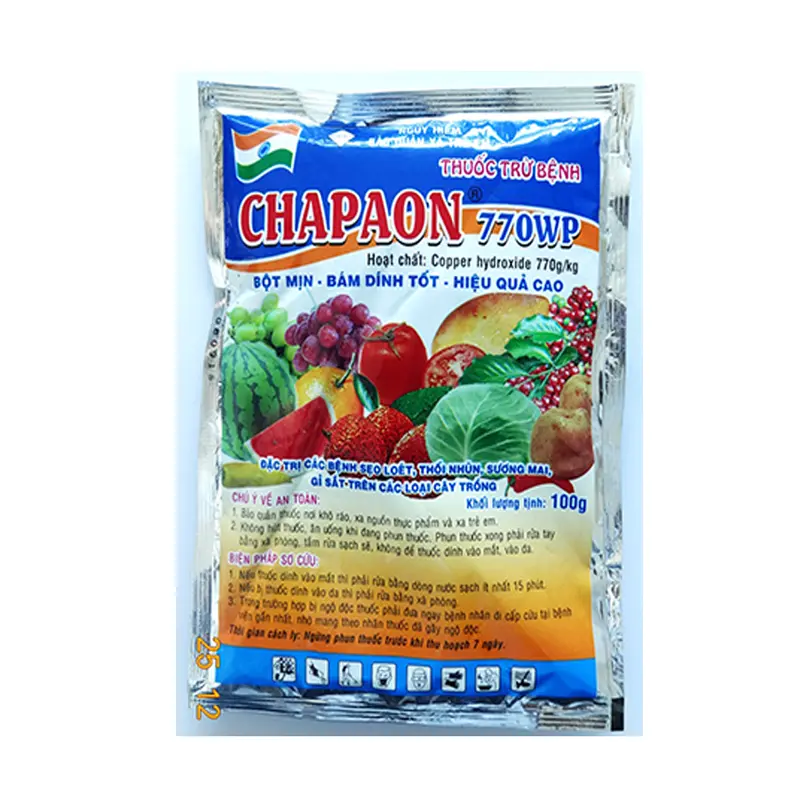
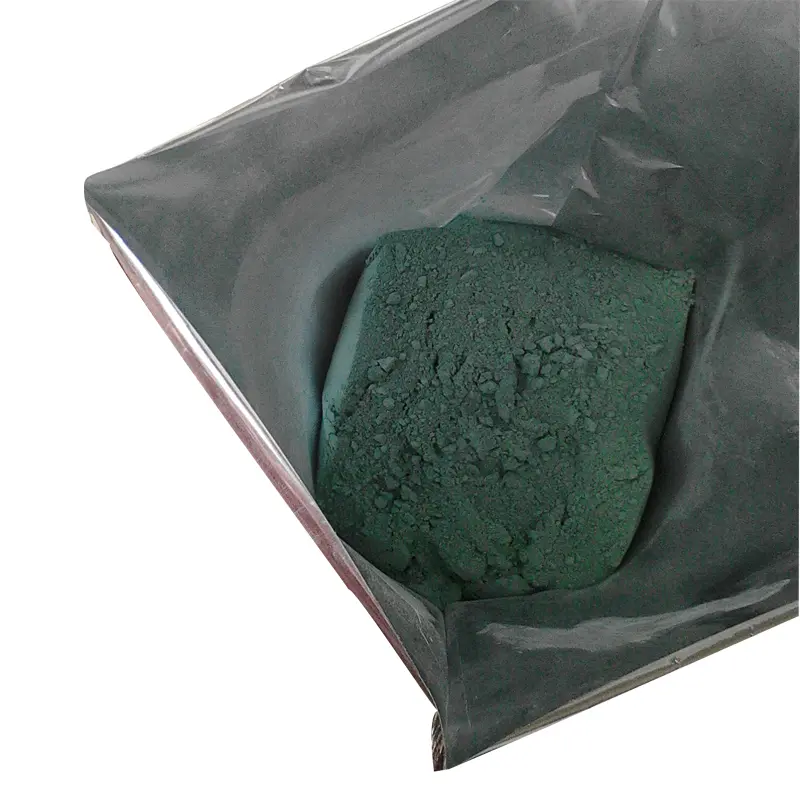
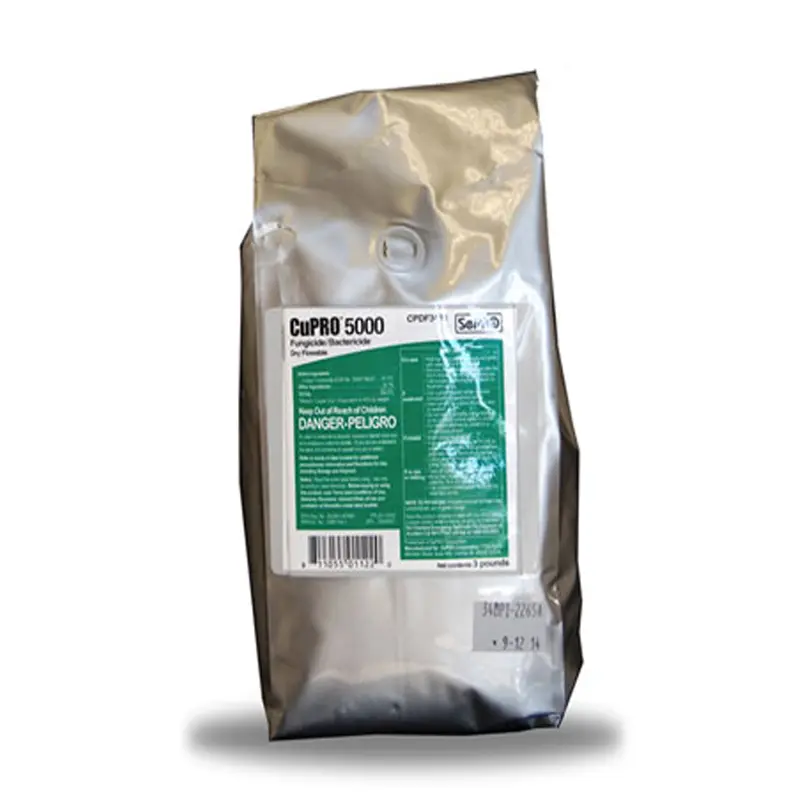
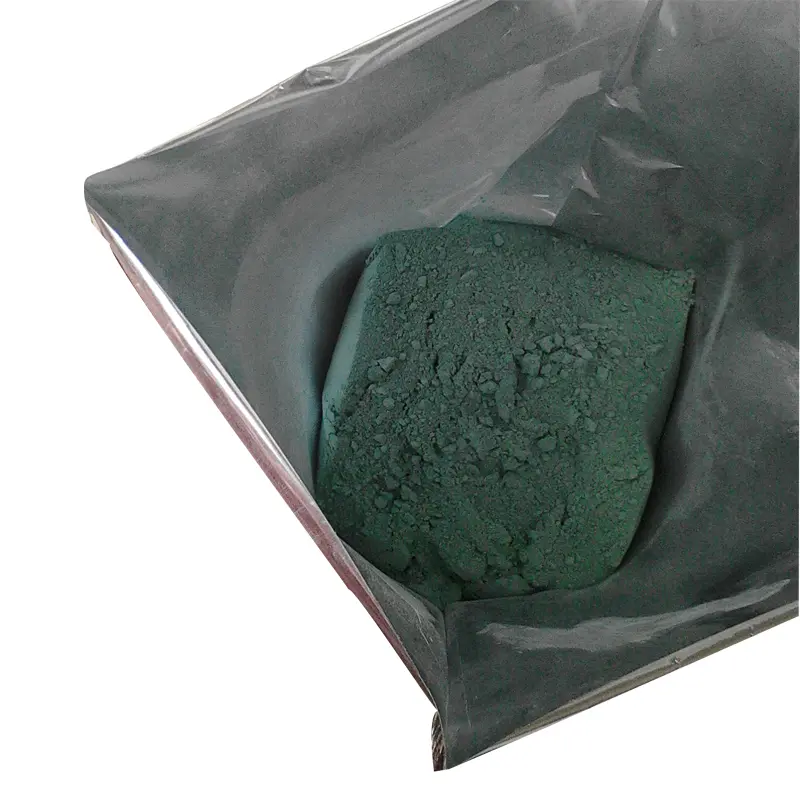
Oral Acute oral LD50 for rats 489 mg/kg (tech.). Skin and eye Acute percutaneous LD50 for rabbits >3160 mg/kg. Severely irritating and corrosive to eyes, mild skin irritant. Inhalation LC50 > 2 mg/l air. Toxicity class WHO (a.i.) III; EPA (formulation) III
Application
Mode of action: Protectant fungicide and bactericide. Deposits must be on the crop before fungal spores begin to germinate.
Uses: For control of Peronosporaceae in vines, hops, and brassicas; Alternaria and Phytophthora in potatoes; Septoria in celery; and Septoria, Leptosphaeria, and Mycosphaerella in cereals, at 2-4 kg/ha or 300-400 g/100 l.
Previous: fungicide Carbendazim 50%SC,50%WP CAS 10605-21-7
Next: fungicide Copper oxychloride 50%WP CAS 1332-40-7
Frequently Asked Questions
Q: What is Copper Hydroxide used for in agriculture?
Copper Hydroxide is a broad-spectrum protectant fungicide and bactericide used to prevent and control various plant diseases such as Peronosporaceae, Alternaria, Phytophthora, and Septoria across a wide variety of crops.
Q: How does Copper Hydroxide function as a protective fungicide?
It works by forming a protective layer over the crop tissue. It must be applied prior to fungal spore germination to effectively inhibit spore development and stop infection before it begins.
Q: What crops can Copper Hydroxide be safely applied to?
It is commonly used on crops such as vines, hops, brassicas, potatoes, celery, and cereals.
Q: What are the main available specifications for Copper Hydroxide?
The typical specifications available include 97% TC (Technical Grade), 77% WP (Wettable Powder), and 50% WP (Wettable Powder).
Q: What is the recommended application dosage rate?
The general application rate is 2–4 kg/ha or 300–400 g per 100 liters of water, depending on the specific target crop and disease pressure.
Q: What are the toxicity and safety considerations for Copper Hydroxide?
It is classified as WHO Toxicity Class III (slightly hazardous). It has an acute oral LD50 for rats of 489 mg/kg. It is mildly irritating to skin and can be severely irritating or corrosive to eyes, so appropriate protective gear should be worn during handling.
 Awiner Biotech