Post-harvest fruit loss accounts for 25% to 45% of total agricultural yield globally, with fungal rot species such as Botrytis cinerea, Penicillium digitatum, Monilinia fructicola, and Colletotrichum gloeosporioides representing the primary cause of economic damage during storage, transit, and distribution.
Fungal spores often infect fruit during the pre-harvest flowering and fruit-set stages, remaining dormant inside the cuticle until post-harvest ripening weakens cell walls. Traditional cold-chain logistics lower metabolic respiration but cannot eliminate psychrotolerant fungal pathogens like Penicillium expansum. Without targeted post-harvest fungicide protocols, rapid latent infection outbreaks frequently destroy entire container shipments during intercontinental transport.
China has evolved into the central production hub for high-purity fungicide Technical Grade Active Ingredients (TC) and advanced formulations (SC, WDG, EC, WP). Chinese agrochemical facilities provide global fruit packers, chemical distributors, and agricultural enterprises with end-to-end access to complex active chemistries—such as Captan, Fluopyram, Pyraclostrobin, Tebuconazole, and Copper complexes—offering unprecedented synthesis precision and cost efficiency.
Selecting the correct active ingredient requires a precise understanding of the pathogen species, resistance risks (FRAC grouping), and post-harvest residue limits (MRLs). Below is a comprehensive analysis of leading post-harvest active chemistries engineered by Chinese factories.
| Active Ingredient | FRAC Code & Mechanism | Target Pathogens | Primary Crop Applications | Key Advantage |
|---|---|---|---|---|
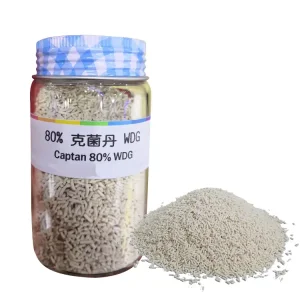
| Captan 80% WDG | FRAC M04 (Multi-site Contact) | Botrytis, Penicillium, Anthracnose | Apples, Pears, Strawberries, Stone Fruit | Zero resistance risk; excellent tank-mix partner. |
| Fluopyram 41.7% SC | FRAC 7 (SDHI Inhibitor) | Sclerotinia, Monilinia, Gray Mold | Grapes, Peaches, Cherries, Tree Nuts | Translaminar activity; high efficacy at low doses. |
| Pyraclostrobin + Tebuconazole | FRAC 11 (QoI) + FRAC 3 (DMI) | Wide spectrum rot, Alternaria, Stem-end rot | Citrus, Mangoes, Pome Fruit, Grapes | Dual-action curative & protective anti-spores. |
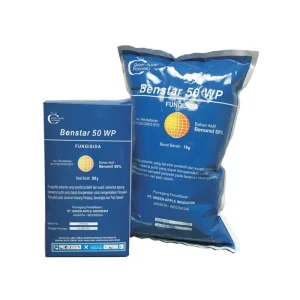
| Benomyl 50% WP | FRAC 1 (β-tubulin Polymerization) | Diplodia rot, Crown rot, Green Mold | Bananas, Citrus, Mangos, Papaya | Deep systemic penetration into fruit vascular tissue. |
| Copper Hydroxide 77% WP | FRAC M01 (Multi-site Inorganic) | Bacterial soft rot, Anthracnose, Canker | Citrus, Avocadoes, Tropical Fruits | Broad-spectrum organic protection; wash-off resistance. |
| Copper Metalaxyl 6% | FRAC M01 + FRAC 4 (RNA Polymerase) | Phytophthora Brown Rot, Downy Mildew | Citrus, Mangoes, Vegetables | Combines systemic oomycete protection with copper shield. |
Repeated single-site fungicide applications (such as single-use DMI or QoI classes) increase selection pressure on pathogen strains like Botrytis cinerea. Chinese formulation factories mitigate this by engineering multi-site combination products (e.g., Pyraclostrobin + Tebuconazole WDG or Captan tank-mixes), ensuring biochemical barriers remain intact across multi-week storage cycles.
China’s chemical manufacturing infrastructure has undergone a technological transformation, combining fully automated continuous synthesis with stringent environmental compliance (ZLD - Zero Liquid Discharge).
Chinese chemical industrial parks maintain direct pipeline access to key intermediate precursors (such as 2-Cyanophenol, Triazole intermediates, and Chloronitrobenzene). This vertical integration protects global supply contracts from raw material price spikes and guarantees continuous production capacity during demand peaks.
Modern Chinese formulation facilities utilize fluidized bed jet-milling technology to achieve sub-micron particle distributions in Water Dispersible Granules (WDG) and Suspension Concentrates (SC). Finer particle sizing improves active chemical suspension stability in packing-house dip tanks and spray lines.
Every batch manufactured in leading Chinese facilities undergoes rigorous High-Performance Liquid Chromatography (HPLC) and Gas Chromatography-Mass Spectrometry (GC-MS) testing to verify active ingredient concentration, moisture content, pH stability, and suspension rate before export release.
International trade in fresh produce depends heavily on meeting strict Maximum Residue Limits established by import regions, including the European Union (EFSA), United States (US EPA), Codex Alimentarius, and Japan (MHLW).
China’s crop protection manufacturing partners collaborate with global growers to structure exact Pre-Harvest Intervals (PHI). Formulations such as Fluopyram 41.7% SC or Captan 80% WDG feature precisely defined breakdown kinetics to ensure chemical residues drop below maximum allowed parts-per-million (PPM) thresholds prior to harvest.
Direct post-harvest treatments—such as thermal fogging, fruit dipping, and micro-wax emulsion spraying—require low-toxicity active profiles. Leading Chinese factories manufacture specialized, highly refined fungicide formulations engineered for rapid dispersion and uniform surface coating without fruit skin discoloration.
Tailored application strategies engineered for commercial fruit processing centers, cold-storage facilities, and long-distance maritime shipping routes.
Primary Pathogens: Penicillium digitatum (Green Mold), Penicillium italicum (Blue Mold), Phomopsis stem-end rot.
Recommended Strategy: Post-harvest dip tank treatment using Pyraclostrobin + Tebuconazole WDG or Benomyl 50% WP combined with food-grade storage wax. Prevents spore germination through stem wounds sustained during harvesting.
Primary Pathogens: Penicillium expansum (Blue Mold), Botrytis cinerea (Gray Mold), Neofabraea (Bull’s-eye rot).
Recommended Strategy: Pre-harvest application 7-14 days prior to picking with Captan 80% WDG or Fluopyram 41.7% SC. Suppresses latent spore infections before fruit enters long-term Controlled Atmosphere (CA) storage rooms.
Primary Pathogens: Colletotrichum gloeosporioides (Anthracnose), Lasiodiplodia theobromae (Stem-end rot).
Recommended Strategy: Hot-water dip treatment supplemented with Copper Hydroxide 77% WP or Copper Metalaxyl 6% to eradicate surface fungi and systemic fungal mycelium in the fruit skin.
Founded in 2006, Awiner Biotech is located in northern China—Shijiazhuang, Hebei Province, near Beijing. Backed by excellent transportation links and robust industrial infrastructure, Awiner Biotech is committed to researching, manufacturing, and distributing high-grade agrochemicals globally.
Our operational scope spans plant protection products including systemic and contact fungicides, broad-spectrum herbicides, targeted insecticides, advanced plant growth regulators (PGRs), and public health pest control solutions.
Up to now, Awiner Biotech has established long-term business partnerships with agricultural leaders, importers, and distributors across more than 30 countries and regions:
Iraq, Iran, Afghanistan, Pakistan, India, Libya, Syria, Turkey, Yemen, Ukraine, Russia, Kazakhstan, Uzbekistan, Chile, Bolivia, Mexico, Brazil, Paraguay, Nigeria, Djibouti, Rwanda, Somalia, Malaysia, Cambodia, Nepal, Myanmar, and beyond.
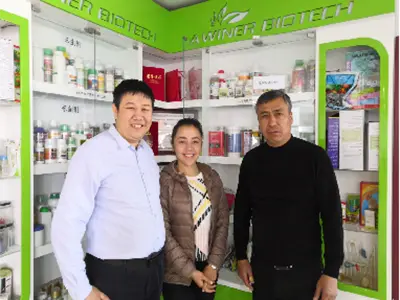
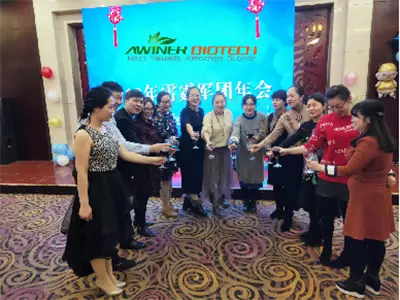
We regularly participate in premier international agrochemical expos across Turkey, Russia, Pakistan, Nigeria, Uzbekistan, Cambodia, Malaysia, and Iran to showcase new chemical synthesis developments.
Our agronomic technical teams regularly visit client operations worldwide to perform localized crop market inspections, analyze fungal resistance profiles, and optimize application protocols on-site.
We provide comprehensive FAO-standard GLP dossier support, ICAMA data verification, and toxicological documentation to facilitate fast product registration for regional partners.
International agrochemical buyers must evaluate key technical parameters when selecting manufacturing partners in China to maintain batch-to-batch consistency and supply reliability.
Insist on HPLC chromatograms for active content verification and CIPAC testing methods for emulsion/suspension stability.
Utilize fluorinated bottles or multi-layer COEX containers to prevent solvent degradation and container collapsing during ocean freight.
Align ordering cycles with seasonal harvest windows, maintaining a minimum 45-day lead time for synthesis, formulation, and customs clearance.
Ensure batches comply with destination MRLs, FAO specification guidelines, and local environmental safety mandates.
Expert answers to common questions regarding post-harvest fungicide formulation, application, compliance, and factory procurement.
 Awiner Biotech