Premium Agrochemical Solutions Available for High-Volume B2B Export and Custom Manufacturing
Analyzing macroeconomic pressures, lepidopteran pest outbreaks, and global supply chain sourcing from China
The global cultivation of Brassicaceae crops—encompassing head cabbage, broccoli, cauliflower, kale, and Brussels sprouts—represents a multi-billion-dollar segment of world agriculture. However, economic yields face escalating threats from lepidopteran insect complexes, primarily led by the Imported Cabbage Worm (Pieris rapae), the Diamondback Moth (Plutella xylostella), and the Cabbage Looper (Trichoplusia ni). Unchecked infestations cause severe skeletonization of foliage, head contamination, complete crop loss, and compromised marketability across commercial supply chains.
In modern agricultural economics, securing competitive, high-efficacy insecticide solutions is not merely an operational necessity; it is a critical strategic advantage for agrochemical distributors, commercial farms, and regional pesticide importers. China's chemical synthesis and formulation ecosystem has evolved into the cornerstone of global crop protection manufacturing. By combining advanced chemical synthesis infrastructure, vertical integration of technical raw materials (TC), and stringent international quality standards, China-based manufacturers provide global buyers with unmatched price-performance ratios and supply chain reliability.
Lepidopteran larvae can devour up to 90% of plant leaf mass during early vegetative stages. Advanced chemical treatments ensure full canopy preservation and optimal head density.
Sourcing direct quotes from primary Chinese manufacturers reduces procurement costs by 25-40% compared to Western regional re-packers without sacrificing formulation purity.
Deploying targeted multi-site and systemic mode-of-action (MoA) rotations prevents rapid field resistance development in intensive brassica-growing zones.
Technical evaluation of active ingredients, IRAC classifications, and state-of-the-art delivery mechanisms
Effective control of Pieris rapae and associated brassica pests requires a deep agronomic understanding of Insecticide Resistance Action Committee (IRAC) classifications. Continuous, single-compound application inevitably triggers metabolic and target-site resistance. Chinese chemical engineers and formulation scientists have mastered multi-compound synergies and high-potency active ingredient (AI) processing to break resistance cycles.
| Active Ingredient / Combination | IRAC Group | Primary Mode of Action | Key Formulation Types | Agronomic Benefits |
|---|---|---|---|---|
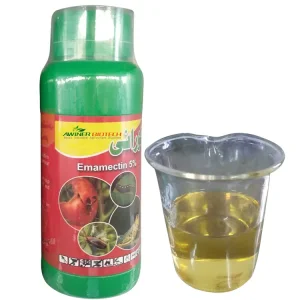
| Emamectin Benzoate | Group 6 | Glutamate-gated chloride channel allosteric modulators | 5% WDG, 30% WDG, 2% EC, 5% SG | Rapid paralytic action, excellent translaminar movement, low dosage, environmentally soft on beneficials. |
| Chlorfenapyr | Group 13 | Uncouplers of oxidative phosphorylation via disruption of proton gradient | 360g/L SC, 240g/L SC, 10% SC | Pro-insecticide activation; zero cross-resistance with pyrethroids/organophosphates; stellar knock-down. |
| Bifenthrin & Pyrethroids | Group 3A | Sodium channel modulators causing repetitive nerve firing | 2.5% EC, 10% EC, 25% SC, 97% TC | Broad-spectrum contact and stomach poison; excellent residual barrier effect on leaf surfaces. |
| Dinotefuran + Imidacloprid | Group 4A | Nicotinic acetylcholine receptor (nAChR) competitive modulators | 30% WP, 20% SC, 70% WDG | Dual systemic action; controls co-existing sucking pests (aphids, whiteflies) alongside early-instar larvae. |
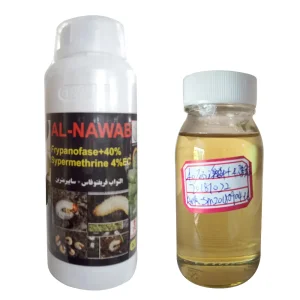
| Profenofos + Cypermethrin | Group 1B + 3A | Acetylcholinesterase (AChE) inhibitors + Sodium channel modulators | 44% EC (40+4), 50% EC | Strong knockdown tank-mix classic; vapor phase activity penetrates dense cabbage leaves. |
The efficacy of an insecticide depends heavily on its physical delivery system. Chinese manufacturing facilities utilize sophisticated milling and dry-granulation technology to optimize droplet retention, rainfastness, and leaf adhesion:
Leveraging state-of-the-art Chinese chemical synthesis and worldwide export compliance
Integrated chemical synthesis, customized formulation packaging, and global regulatory support
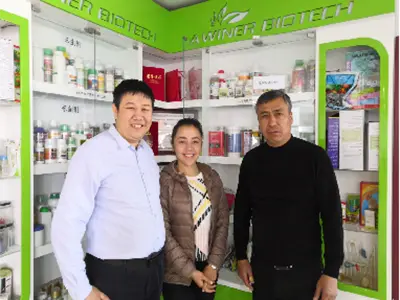
Awiner Biotech was founded in 2006, located in northern China—Shijiazhuang, Hebei Province. The city is close to China's capital, Beijing, benefiting from convenient logistics, raw material access, and international shipping corridors.
Awiner Biotech is committed to research, production, and distribution of high-grade agrochemicals. We specialize in comprehensive crop protection portfolios including insecticides, herbicides, fungicides, plant growth regulators (PGRs), and public health pesticides.
Our Global Market Reach: Up to now, we have secured long-term partnerships and won customers across diverse international territories, including Iraq, Iran, Afghanistan, Pakistan, India, Libya, Syria, Turkey, Yemen, Ukraine, Russia, Kazakhstan, Uzbekistan, Chile, Bolivia, Mexico, Brazil, Paraguay, Nigeria, Djibouti, Rwanda, Somalia, Malaysia, Cambodia, Nepal, Myanmar, and beyond.
We actively visit customer regions to conduct on-site agricultural field inspections, analyze localized pest resistance dynamics, solve specific crop protection challenges, and optimize product usage protocols.
Awiner Biotech maintains a continuous global presence at major international agrochemical trade shows in Turkey, Iran, Pakistan, Nigeria, Russia, Cambodia, Malaysia, Uzbekistan, and other regional agricultural hubs.
Providing complete GLP dossier packages, COA, MSDS, FAO standard compliance documents, and ICAMA registration support for seamless customs clearance and regional licensing.
Optimizing timing, water volume, surface tension, and tank mixing for brassica crop protection
Achieving maximum biological efficacy against Pieris rapae and Plutella xylostella requires precise field execution aligned with cabbage growth stages. Cabbage leaves possess a dense, hydrophobic waxy cuticle (epicuticular wax) that often causes conventional spray droplets to bounce off or bead up, leading to wasted chemical runoff and inadequate pest control.
Scouting must begin immediately after seedling transplanting. Application of systemic or translaminar insecticides—such as Emamectin Benzoate 30% WDG or Chlorfenapyr 360g/L SC—should initiate when egg hatching reaches peak density (1-2 early-instar larvae per plant). Early intervention prevents larvae from boring into developing cabbage heads, where they are protected from contact sprays.
To overcome hydrophobic leaf surfaces, tank mixing with non-ionic organosilicone surfactants is strongly recommended. Organosilicones lower spray solution surface tension below 22 mN/m, producing super-spreading characteristics that allow active ingredients to infiltrate leaf stomata and cover hidden larvae beneath foliage layers.
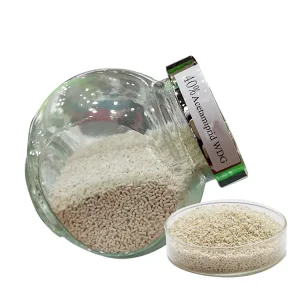
Combining Emamectin Benzoate with Acetamiprid 40% WDG allows simultaneous control of chewers (cabbage worms) and sap-feeders (Brevicoryne brassicae aphids). Combining pyrethroids like Bifenthrin with organophosphates provides both rapid contact kill and long residual repellant action.
Avoid mixing alkaline formulations (e.g., lime sulfur) with organophosphates or pyrethroids as alkaline hydrolysis degrades active ingredients rapidly. Always ensure spray water pH is buffered between 5.5 and 6.5 for optimal active ingredient half-life.
Ensuring formulation integrity from Chinese manufacturing lines to end-user agricultural fields
International shipping of crop protection chemicals demands strict adherence to UN hazardous material packaging standards and long-term chemical degradation prevention. China's top-tier manufacturers enforce end-to-end quality assurance mechanisms across the entire production chain:
Every raw material batch undergoes High-Performance Liquid Chromatography (HPLC) and Gas Chromatography (GC) analysis to verify active ingredient purity and rule out toxic impuritites prior to formulation execution.
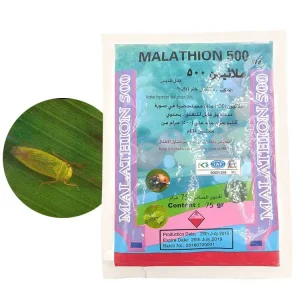
Liquid SC/EC products are packaged in fluorinated HDPE bottles or COEX barrier bottles to prevent solvent permeation. Solid WDG/WP products utilize multi-layer aluminum foil bags with heat-sealed moisture barriers.
Formulations undergo strict 14-day accelerated heat storage tests at 54°C and cold storage tests at 0°C to guarantee a 2-year shelf life under extreme global climate variations.
Innovations in microencapsulated formulations, bio-insecticide integration, and drone-ready spray technology
As regulatory scrutiny tightens globally and demand for low-residue vegetable production rises, Chinese agrochemical research institutes and B2B manufacturers are advancing next-generation delivery systems:
By enclosing volatile or photo-labile active ingredients inside polymeric micro-capsules, CS formulations provide controlled sustained-release dynamics over 21-28 days. This drastically reduces application frequency and minimizes operator exposure hazards.
With drone spraying adoption accelerating across Asia and Latin America, special anti-evaporation and drift-control anti-rebound surfactants are integrated into liquid SC formulations to ensure precision low-volume coverage.
Direct technical and commercial answers for pesticide importers, distributors, and agrochemical buyers
When field resistance to classical pyrethroids (such as cypermethrin) is observed, we recommend switching immediately to Emamectin Benzoate 30% WDG (IRAC Group 6) or Chlorfenapyr 360g/L SC (IRAC Group 13). These active ingredients possess completely different metabolic breakdown pathways and uncouple oxidative phosphorylation or disrupt chloride channels, bypassing pyrethroid target-site insensitivity.
Standard MOQs for liquid formulations (SC, EC, SL) typically range from 1,000 to 3,000 Liters, depending on packaging size (e.g., 1L bottles vs 200L drums). For solid formulations (WDG, WP), MOQs start around 1,000 kg. Typical production lead time is 15-25 days after artwork approval and COA verification.
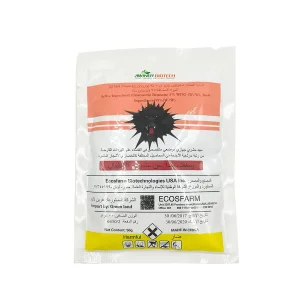
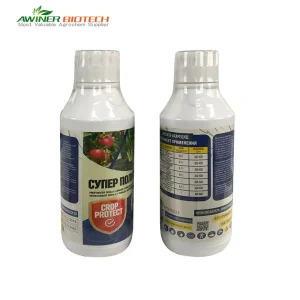
Yes, complete customized private labeling, customized bottle structural molds (HDPE, PET, Fluorinated), and localized multi-language text printing (Arabic, Spanish, Russian, French, English) are standard services for all export orders.
PHI depends on active ingredient volatility and breakdown rates. For example, Emamectin Benzoate formulations typically require a 7-day PHI, whereas Chlorfenapyr requires 14 days. We provide comprehensive MRL (Maximum Residue Limit) guidance documentation based on destination country target requirements.
Explore Extended Formulations for Insect, Weed, and Fungal Pathogen Management
 Awiner Biotech