Enterprise-grade crop protection solutions formulated for rapid knock-down and long-lasting residual control.
Understanding global leafhopper vector migration, economic crop losses, and modern active ingredient engineering.
Leafhoppers (family Cicadellidae) represent one of the most economically devastating plant-feeding Hemipteran insect families across global agricultural ecosystems. Ranging from the Green Rice Leafhopper (Nephotettix cincticeps) and Tea Green Leafhopper (Empoasca onukii) to the Cotton Leafhopper (Amrasca biguttula) and Potato Leafhopper (Empoasca fabae), these polyphagous pests inflict systemic damage on commercial crops. Damage occurs both through direct sap feeding—causing characteristic "hopperburn"—and via their role as vectors for lethal plant pathogens, including phytoplasmas, spiroplasmas, and plant viruses (e.g., Rice Transitory Yellowing Virus, Maize Chlorotic Dwarf Virus).
As global temperatures rise and crop rotation cycles intensify, leafhopper generations are multiplying rapidly per season, extending their geographic boundaries into temperate zones across South America, Central Asia, and Eastern Europe. Consequently, enterprise agricultural operations and bulk chemical distributors are seeking targeted, high-purity insecticide solutions from primary chemical manufacturing hubs like China to maintain crop yields and manage vector transmission risks.
Optimizing neurotoxic site blockage and selective feeding inhibition to break resistance profiles.
Modern leafhopper chemical control relies on targeting specific physiological pathways within the insect nervous and digestive systems. Due to widespread field resistance against older organophosphates and carbamates, primary research and manufacturing in China have shifted toward advanced Neonicotinoids (IRAC Group 4A), Feeding Blockers (IRAC Group 9B/29), and Pyrethroid Co-formulations.
Molecules such as Imidacloprid, Thiamethoxam, and Acetamiprid act as competitive agonists on the nicotinic acetylcholine receptors (nAChR) in the central nervous system of leafhoppers. Upon ingestion or contact, these active ingredients induce rapid nerve hyperexcitation, convulsions, immediate cessation of feeding, and subsequent mortality. Their high systemic acropetal translocation via xylem tissues ensures that newly emerged plant foliage remains protected against piercing-sucking pests.
Active ingredients like Pymetrozine and Flonicamid disrupt the function of chordotonal stretch receptor organs. Within hours of exposure, leafhoppers experience permanent paralysis of their mouthparts (stylet retraction failure), causing them to starve to death without further damaging crop vascular bundles or transmitting viral particles.
Combining systemic neonicotinoids with contact pyrethroids (e.g., Thiamethoxam 141 g/l + Lambda-Cyhalothrin 106 g/l SC) offers a dual-mechanism approach. Lambda-Cyhalothrin provides instant contact knock-down of adult populations on the outer canopy, while Thiamethoxam absorbs into leaf tissues to kill hidden nymphs and maintain long-term systemic control.
| Active Ingredient / Combination | IRAC Class | Primary Mode of Action | Translocation | Target Crops | Residual Activity |
|---|---|---|---|---|---|
| Thiamethoxam 35% FS / 25% WDG | 4A (Neonicotinoid) | nAChR Competitive Agonist | Systemic (Xylem) | Rice, Maize, Cotton, Wheat | 14 - 21 Days |
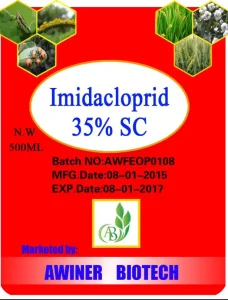
| Imidacloprid 35% SC / 70% WDG | 4A (Neonicotinoid) | nAChR Competitive Agonist | Systemic & Translaminar | Vegetables, Fruit Trees, Tea | 14 - 20 Days |
| Pymetrozine 25% WP / 50% WDG | 9B (Chordotonal Modulator) | Irreversible Stylet Feeding Block | Translaminar Systemic | Paddy Rice, Vegetables | 18 - 25 Days |
| Thiamethoxam + Lambda-Cyhalothrin | 4A + 3A (Neonic + Pyrethroid) | Dual: Receptor Agonist + Sodium Channel Block | Systemic + Contact Knockdown | Soybeans, Corn, Cotton, Fruit | 21 - 28 Days |
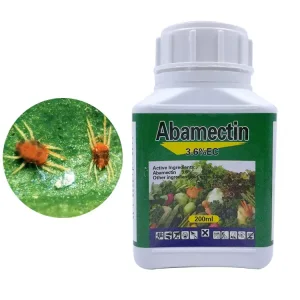
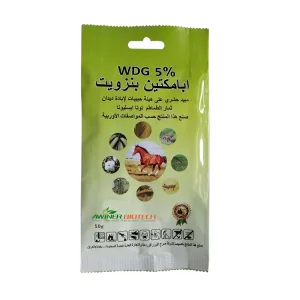
| Abamectin 3.6% EC | 6 (Avermectin) | GABA & Glutamate Chloride Channel Agonist | Translaminar Micro-Systemic | Orchards, Tea, Greenhouse Crops | 7 - 10 Days |
Navigating technical raw materials, advanced formulation engineering, packaging integrity, and international logistics.
China hosts integrated chemical synthesis clusters in Hebei, Jiangsu, and Shandong provinces, providing direct access to essential intermediates such as 2-chloro-5-chloromethylthiazole (CCMT) for Thiamethoxam and 2-chloro-5-chloromethylpyridine (CCMP) for Imidacloprid. This cluster integration guarantees competitive price quotes and stable raw material supply.
Modern global agrochemical markets demand eco-friendly formulations that minimize organic solvents. Leading Chinese exporters utilize suspension concentrates (SC), water dispersible granules (WDG), micro-emulsions (ME), and flowable concentrates for seed treatment (FS) to improve rainfastness, UV stability, and leaf adhesion.
To meet diverse retail and industrial market standards across South America, Africa, and Eurasia, suppliers provide custom packaging solutions—ranging from 100mL fluorinated HDPE bottles to 200L steel drums, complete with multi-lingual label design and tamper-evident induction heat seals.
Qualified manufacturers maintain strict Quality Management Systems under ISO 9001 and ISO 14001, verifying batch purity, active ingredient concentrations, suspension rates, wet sieve retention, and pH stability via High-Performance Liquid Chromatography (HPLC) and Gas Chromatography (GC).
Actionable operational strategies to preserve insecticide efficacy and eliminate resistance selection pressures.
Improper reliance on single chemical classes can quickly select for resistant leafhopper populations harboring target-site mutations (such as the nAChR R81T mutation) or metabolic detoxification enzymes (cytochrome P450 monooxygenases). To secure maximum control efficacy, enterprise growers and agricultural consultants must execute integrated management protocols:
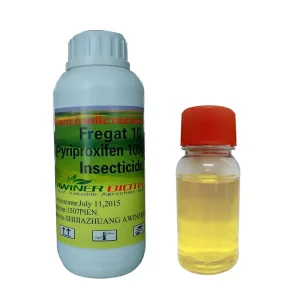
Never apply Neonicotinoids (Group 4A) sequentially over consecutive generations within a single cropping season. Rotate applications with non-cross-resistant chemistries such as Pymetrozine (Group 9B), Abamectin (Group 6), or insect growth regulators like Pyriproxyfen (Group 7C) to break target breeding cycles.
Leafhopper cuticles possess hydrophobic waxy coatings, and crop canopies (especially tea and paddy rice) present dense foliage layers. Incorporating non-ionic silicon adjuvants or methylated seed oils (MSO) reduces spray droplet surface tension, accelerating cuticular penetration and trans-laminar movement into lower leaf undersides where nymphs aggregate.
Navigating global regulatory authorities with full GLP laboratory data, FAO standards, and field trial studies.
Agricultural chemical importation is subject to strict regulatory oversight by national ministries of agriculture (such as MAPA in Brazil, SENASA in Peru, and Ministries of Agriculture across Central Asia and the Middle East). Established suppliers provide complete regulatory documentation to facilitate client registrations, including:
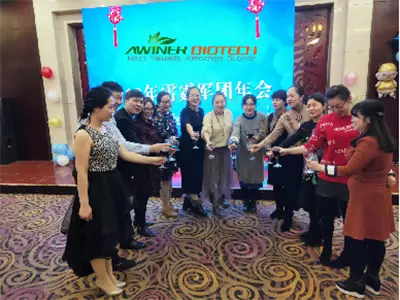
Awiner Biotech was founded in 2006, located in the north of China—Shijiazhuang, Hebei Province. The city is close to our capital Beijing, with convenient transportation connections.
Awiner Biotech is committed to research, production, and distribution of agrochemicals. We mainly deal with high-efficacy pesticides, herbicides, fungicides, plant growth regulators, and public health pesticides.
Up to now, we have won customers from Iraq, Iran, Afghanistan, Pakistan, India, Libya, Syria, Turkey, Yemen, Ukraine, Russia, Kazakhstan, Uzbekistan, Chile, Bolivia, Mexico, Brazil, Paraguay, Nigeria, Djibouti, Rwanda, Somalia, Malaysia, Cambodia, Nepal, Myanmar and so on.
We actively participate in international trade exhibitions in Turkey, Iran, Pakistan, Nigeria, Russia, Cambodia, Malaysia, Uzbekistan, etc.
Our agronomists and technical sales teams conduct direct on-site customer market inspections in destination countries to analyze local field conditions, solve pest resistance problems, optimize product application methods, and host reciprocal factory visits.

Innovative technology pipelines driving sustainable bio-rational control, nano-encapsulation, and digital agriculture.
Polymeric shell microencapsulation technology provides controlled core releases of active ingredients over 30-45 days while shielding volatile molecules from UV photodegradation, reducing application frequencies.
Synthesizing bio-derived peptides and fungal biopesticides (e.g., Beauveria bassiana strains specialized for sap-sucking insects) offering zero-residue control tailored for premium export crops.
Researching double-stranded RNA (dsRNA) sprayables engineered to silence specific essential genes within target leafhopper species without impacting non-target pollinators or beneficial insects.
Addressing core technical, regulatory, and commercial procurement inquiries from commercial partners.
Complete product spectrum including systemic fungicides, plant growth regulators, and public health insecticides.
 Awiner Biotech