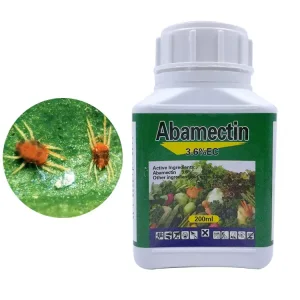
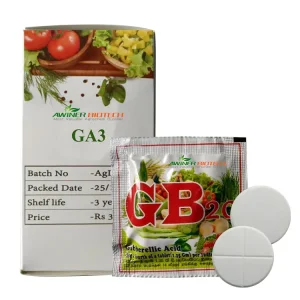
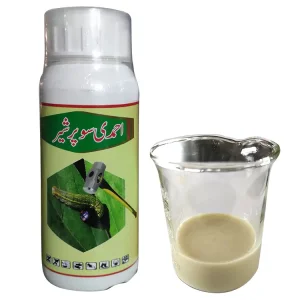
Explore our technical-grade and specialized agrochemical formulations engineered for global agricultural enterprises, crop distributors, and commercial growers.
Spider mites (family Tetranychidae), particularly the Two-Spotted Spider Mite (Tetranychus urticae) and Citrus Red Mite (Panonychus citri), represent one of the most destructive agricultural pest threats across global crop production systems. Understanding supply chain dynamics and formulation technology is essential for international agrochemical buyers.
Spider mites cause rapid cell-piercing tissue disruption in economic crops such as cotton, citrus, apples, tomatoes, grapes, and ornamentals. Foliar feeding strips chloroplastic cell contents, leading to bronzing, stippling, defoliation, and up to 80% loss in commercial crop yield if untreated.
Due to high fecundity (females lay up to 100+ eggs) and arrhenotokous parthenogenetic reproduction, mite populations develop metabolic detoxification mechanisms and target-site mutations faster than almost any other agricultural pest. Cross-resistance management requires strategic chemical rotation.
China serves as the foundational chemical manufacturing epicenter for technical active ingredients (TC) and advanced formulations (SC, WDG, EC, ME). Strategic bulk procurement from specialized Chinese chemical hubs provides high-potency pest control solutions at competitive price points.
To prevent field resistance failure, commercial crop protection programs must rotate active ingredients according to the Insecticide Resistance Action Committee (IRAC) framework. Below is a structural matrix of primary active chemical classes for spider mite eradication.
| Active Ingredient (AI) | IRAC Group | Primary Target Stage | Mechanism of Action | Translaminar / Systemic Activity |
|---|---|---|---|---|
| Abamectin | Group 6 | Nymphs, Adults | Allosteric modulator of glutamate-gated chloride channels (GluCl) causing paralysis. | High Translaminar Movement |
| Bifenazate | Group 20D | All Motile Stages (Eggs partial) | Mitochondrial complex III electron transport inhibitor. Rapid knock-down effect. | Contact / Non-systemic |
| Spirodiclofen | Group 23 | Eggs, Larvae, Nymphs | Inhibitor of acetyl CoA carboxylase (Lipid synthesis inhibition). Prevents molting. | Strong Ovicidal Contact |
| Etoxazole | Group 10B | Eggs, Early Larval Stages | Chitin biosynthesis inhibitor. Disrupts cuticle formation during molting cycles. | Translaminar Ovicides |
| Pyridaben / Fenpyroximate | Group 21A | All Life Stages | Mitochondrial complex I electron transport inhibitor (METI). Fast knockdown. | Contact Activity |
Single-active applications are prone to high selection pressure. Modern agrochemical formulations engineered in China combine ovicidal active ingredients (e.g., Etoxazole or Spirodiclofen) with adulticidal contact knockdown actives (e.g., Abamectin, Bifenazate, or Pyridaben) to achieve 100% stage-spectrum eradication in a single spray window.
Navigating the bulk agrochemical market from China requires understanding key commercial parameters, pricing structures, minimum order quantities (MOQ), and shipping specifications.
Global buyers can procure raw Technical Grade (95%+ TC) active ingredients for local repacking or finished commercial formulations including Suspension Concentrates (SC), Emulsifiable Concentrates (EC), Microemulsions (ME), and Water Dispersible Granules (WDG/DF). Modern water-based SC and WDG formulations avoid toxic organic solvents, complying with strict EU and LATAM environmental frameworks.
Quotation prices for Chinese insecticides depend heavily on basic chemical precursors (e.g., phosphorus tricholride, biological fermentation substrate costs for Streptomyces avermitilis, and specialized aromatic solvents). Purchasing at optimal price cycles via factory-direct agreements ensures pricing stability for distributors.
From 200L HDPE/Fluorinated drums for industrial distributors to customized 100ml, 500ml, and 1L high-barrier Co-EX bottles featuring multi-language branding, aluminum foil induction seals, and anti-counterfeiting QR codes, Chinese manufacturers supply comprehensive OEM/ODM packaging options.
As precision agriculture expands globally, crop protection chemicals must be optimized for low-volume application via Unmanned Aerial Vehicles (UAV) and automated boom sprayers.
Traditional EC formulations can degrade rubber spray nozzles and cause phytotoxicity under high temperatures. Advanced SC and ME miticide formulations from China feature particle sizes below 5 microns, ensuring zero nozzle blockage in UAV ultra-low volume (ULV) applications while improving leaf canopy coverage.
Spider mites reside primarily on the abaxial (underside) surface of crop leaves, protected by delicate webbing. Integrating organosilicone spray adjuvants decreases surface tension, accelerating translaminar penetration through thick leaf cuticles to reach hidden mite colonies.
Modern IPM strategies combine selective miticides with predatory mites (e.g., Phytoseiulus persimilis or Neoseiulus californicus). Selective actives like Bifenazate and Spirodiclofen exhibit high toxicity toward spider mites while preserving beneficial predatory insects.
Securing product registration in target market countries is the most critical hurdle for agrochemical importers. Premium Chinese manufacturers offer complete regulatory support portfolios.
Full support for ministry registrations, including ICAMA (Institute for the Control of Agrochemicals, Ministry of Agriculture) export certificates, Certificate of Analysis (COA), Certificate of Origin (COO), and SDS/MSDS compliant with GHS standards.
Access to Good Laboratory Practice (GLP) toxicology, eco-toxicology, and 5-batch analysis reports conducted according to FAO/WHO specifications to streamline local registration approval timelines in Europe, Asia, and the Americas.
Every commercial production batch undergoes strict High-Performance Liquid Chromatography (HPLC) and Gas Chromatography (GC) analysis to verify active ingredient concentration, suspension stability, particle size distribution, and pH limits.
The global agricultural chemical industry is rapidly evolving toward zero-residue biological solutions, RNA interference (RNAi) biopesticides, and green chemical synthesis.
Target-specific double-stranded RNA (dsRNA) solutions that silence critical metabolic genes in spider mites, offering zero cross-resistance and absolute safety for beneficial organisms.
Integration of natural plant essential oils (e.g., Matrine, Azadirachtin, and terpene blends) with lower concentrations of synthetic miticides to bypass metabolic resistance pathways.
Polymer-encapsulated active ingredients (CS formulations) that slowly release miticide molecules over 30–45 days, dramatically reducing necessary application frequency in orchards.
Awiner Biotech was founded in 2006, located in north of China-Shijiazhuang, Hebei Province. The city is close to our capital Beijing, transportation is convenient. Awiner Biotech is committed to research, produce and distribute agrochemicals, mainly deal with pesticides, herbicides, fungicides, plant growth regulator and public health pesticides.
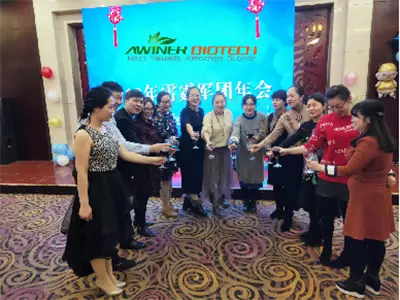
Up to now, we have win customers from Iraq, Iran, Afghanistan, Pakistan, India, Libya, Syria, Turkey, Yemen, Ukraine, Russia, Kazakhstan, Uzbekistan, Chile, Bolivia, Mexico, Brazil, Paraguay, Nigeria, Djibouti, Rwanda, Somalia, Malaysia, Cambodia, Nepal, Myanmar and so on.
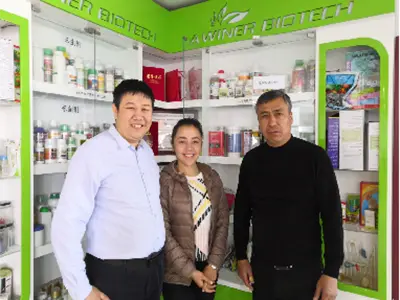
Our countries participating in the exhibition are Turkey, Iran, Pakistan, Nigeria, Russia, Cambodia, Malaysia, Uzbekistan, etc.
We go to the customer's country to conduct market inspections, analyze and solve problems for them, understand their product usage, and customers will also visit us.
Get clear, authoritative answers regarding agrochemical procurement, custom formulations, factory quotes, and global export procedures.
Discover additional high-performance crop protection chemicals, fungicides, herbicides, and pest control solutions available for international procurement.
 Awiner Biotech