Explore our global export-grade crop protection solutions manufactured under strict quality standards in China.
An in-depth technical analysis of 2-isopropoxyphenyl methylcarbamate (MIPC) delivered via pyrotechnic thermal aerosol sublimation for total canopy coverage.
Isoprocarb (CAS No. 2631-40-5) is a fast-acting carbamate insecticide. When formulated into a specialized smoke generator, low-temperature combustion creates a dense thermal aerosol. Active chemical molecules sublime without thermal degradation, achieving micro-particle dispersion ranging between 0.5 to 3.0 microns.
These ultra-fine smoke particles exhibit high Brownian motion, allowing them to penetrate thick foliage, dense greenhouse structures, and crevice shelters where traditional liquid EC/WP sprays cannot reach.
As a selective carbamate, Isoprocarb acts by reversibly inhibiting Acetylcholinesterase (AChE) in insect nervous systems. This leads to rapid accumulation of acetylcholine at synaptic junctions, causing immediate nerve paralysis and knock-down within 15 to 30 minutes of smoke exposure.
It provides exceptionally high activity against sap-sucking pests, specifically leafhoppers (Nephotettix spp.), planthoppers (Nilaparvata lugens), whiteflies (Trialeurodes vaporariorum), and thrips.
Conventional hydraulic spraying adds hundreds of liters of water per hectare into greenhouse environments, elevating relative humidity and accelerating fungal outbreaks like Botrytis cinerea (Gray Mold) and Powdery Mildew.
Isoprocarb smoke agents operate entirely dry. Growers achieve complete insect suppression while maintaining strict environmental humidity control, safeguarding high-value flower, vegetable, and berry crops.
| Specification Parameter | Standard Grade Formulation | Premium Export Grade | Testing Methodology Compliance |
|---|---|---|---|
| Active Ingredient (Isoprocarb Content) | 10.0% - 15.0% w/w | 20.0% - 30.0% w/w (Customable) | HPLC (FAO/WHO Standard Specifications) |
| Smoke Generation Rate | > 98.5% Ignition Efficiency | 99.9% Complete Combustion | Pyrotechnic Thermal Chamber Test |
| Aerosol Particle Diameter | 1.0 – 5.0 µm | 0.5 – 2.5 µm (Micro-Aerosol) | Laser Diffraction Particle Size Analysis |
| Active Retention Post-Combustion | ≥ 92.0% | ≥ 96.5% | Gas Chromatography (Thermal Stability) |
| Ignition Delay / Safety Lead | 5 - 8 seconds fuse delay | 10 - 15 seconds electronic fuse option | Pyrotechnic Safety Protocol Standard |
| Shelf Life & Storage Stability | 2 Years (Cool, Dry Conditions) | 3 Years (Hermetic Aluminum Can packaging) | Accelerated Storage (54°C for 14 Days) |
China's agrochemical industrial infrastructure combines upstream raw material synthesis with advanced pyrotechnic engineering, offering unparalleled cost efficiency and quality control.
China produces over 80% of global Isoprocarb Technical Grade (TC) key precursors, including 2-isopropoxyphenol and methyl isocyanate derivatives. This direct integration eliminates raw material bottlenecks, securing stable supply chains and competitive bulk pricing for global agricultural buyers.
Formulating effective smoke agents requires balancing oxidizers, fuels, and flame retardants to prevent heat-induced breakdown of Isoprocarb. Chinese manufacturers utilize automated high-precision blending technology, ensuring low-temperature (<320°C) steady combustion with zero open flame risks.
From 50g small foil sachets for home greenhouses to 500g heavy-duty metal canisters designed for commercial agricultural complexes and grain silos, Chinese suppliers provide comprehensive OEM private labeling, multi-lingual branding, and hazardous materials export compliance.
Isoprocarb smoke agents provide specialized pest control across diverse high-density crop environments where standard hydraulic applications are inadequate.
High-density vegetable cultivation (tomatoes, cucumbers, peppers) and ornamental floriculture often suffer from rapid pest outbreaks. Applying liquid sprays leads to labor-intensive application, high energy costs for ventilation, and pesticide run-off.
Solution Protocol: Deploy Isoprocarb smoke cans during evening closing hours. The smoke fills the enclosed space within minutes, penetrating under-leaf surfaces and eliminate whiteflies, thrips, and aphids overnight with zero labor-intensive spraying equipment.
Stored agricultural commodities such as rice, wheat, corn, and tobacco are highly vulnerable to stored-product insects (e.g., grain weevils, beetle larvae, and moths). Spraying liquid insecticides directly onto dry grain can cause moisture spoilage and regulatory chemical residue issues.
Solution Protocol: Isoprocarb smoke agents function as non-residual surface and air disinfestants inside sealed warehouses, providing deep-penetrating eradication without elevating grain moisture parameters.
Municipal vector control teams and public health departments require fast-acting knockdown treatments against disease vectors such as mosquitoes (Culex, Aedes), flies, and cockroaches in subterranean drains, sewage tunnels, and transport containers.
Solution Protocol: Thermal smoke generators disperse airborne micro-droplets of Isoprocarb that quickly paralyze flying and crawling pests, reducing vector-borne disease transmission in high-risk zones.
Widespread overuse of Neonicotinoids (Imidacloprid, Acetamiprid) and Synthetic Pyrethroids (Cypermethrin, Deltamethrin) has accelerated pest resistance worldwide among planthoppers and whiteflies.
Solution Protocol: Rotating Isoprocarb (a Class 1A AChE inhibitor carbamate) into Integrated Pest Management (IPM) schedules breaks resistant pest life cycles, restoring field efficacy for growers.
Evaluating technical efficiency, labor expenses, and environmental metrics across modern pest control delivery methods.
| Evaluation Feature | Isoprocarb Smoke Canister / Can | High-Pressure Liquid Spraying (EC/WP) | Ultra-Low Volume (ULV) Cold Fogging |
|---|---|---|---|
| Penetration Depth | Extremely High (360° Gas-like expansion) | Moderate (Requires direct line-of-sight spray) | High (Requires specialized thermal machinery) |
| Labor Input Required | Minimal (Set fuse and vacate room) | High (Multiple operators per hectare) | Moderate (Requires trained equipment operator) |
| Water Resource Consumption | 0 Liters / Hectare | 500 - 1500 Liters / Hectare | 10 - 50 Liters / Hectare |
| Impact on Greenhouse Relative Humidity | Zero Elevation (Prevents fungal outbreaks) | Significant Elevation (+25% to 40% RH) | Slight Elevation |
| Target Pest Knockdown Speed | Immediate (< 30 Minutes) | 2 - 6 Hours | 1 - 3 Hours |
| Equipment Maintenance Costs | Zero Equipment Needed | High (Pumps, nozzles, filters maintenance) | High (Engine & blower maintenance) |
Awiner Biotech was founded in 2006, located in the north of China—Shijiazhuang, Hebei Province. The city is close to our capital Beijing, with convenient transportation networks connecting directly to Tianjin seaport.
Awiner Biotech is committed to research, production, and distribution of premium agrochemicals. We specialize in high-efficacy pesticides, insecticides, herbicides, fungicides, plant growth regulators, and public health pesticides.
With over 18 years of global export experience, state-of-the-art analytical testing laboratories (GLP compliant), and automated pyrotechnic production lines, we provide world-class crop protection solutions tailored to regional climate conditions and regulatory environments.

Up to now, we have won trusted customers from Iraq, Iran, Afghanistan, Pakistan, India, Libya, Syria, Turkey, Yemen, Ukraine, Russia, Kazakhstan, Uzbekistan, Chile, Bolivia, Mexico, Brazil, Paraguay, Nigeria, Djibouti, Rwanda, Somalia, Malaysia, Cambodia, Nepal, Myanmar and so on.
We regularly participate in premier agricultural chemical expos globally. Our exhibition presence includes Turkey, Iran, Pakistan, Nigeria, Russia, Cambodia, Malaysia, Uzbekistan, and other regional agricultural hubs.
We travel directly to our customers' countries to conduct on-site market inspections, analyze pest pressure, solve application challenges, evaluate product performance in local micro-climates, and host client delegations at our factory.
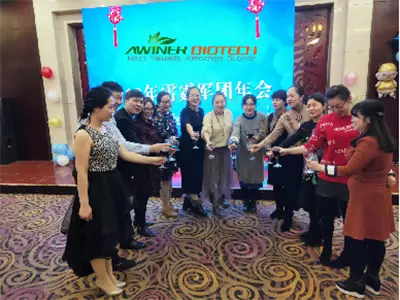
Rigorous multi-stage quality control mechanisms ensuring global compliance, active concentration stability, and seamless ocean transportation.
Every batch of Isoprocarb TC and finished smoke agent undergoes HPLC purity testing, moisture analysis, and particulate distribution checking before export packaging clearance.
Full Class 4.1 / Class 9 Dangerous Goods export certification. We handle UN-rated packaging, MSDS, COA, and customs declarations for smooth transit through major ports.
We provide complete product registration dossiers for agricultural ministries, including toxicity reports, efficacy trial data, stability test summaries, and Certificate of Free Sale (CFS).
Custom active ingredient percentages (e.g., 10%, 15%, 20% Isoprocarb) and combination smoke formulations (e.g., Isoprocarb + Chlorothalonil for dual insect/disease management).
Answers to common commercial, chemical, and operational inquiries from agrochemical distributors and agricultural buyers.
The standard operational dosage is typically 30 to 50 grams of formulation per 100 cubic meters (m³) of enclosed volume, depending on pest density and greenhouse height. For severe planthopper or whitefly infestations, increase to 50–70g per 100m³. Always calculate dosage based on total spatial volume rather than floor surface area alone.
No. Our advanced formulation utilizes low-temperature pyrotechnic fuel matrices with flame-retardant organic cooling agents. The combustion temperature is strictly maintained below 320°C, ensuring over 95% active ingredient retention via clean thermal sublimation without thermal degradation or carbonization.
The facility should remain fully sealed for a minimum of 4 to 6 hours (ideally overnight). After the exposure period, open vents and operate ventilation fans for 30–60 minutes to flush out residual smoke prior to worker re-entry.
When applied at recommended rate limits under non-condensing dry foliage conditions, Isoprocarb smoke exhibits high crop safety across major commercial crops including tomatoes, cucumbers, ornamentals, and leafy greens. Avoid smoke application if foliage is wet or when indoor temperatures exceed 35°C.
The standard Harmonized System Code for Isoprocarb pesticide preparations is HS Code 3808.91. For international maritime shipping (IMDG Code), insecticidal smoke canisters are typically classified under Class 4.1 (Flammable Solids) or Class 9 (Miscellaneous Dangerous Goods) depending on specific pyrotechnic mix composition. Awiner Biotech provides full UN-approved packaging and shipping documentation.
Yes, we specialize in OEM/ODM services for regional distributors. We offer customized tin can printing, outer carton designs, localized language labeling (English, Spanish, French, Arabic, Russian), and flexible package sizes ranging from 50g to 1000g containers.
Discover our comprehensive range of high-performance insecticides, fungicides, and plant growth regulators manufactured for export worldwide.
 Awiner Biotech