High-purity technical concentrates, weatherproof rodent baits, and systemic agricultural formulations manufactured under ISO & FAO international specifications.
Navigating Vector Management, Agricultural Storage Security, and Chemical Innovation in a Complex Regulatory Era
The global rodent control market has escalated into a critical pillar of public health infrastructure, municipal management, and agricultural supply chain security. Valued at over $3.2 billion globally and projected to sustain a Compound Annual Growth Rate (CAGR) of 6.4% through 2030, rodent management is driven by aggressive urbanization, climate-induced breeding cycle accelerations, and strict international sanitation directives such as HACCP (Hazard Analysis Critical Control Point) and ISO 22000 for food production environments.
In municipal and agricultural ecosystems, rodents—primarily Rattus norvegicus (Brown Rat), Rattus rattus (Roof Rat), and Mus musculus (House Mouse)—represent a dual threat. Pathogenically, they serve as biological vectors for over 45 zoonotic diseases, including Leptospirosis, Hantavirus Pulmonary Syndrome, Salmonellosis, and Murine Typhus. Economically, post-harvest losses caused by rodent consumption and contamination range between 5% to 15% of total annual global grain yields, representing millions of metric tons of compromised food supply.
Sourcing high-performance "Mouse Killer" (Rodenticide) formulations requires analyzing active ingredient (AI) synthesis purity, palatability matrices, humidity resistance coefficients, and secondary toxicity mitigation profiles. Partnering directly with established China suppliers offers structural advantages in raw material availability, cost optimization, and scalable custom formulation synthesis.
China has established itself as the world's primary manufacturing hub for rodenticide Active Ingredients (AIs) and finished bait formulations. The domestic chemical infrastructure supports full vertical integration—from basic petrochemical cracking to the synthesis of complex organic intermediates such as 4-hydroxycoumarin derivatives. This integration allows chemical synthesis facilities in provinces like Hebei, Shandong, and Jiangsu to offer unmatched stability in global bulk chemical distribution, enabling international distributors and Pest Control Operators (PCOs) to maintain stable procurement channels under volatile market conditions.
Detailed analysis of chemical modes of action, lethal dose metrics, and environmental stability parameters.
Formulated around potent hydroxycoumarin derivatives like Brodifacoum (CAS 56073-10-0) and Bromadiolone (CAS 28772-56-7). SGARs inhibit the vitamin K1 epoxide reductase (VKOR) enzyme, preventing blood clotting factor synthesis. A single feeding dose is typically sufficient to induce mortality within 3 to 7 days, preventing bait shyness.
Includes compounds such as Zinc Phosphide (fast-acting phosphine gas release in stomach acid) and Cholecalciferol (Vitamin D3, inducing hypercalcemia). These options are engineered for immediate population knockdown or targeting populations exhibiting resistance to standard anticoagulants.
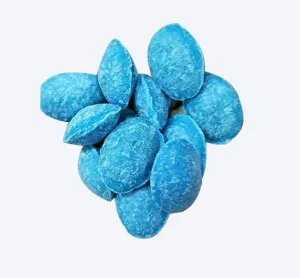
Modern mouse killer blocks utilize food-grade paraffin waxes, microencapsulated AIs, and olfactory attractants. These paraffin block and soft gel formulations prevent degradation from high humidity, mold, and extreme temperatures in tropical agricultural or underground sewer environments.
| Active Ingredient | Chemical Class | Oral LD50 (Rat - mg/kg) | Target Concentration | Primary Application Environment | Antidote / Treatment |
|---|---|---|---|---|---|
| Brodifacoum | 4-Hydroxycoumarin (SGAR) | 0.27 mg/kg | 0.005% (50 ppm) | Municipal, Industrial, High-Resistance Zones | Vitamin K1 (Phytomenadione) |
| Bromadiolone | 4-Hydroxycoumarin (SGAR) | 1.12 mg/kg | 0.005% (50 ppm) | Agricultural Crops, Warehouses, Residential | Vitamin K1 (Phytomenadione) |
| Difenacoum | 4-Hydroxycoumarin (SGAR) | 1.80 mg/kg | 0.005% (50 ppm) | Urban Sewer Networks, Domestic Rodent Control | Vitamin K1 (Phytomenadione) |
| Zinc Phosphide | Inorganic Phosphide | 45.0 mg/kg | 0.5% - 2.0% | Agricultural Field Knockdown, Orchard Baits | No specific antidote (Symptomatic) |
| Cholecalciferol | Sterol (Vitamin D3) | 42.5 mg/kg | 0.075% (750 ppm) | HACCP Food Processing Facilities, Anti-Resistant | Calcitonin / Saline Hydration |
Awiner Biotech was founded in 2006, located in north of China—Shijiazhuang, Hebei Province. The city is close to our capital Beijing, with convenient transportation access to major shipping ports like Tianjin. Awiner Biotech is committed to research, produce and distribute agrochemicals, mainly dealing with pesticides, herbicides, fungicides, plant growth regulators, and public health pesticides.
Through robust quality assurance protocols and continuous synthesis refinement, Awiner Biotech delivers engineered pest control solutions designed for global environmental conditions.
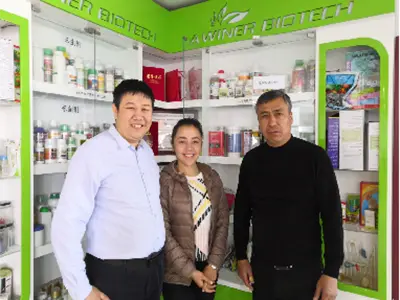
Bridging high-volume industrial synthesis with localized field application insights across continents.
Up to now, we have won customers from Iraq, Iran, Afghanistan, Pakistan, India, Libya, Syria, Turkey, Yemen, Ukraine, Russia, Kazakhstan, Uzbekistan, Chile, Bolivia, Mexico, Brazil, Paraguay, Nigeria, Djibouti, Rwanda, Somalia, Malaysia, Cambodia, Nepal, Myanmar, and beyond.
Our company actively participates in premier agricultural and public health chemical exhibitions globally, including key trade shows in Turkey, Iran, Pakistan, Nigeria, Russia, Cambodia, Malaysia, Uzbekistan, and other regional agricultural hubs.
We conduct on-site market inspections in our customers' home countries to analyze regional pest pressures, evaluate localized bait palatability under varying humidity levels, solve technical application problems, and support client growth.
Tailoring active chemistry and delivery matrices for complex deployment environments.
Grain storage facilities face relentless pressure from Rattus norvegicus. Implementation requires perimeter baiting using weatherproof Bromadiolone 0.005% Wax Blocks placed inside tamper-resistant stations every 10–15 meters. Wax blocks resist moisture buildup from crop respiration, ensuring high palatability over extended periods.
Subterranean environments exhibit high moisture levels, requiring high-density paraffin content. Deploying wire-mounted Brodifacoum 0.005% Wax Blocks directly above high-water flow lines ensures long-term toxic potency without bait erosion or chemical leaching into wastewater streams.
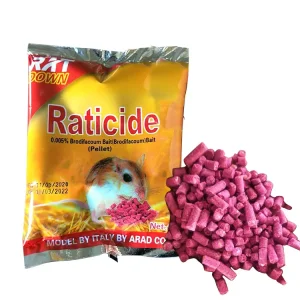
In certified food manufacturing spaces where zero-chemical contamination policies are mandated indoors, non-toxic monitoring matrices are deployed internally. Exterior perimeters utilize Brodifacoum 0.005% Gel Raticide inside secure stations to intercept rodents before facility penetration.
The future of industrial rodent control is defined by precision delivery systems, ecological impact reduction, and resistance mitigation engineering. As regulatory oversight tightens worldwide, synthesis methodologies are evolving to meet rigorous environmental standards.
1. Microencapsulation Technology: Encapsulating active ingredients within polymeric membranes masks chemical taste, increasing bait acceptance among bait-shy rodent populations.
2. Biodegradable Carrier Matrices: Replacing synthetic paraffin wax with renewable bio-lipids reduces long-term microplastic deposition in soil ecosystems.
3. Target-Specific Biomarker Additives: Integrating fluorescence markers allows PCOs to track rodent feeding pathways and map nest locations via UV light inspection.
Expert technical insights regarding mouse killer sourcing, regulatory compliance, formulation selection, and safety protocols.
Explore our full range of public health pesticides, plant growth regulators, and specialized agricultural formulations.
 Awiner Biotech