Premium crop protection solutions, rodent control bait blocks, and vector control products manufactured under strict ISO & FAO/WHO quality standards.
An in-depth guide on chemical synthesis, formulation science, extrusion technology, and global supply chain dynamics for B2B distributors and municipal authorities.
The global demand for high-efficiency rodent management solutions has experienced exponential growth, driven by rapid urbanization, expanding global supply chain logistics, intensifying agricultural storage requirements, and stringent municipal public health mandates. Modern vector control relies heavily on extruded rodenticide wax blocks—commonly known as mouse poison blocks—due to their unparalleled weather resistance, high palatability, structural integrity in humid environments, and long shelf life.
China has established itself as the undisputed primary manufacturing hub for active pharmaceutical ingredients (APIs) and advanced rodenticide block formulations globally. With an integrated chemical manufacturing infrastructure, direct access to premium synthetic anticoagulants (such as Brodifacoum, Bromadiolone, and Diphacinone), and state-of-the-art multi-extrusion processing lines, Chinese manufacturers provide global B2B procurement managers, pest control operators (PCOs), and agrochemical importers with unmatched economic efficiency, scalable production capacity, and rigorous regulatory compliance support.
Formulated with high-melting-point paraffin waxes, keeping blocks structural in extreme humidity, tropical heat, and sub-zero conditions without melting or crumbling.
Incorporates Denatonium Benzoate (Bitrex) at 10-20 ppm, creating an intensely bitter taste to prevent accidental consumption by children, pets, and non-target wildlife.
Engineered with multiple sharp ridges and central mounting holes, leveraging natural rodent gnawing instincts for maximum single-feed or multi-feed bait acceptance.
Mouse poison blocks manufactured in leading Chinese factories like Awiner Biotech utilize second-generation anticoagulant rodenticides (SGARs) engineered for maximum biological efficacy against resistant rodent strains (Rattus norvegicus, Rattus rattus, and Mus musculus).
| Active Ingredient (AI) | Concentration | Action Mechanism | Target Species | Primary Application |
|---|---|---|---|---|
| Brodifacoum | 0.005% (50 ppm) | Single-feed 2nd Gen Anticoagulant | Rattus norvegicus, Mus musculus | High-infestation urban & agricultural areas |
| Bromadiolone | 0.005% (50 ppm) | Potent 2nd Gen Anticoagulant | Roof rats, Norway rats, mice | Residential, commercial warehouses, farms |
| Diphacinone | 0.005% - 0.01% | Multi-feed 1st Gen Anticoagulant | Field mice, voles, domestic rodents | Agricultural crop protection & perimeter baiting |
| Flocoumafen | 0.005% (50 ppm) | Single-feed 2nd Gen Anticoagulant | Resistant rodent populations | Industrial port sanitation & sewer networks |
A superior mouse poison block relies not only on the active chemical agent but on the proprietary carrier matrix:
Global chemical procurement directors choose China for rodenticide manufacturing due to four foundational competitive pillars:
China produces over 70% of the world's chemical precursors for rodenticide active ingredients. Chinese factories benefit from immediate raw material availability, eliminating international supply disruptions and ensuring cost stabilization for high-volume B2B orders.
Modern Chinese manufacturing plants utilize cold-extrusion and hot-extrusion continuous production lines. Cold-extrusion preserves the palatability of heat-sensitive grain aromas while producing ultra-dense, moisture-resistant blocks that do not melt during summer baiting campaigns.
From standard 20g, 28g, and 50g block configurations to specialized hole-through-center blocks for bait station securing, Chinese suppliers offer tailor-made product dimensions. Options include private-label retail pouching, 10kg/20kg bulk industrial drums, tamper-evident boxes, and custom color dyes (e.g., bright blue or green for clear identification).
Leading suppliers such as Awiner Biotech provide global partners with complete registration support documents, including Material Safety Data Sheets (MSDS), Certificates of Analysis (COA), FAO/WHO specification reports, and ICAMA certificates necessary for smooth customs clearance and local pesticide authority registration.
Tailored deployment methodologies across diverse commercial, agricultural, and municipal environments.
Rodents destroy millions of tons of grain annually and vector pathogens to livestock. Wax poison blocks placed along perimeter fences, feed channels, and silo bases deliver reliable control without degrading when exposed to animal slurry or high relative humidity.
Sewer networks present extreme challenges due to high water exposure and dampness. High-wax extruded bait blocks secured by stainless steel wire rods inside manholes remain fully intact and appetizing to sewer rats (Rattus norvegicus) for extended periods.
International maritime trade requires strict vector contamination protocols. Placing tamper-resistant bait boxes equipped with brodifacoum wax blocks along port perimeters and logistics hubs prevents rodent transport via ocean freight containers.
Food manufacturing facilities enforce zero-tolerance pest policies. Utilizing lockable bait stations housing non-fragmenting poison blocks ensures zero contamination of food production lines while eliminating surrounding rodent threats.
Expert answers regarding technical procurement, active concentrations, toxicity profiles, and regulatory compliance.
Brodifacoum is a second-generation anticoagulant capable of causing lethal hemorrhaging after a single feeding. Unlike loose grain baits, wax blocks cannot be easily scattered or hoarded by rodents, ensuring consistent dosage. Furthermore, the wax protects the grain matrix from dampness, mold, and atmospheric oxidation.
For custom private label packaging (custom pouches, printed boxes, or specific block colors), our standard MOQ is typically 1,000 kg (1 Metric Ton). For standard factory packaging, smaller trial shipments can be accommodated to facilitate market evaluation and registration testing.
All our commercial mouse poison blocks contain Denatonium Benzoate (Bitrex)—the world's most bitter substance. Human children and domestic pets (dogs, cats) immediately reject Bitrex-treated baits upon contact with saliva, whereas rodents lack the specific gustatory pathway to perceive it, ensuring uncompromised bait consumption.
Yes, Awiner Biotech maintains a dedicated regulatory compliance department. We provide full dossier packages including Certificate of Analysis (COA), Product Stability Data, Acute Oral/Dermal Toxicity Studies, MSDS, and ISO documentation to facilitate registration with Ministries of Agriculture or Environmental Agencies globally.
When stored in original sealed packaging in a cool, dry, well-ventilated warehouse away from direct sunlight, our mouse poison blocks maintain 100% biological activity and physical stability for up to 3 years from the date of manufacture.
Explore our extended line of technical pesticides, biological insecticides, growth regulators, and rodent traps.
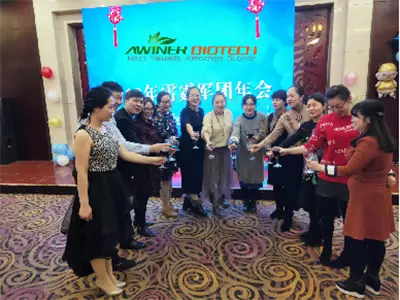
Awiner Biotech was founded in 2006, located in northern China at Shijiazhuang, Hebei Province. Situated close to China's capital, Beijing, our facility enjoys convenient transportation access and robust logistical connections to major export sea ports.
Awiner Biotech is dedicated to the research, synthesis, formulation, and global distribution of agrochemicals. We specialize in high-efficiency pesticides, herbicides, fungicides, plant growth regulators, and public health vector control solutions.
We actively conduct overseas market inspections to analyze local pest pressure, solve technical application challenges, and optimize formulation parameters for local climatic conditions. Furthermore, Awiner Biotech regularly participates in international agricultural exhibitions in countries such as Turkey, Iran, Pakistan, Nigeria, Russia, Cambodia, Malaysia, and Uzbekistan.

 Awiner Biotech