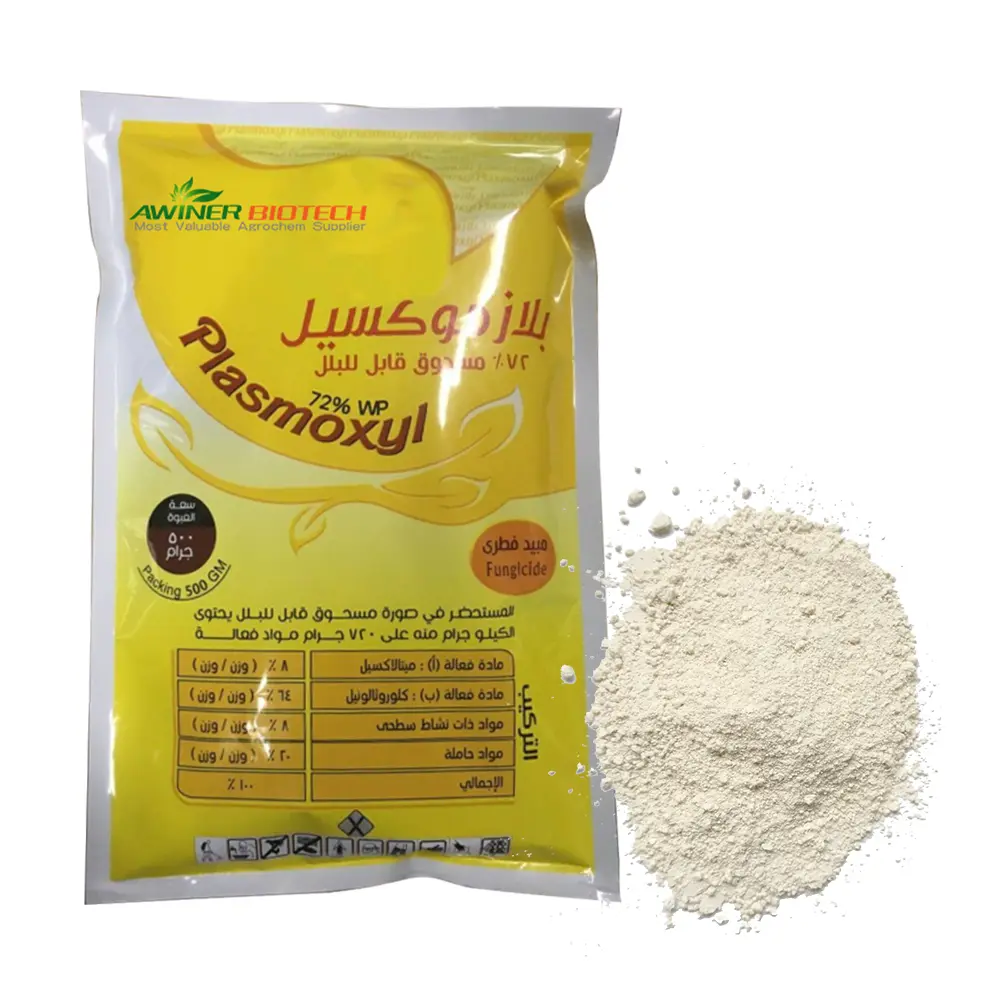
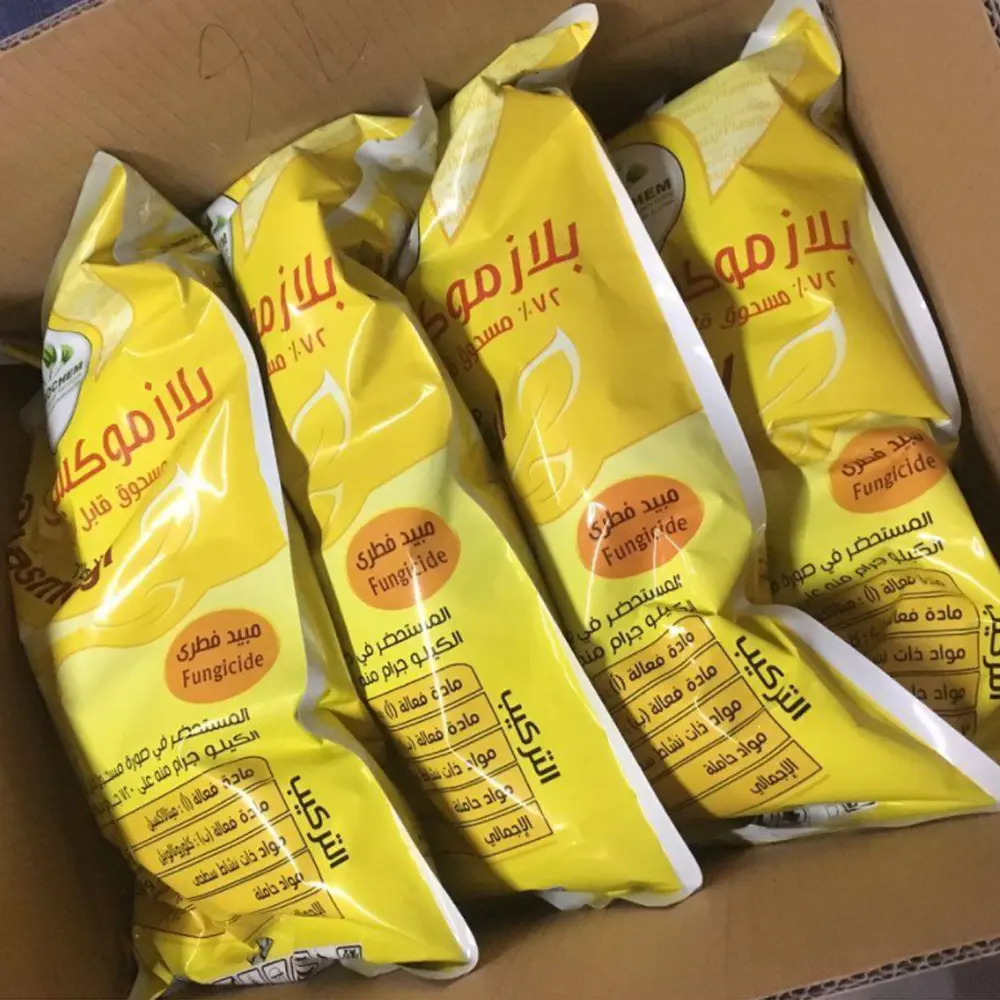
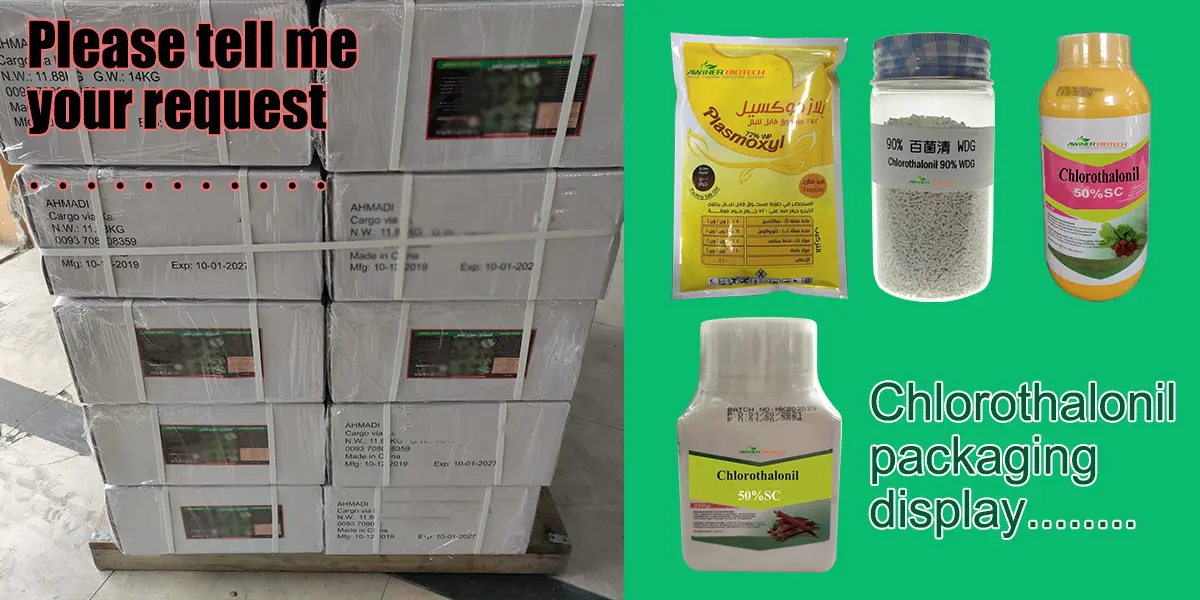
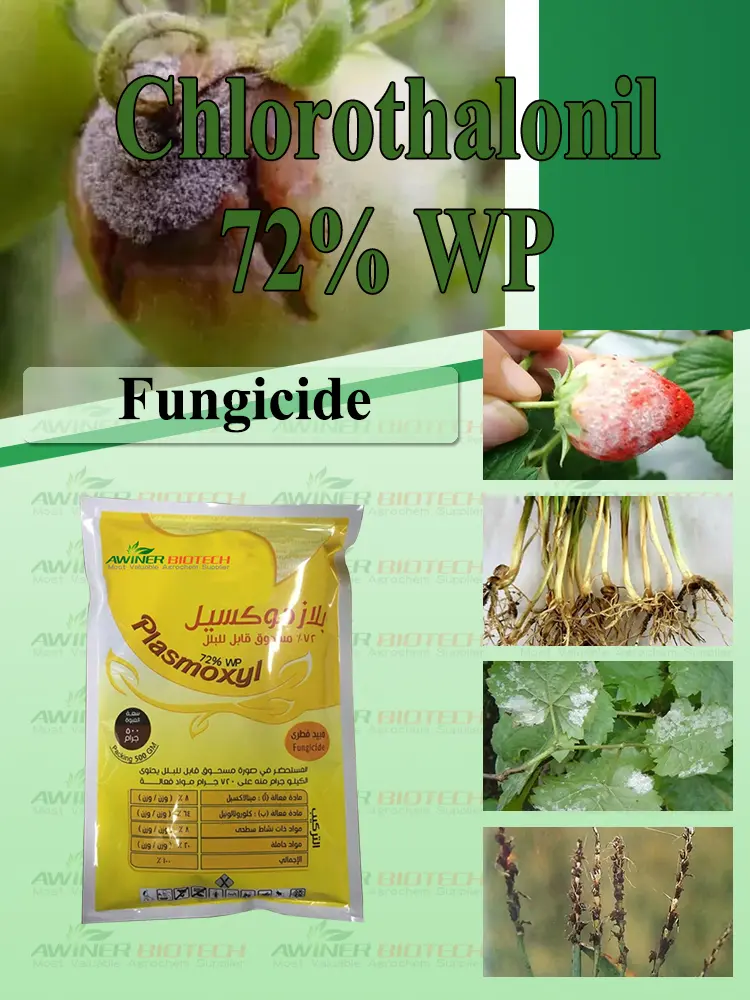
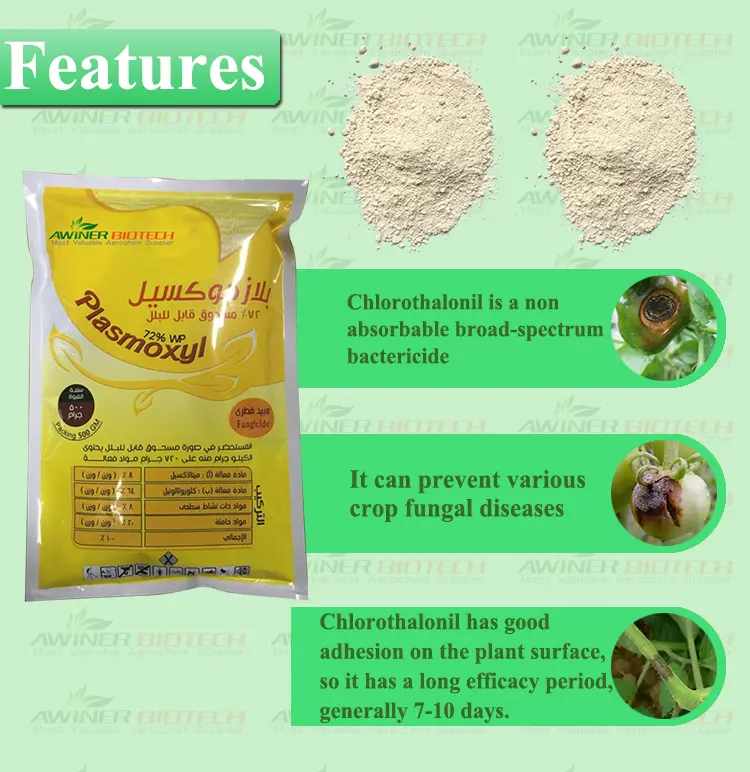
Chlorothalonil can contact With the glyceraldehyde 3 phosphoric acid dehydrogenase of fungal cells, combining with the protein containing cysteine, making the metabolism of fungal cell damage and loss of vitality.
Targets
Downy Mildew, Grey leaf, Blight
Crops
Cucumber, Peanut, Tomato
Main customer benefits
Longer Lasting Control
Consistent Performance
Secures Yield
New Mode of Action
Dosage form
WP, SC
Chlorothalonil Mode of action
Chlorothalonil can contact With the glyceraldehyde 3 phosphoric acid dehydrogenase of fungal cells, combining with the protein containing cysteine, making the metabolism of fungal cell damage and loss of vitality.
Advantage of Chlorothalonil
1. Chlorothalonil is a kind of harmfulless fungicide.
2. Chlorothalonil Have good adhesion, are not easy to be washed away by rain.
3. Longer lasting period.
4. Almost no pollution to the environment.
Frequently Asked Questions (FAQ)
Q: What diseases does Chlorothalonil 72% WP primarily target?
A: Chlorothalonil 72% WP is effective in controlling broad-spectrum fungal diseases including Downy Mildew, Grey Leaf, and Blight across various crops.
Q: Which crops can benefit from Chlorothalonil applications?
A: It is widely used on suitable agricultural crops such as Cucumber, Peanut, and Tomato to secure high yields and crop protection.
Q: How does Chlorothalonil provide longer-lasting control?
A: It features excellent adhesion properties, making it resistant to being washed away by rain and ensuring a extended period of activity on plant foliage.
Q: What are the main dosage forms available for Chlorothalonil?
A: The common dosage forms for Chlorothalonil products include WP (Wettable Powder) and SC (Suspension Concentrate).
Q: Is Chlorothalonil safe for the environment?
A: Yes, Chlorothalonil is considered a harmful-less fungicide option that causes almost no pollution to the environment when used as instructed.
 Awiner Biotech