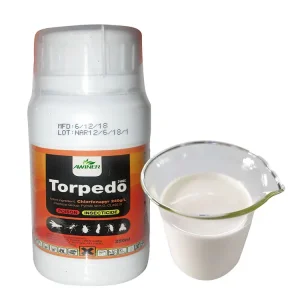
High-performance crop protection chemicals engineered for rapid knockdown, extended residual protection, and minimal environmental resistance impact.
Understanding the stereochemical advantage of active enantiomers in commercial insecticide procurement.
Alpha-cypermethrin is a highly active pyrethroid compound consisting predominantly of two of the eight stereoisomers comprising cypermethrin. Specifically, it contains the (1R-cis)-S and (1S-cis)-R enantiomeric pair. By isolating these specific isomers, technical grade Alpha-Cypermethrin (typically 97% TC minimum purity) delivers up to two to three times higher biological activity per unit mass compared to standard racemic cypermethrin mixtures. This enables lower dosage application rates per hectare, minimizing chemical load in commercial vegetable ecosystems.
Operating primarily as a non-systemic broad-spectrum insecticide with intense contact and stomach activity, Alpha-Cypermethrin target-binds to the voltage-gated sodium channels along the nerve axons of chewing and sucking insects. By delaying the closure of these activation gates, it causes continuous repetitive nerve discharges, rapidly resulting in the loss of motor control, feeding cessation ("knockdown"), paralysis, and ultimate death of susceptible pests within hours of exposure.
| Active Ingredient | Isomeric Composition | Oral LD50 (Rat, mg/kg) | Foliar Persistence (Half-life) | Log Kow (Octanol-Water) | Primary Agronomic Target |
|---|---|---|---|---|---|
| Alpha-Cypermethrin | Cis-isomer pair (1R cis + 1S cis) | ~57 - 500 | 7 - 14 Days | 6.94 (High rainfastness) | Brassica, Solanaceous, Curcurbits |
| Cypermethrin (Racemic) | 8-isomer mix (Cis/Trans 45/55 or 50/50) | ~250 - 4150 | 4 - 8 Days | 6.60 | Broad field crops, Cereals |
| Lambda-Cyhalothrin | Enantiomeric pair of cyhalothrin | ~56 - 79 | 5 - 12 Days | 7.00 | Cotton, Vegetables, Orchards |
| Deltamethrin | Single isomer [(1R,3R)-3- (2,2-dibromovinyl)...] | ~87 - 135 | 6 - 10 Days | 4.60 | Vegetables, Stored Grains |
Market dynamics driving the adoption of high-efficiency synthetic pyrethroids in enterprise vegetable production.
Commercial production of tomatoes, eggplants, and peppers faces constant pressure from destructive larvae including Helicoverpa armigera (Tomato Fruitworm) and Tuta absoluta. Wholesale Alpha-Cypermethrin 10% EC provides economic control of surface feeding and adult moths, preserving foliage integrity and fruit marketability.
Brassica crops (cabbage, broccoli, cauliflower) require rigorous control against Plutella xylostella (Diamondback Moth) and Pieris brassicae. Alpha-Cypermethrin's highlipophilic nature allows it to bind tightly to the waxy leaf cuticle of brassicas, maintaining residual action despite overhead irrigation.
Foliar applications effectively suppress cucumber beetles, leafminers (Liriomyza spp.), and flea beetles on melons, squash, and root vegetables. Rapid repellent effects deter vector insects from transmitting viral pathogens between plants.
Field-tested application parameters tailored for diverse climatic conditions, cropping systems, and regional regulatory frameworks.
| Target Region | Crop Category | Primary Target Pests | Recommended Formulation | Dosage (Active Ingredient / Ha) | PHI (Pre-Harvest Interval) |
|---|---|---|---|---|---|
| Middle East & North Africa (MENA) | Greenhouse & Open Tomato, Pepper | Helicoverpa armigera, Whiteflies (suppression), Thrips | Alpha-Cypermethrin 10% EC / 5% SC | 10 - 15 g a.i./ha | 7 Days |
| Southeast Asia (Tropical High Humidity) | Cabbage, Chinese Kale, Bok Choy | Plutella xylostella, Cabbage Looper, Flea Beetles | Alpha-Cypermethrin 5% WDG / 10% EC + Adjuvant | 12.5 - 20 g a.i./ha | 7 - 10 Days |
| Latin America (Mercosur Zone) | Large-scale Potato & Onion Field Plots | Potato Tuber Moth (Phthorimaea operculella), Thrips tabaci | Alpha-Cypermethrin 10% EC / 20% SC | 15 - 25 g a.i./ha | 14 Days |
| Eastern Europe & Central Asia | Carrot, Beetroot, Cucurbits | Aphids, Cutworms (Agrotis spp.), Leafminers | Alpha-Cypermethrin 10% WP / 5% SC | 10 - 15 g a.i./ha | 7 - 14 Days |
In regions experiencing intense rainfall (e.g., Southeast Asia, Equatorial Africa), foliar wash-off is a primary cause of reduced efficacy. Combining Alpha-Cypermethrin formulations with organosilicone spreaders or synthetic latex stickers enhances cuticle penetration within 30 minutes of spray application, ensuring rainfastness and prolonged residual insect control.
In high-radiation zones (e.g., Middle East, Northern Mexico), ultraviolet degradation can shorten pyrethroid half-life. Utilizing microencapsulated (CS) or Suspension Concentrate (SC) formulations incorporates UV-stabilizing carriers that mitigate photodegradation, extending protective intervals under intense sun exposure.
Next-generation formulation technology designed to combat chemical resistance and elevate environmental safety profiles.
Transitioning from traditional Emulsifiable Concentrates (EC) to Capsule Suspensions (CS). Microencapsulation coats the Alpha-Cypermethrin droplet in a polymeric shell. This ensures controlled release over 21+ days, significantly reduces skin irritation (paresthesia) for spray operators, and drastically lowers aquatic solvent toxicity.
To circumvent target-site mutation resistance (kdr genes) in diamondback moths and thrips, modern commercial strategies combine Alpha-Cypermethrin with complementary active ingredients:
R&D focus has shifted away from xylene-based solvents toward methyl ester vegetable oils and water-based Water Dispersible Granules (WDG/WG). These solvent-free matrices eliminate volatile organic compounds (VOCs), reducing phytotoxicity risks on sensitive crop flowers and young foliage.
Why sourcing technical and formulated Alpha-Cypermethrin from established Chinese manufacturing hubs ensures global cost-competitiveness and continuous supply continuity.
China's agrochemical cluster maintains complete vertical integration—from basic petro-chemical building blocks to critical intermediates such as DV-acid methyl ester and m-phenoxybenzaldehyde (MPBD). This self-contained supply chain insulates global buyers from intermediate shortages, stabilizing multi-ton wholesale quotes for Alpha-Cypermethrin even during global raw material fluctuations.
Leading export synthesis plants operate under strict ISO 9001, ISO 14001, and ISO 45001 accreditations. Every production batch of Alpha-Cypermethrin undergoes rigorous High-Performance Liquid Chromatography (HPLC) testing to confirm isomer ratios, ensuring active enantiomeric purity remains strictly ≥ 97.0% with zero unwanted chemical impurities.
When evaluating commercial quotes for bulk purchases of Alpha Cypermethrin for vegetable crops, international procurement directors should consider:
Awiner Biotech: Delivering world-class crop protection and public health solutions globally since 2006.
Awiner Biotech was founded in 2006, located in north of China—Shijiazhuang, Hebei Province. The city is close to our capital Beijing, transportation is convenient. Awiner Biotech is committed to research, produce and distribute agrochemicals, mainly dealing with pesticides, herbicides, fungicides, plant growth regulators, and public health pesticides.

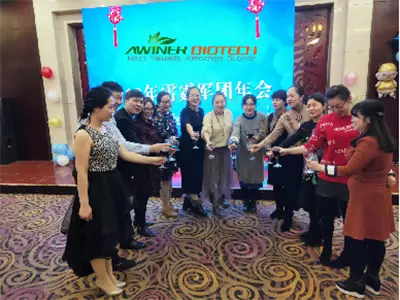
Up to now, we have won customers from Iraq, Iran, Afghanistan, Pakistan, India, Libya, Syria, Turkey, Yemen, Ukraine, Russia, Kazakhstan, Uzbekistan, Chile, Bolivia, Mexico, Brazil, Paraguay, Nigeria, Djibouti, Rwanda, Somalia, Malaysia, Cambodia, Nepal, Myanmar and so on.
We actively participate in international agrochemical trade fairs and industry summits worldwide. Our key exhibition footprints include Turkey, Iran, Pakistan, Nigeria, Russia, Cambodia, Malaysia, Uzbekistan, and many other regional agricultural hubs.
We conduct direct field inspections in our client countries, analyzing and solving localized agronomic challenges on-site. We evaluate real-world product usage and crop efficacy, while frequently hosting international client delegations at our manufacturing facility.
Expert answers to common commercial, chemical, and field execution queries regarding Alpha-Cypermethrin for vegetables.
Alpha-Cypermethrin is an isolated isomer preparation consisting specifically of the most biologically active (cis) stereoisomers. As a result, Alpha-Cypermethrin exhibits approximately 2 to 3 times greater insecticidal potency compared to racemic Cypermethrin. This higher potency allows commercial growers to apply significantly lower active ingredient rates per hectare (typically 10-25 g a.i./ha vs 40-75 g a.i./ha for standard cypermethrin), resulting in improved cost-efficiency, lower environmental residue, and reduced phytotoxicity risk on young vegetable crops.
International agricultural distributors and commercial buyers can request customized wholesale quotes directly through Awiner Biotech's official channels. Quotes are tailored based on requested formulation type (e.g., 10% EC, 5% SC, 10% WP, 5% WDG), target active ingredient purity (e.g., 97% TC), preferred bottle or drum packaging specifications, total order volume, and destination seaport logistics (FOB China ports or CIF/CFR terms). Written commercial quotes are typically provided within 24 to 48 business hours.
The Pre-Harvest Interval (PHI) for Alpha-Cypermethrin varies according to crop type, localized climate, and target country regulatory standards. Generally, for solanaceous crops (tomatoes, peppers, eggplants) and brassicas (cabbage, broccoli), the recommended PHI ranges between 7 to 14 days. For leafy green vegetables with shorter lifecycle rotations, strict adherence to regional MRL (Maximum Residue Limit) guidelines is required. Always consult the official label instructions registered in your local jurisdiction.
Because synthetic pyrethroids share a IRAC Group 3A mode of action (sodium channel modulators), continuous application throughout multiple crop life cycles can accelerate insect target-site resistance (kdr mutations). To maintain maximum field efficacy, Alpha-Cypermethrin should be rotated in chemical rotation programs with alternative mode-of-action insecticides such as Neonicotinoids (IRAC Group 4A, e.g., Acetamiprid, Imidacloprid), Diamides (IRAC Group 28), or Macrocyclic Lactones (IRAC Group 6, e.g., Abamectin). Tank-mixing with metabolic synergists or complementary compounds also helps delay resistance development.
Awiner Biotech provides full regulatory support for registration in destination countries. Documentation includes Certificate of Analysis (COA), Safety Data Sheets (SDS / MSDS), FAO/WHO specification compliance data, CIPAC testing methodology reports, stability trial analytical data, and complete dossier packages for local Ministry of Agriculture product registration.
Explore our extended catalog of technical insecticides, fungicides, herbicides, and public health formulations.
 Awiner Biotech