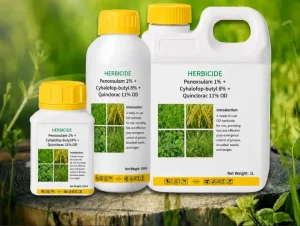
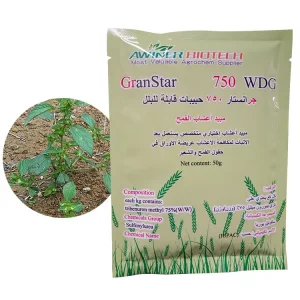
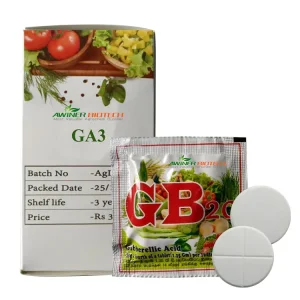
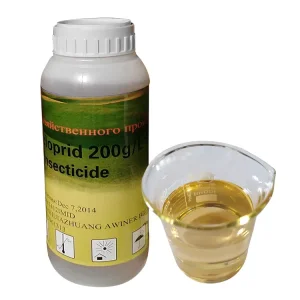
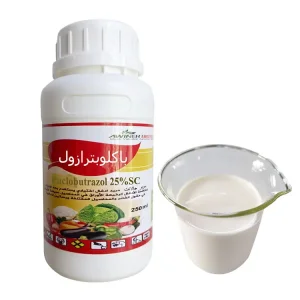
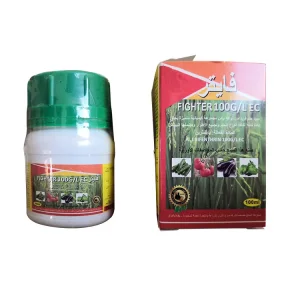
Explore our premium grade insecticides, rodenticides, fungicides, and plant growth regulators designed for global distribution and commercial orchard protection.
Awiner Biotech was founded in 2006, located in the northern chemical industrial hub of China—Shijiazhuang, Hebei Province. Situated in close proximity to the capital city of Beijing, our logistically optimized geographic location allows for efficient international shipping via major ports, ensuring streamlined export supply chains for high-purity active ingredients and finished crop protection formulations.
As a premier industrial pesticide synthesis and technical formulation provider, Awiner Biotech is dedicated to the rigorous research, precision production, and worldwide distribution of agrochemicals. Our comprehensive product portfolio spans high-performance insecticides, selective and non-selective herbicides, systemic fungicides, specialized plant growth regulators (PGRs), and public health pest management solutions.
With an unwavering commitment to E-E-A-T (Experience, Expertise, Authoritativeness, and Trustworthiness) standards, our chemical synthesis laboratories and automatic formulation facilities comply with international FAO/WHO specifications and ISO quality assurance metrics, supplying agricultural enterprise buyers across more than 50 countries.
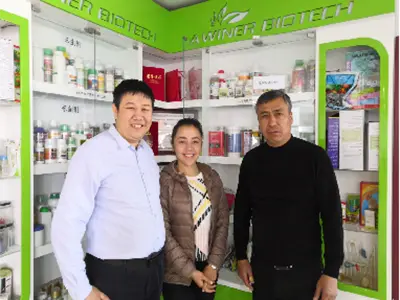
Analyzing key market dynamics, economic threshold parameters, and chemical resistance management challenges in high-density commercial pome fruit production.
Global commercial apple production exceeds 86 million metric tons annually, spanning major agricultural centers across Asia, North America, Europe, and South America. Orchard protection against primary insect vectors represents over $1.4 billion in annual chemical active ingredient procurement, driven by stringent aesthetic and biosecurity standards required for international export grade fruit.
Apple orchards are vulnerable to economic infestations from Codling Moth (Cydia pomonella), Rosy Apple Aphid (Dysaphis plantaginea), San Jose Scale (Quadraspidiotus perniciosus), and European Red Mite (Panonychus ulmi). Uncontrolled populations lead to internal fruit tunneling, leaf curling, tree devitalization, and complete crop loss in high-density orchards.
Continuous overuse of single-mode Organophosphates and Pyrethroids has accelerated pest resistance worldwide. Modern commercial production requires multi-site Mode of Action (MoA) rotations leveraging Avermectins (Emamectin Benzoate), Neonicotinoids (Imidacloprid), Synthetic Pyrethroids (Bifenthrin, Lambda-Cyhalothrin), and Insect Growth Regulators (IGRs).
Comprehensive overview of high-efficiency active ingredients, Mode of Action (MoA) IRAC classification, and advanced chemical delivery platforms optimized for pome fruit application.
| Active Ingredient / Combination | IRAC MoA Group | Primary Target Pests | Formulation Type | Key Agronomic Advantages |
|---|---|---|---|---|
| Emamectin Benzoate (5% WDG / 2% EC) | Group 6 (Glutamate-gated chloride channel allosteric modulators) | Codling Moth larvae, Leafrollers, Caterpillars | WDG / EC | Translaminar activity, rapid feeding cessation, low residue risk when applied at petal fall. |
| Imidacloprid (20% SL) | Group 4A (Nicotinic acetylcholine receptor competitive modulators) | Rosy Apple Aphid, Woolly Apple Aphid, Leafhoppers | SL (Soluble Concentrate) | Systemic xylem transport, long-lasting systemic protection of fresh vegetative flushes. |
| Bifenthrin (10% EC) | Group 3A (Sodium channel modulators) | Apple Maggot, Mites, Broad Spectrum Beetles | EC (Emulsifiable Concentrate) | Strong knockdown effect, excellent foliar rainfastness, broad-spectrum contact activity. |
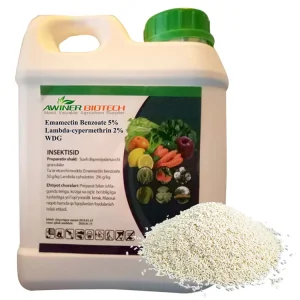
| Lambda-Cyhalothrin + Emamectin Benzoate | Group 3A + Group 6 (Dual Combination) | Complex pest infestation (Moths, Flea Beetles, Aphids) | WDG / SC | Synergistic contact and translaminar action; prevents resistance buildup through dual modes. |
| Beta-Cypermethrin (6% Gas / Fumigant Formulations) | Group 3A (Sodium channel modulators) | Post-harvest warehouse storage pests, Borers | Fumigant / Technical Gas | Deep vapor penetration for storage hygiene and quarantine disinfestation standards. |
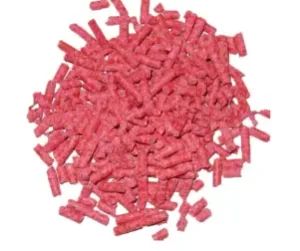
Dust-free micro-granules providing zero operator dust inhalation, rapid disaggregation in tank mixtures, and superior physical stability across wide storage temperature ranges (-10°C to 50°C).
Polymer capsule encapsulation technology allowing controlled release of active ingredients. Provides UV-shielding, extended residual control on apple foliage, and reduced mammalian dermal toxicity.
Optimized bio-surfactant blending to reduce surface tension of water droplets, ensuring 95%+ leaf surface coverage, superior canopy penetration, and minimal wash-off under overhead irrigation.
A systemic guide for enterprise orchard managers, commercial distributors, and agricultural consultants to maximize yield output and maintain strict compliance with European and US MRL standards.
Primary Targets: Overwintering mite eggs, Scale crawlers, Aphid eggs.
Chemical Strategy: High-grade paraffinic oils tank-mixed with broad-spectrum contact insecticides like Bifenthrin or Pyrethroids to suffocate overwintering eggs and disrupt scale armor.
Primary Targets: Rosy Apple Aphids, Bud Moths, Curculio.
Chemical Strategy: Systemic neonicotinoid sprays (e.g., Imidacloprid 20% SL) to clean foliage prior to pollinator entry. Rigid adherence to non-blooming spray windows to safeguard beneficial bees.
Primary Targets: Codling Moth 1st Generation, Leafminers, Curculio.
Chemical Strategy: Deploy translaminar active ingredients like Emamectin Benzoate 5% WDG combined with IGRs. Prevents egg hatch and eliminates early larval entrance into young fruitlets.
Primary Targets: Codling Moth 2nd Gen, Apple Maggot, Secondary Mite Flares.
Chemical Strategy: Rotational sprays using rapid-breakdown chemistries. Strict observance of Pre-Harvest Intervals (PHI) to guarantee zero chemical residue violations at export destination ports.
Customized chemical management protocols tailored to distinct climatic regions, local pest variations, and regional import regulatory thresholds.
Focused on low-drift ultra-low volume (ULV) formulations compatible with automated canopy sprayers and drone technology. Strict emphasis on EPA worker protection standards (WPS) and reduced-risk chemical active ingredients for high-density spindle plantings in Washington State and Ontario.
Adherence to extremely strict EU Maximum Residue Limits (MRLs) and Sustainable Use Directives. Heavy reliance on rapid-degrading active ingredients, bio-pesticide integration, and low-dose micro-granule formulations (WDG) suitable for intensive orchard production in Poland, Italy, and Ukraine.
High humidity and prolonged pest pressure zones in China, India, Chile, and Brazil requires broad-spectrum residual insecticides with extreme rainfastness. Combining systemic neonicotinoids with contact pyrethroids ensures continuous barrier protection against multi-generational pest waves.
Awiner Biotech actively engages in field verification, technical exchanges, and international agrochemical expos to deliver precise solutions tailored to local grower challenges.
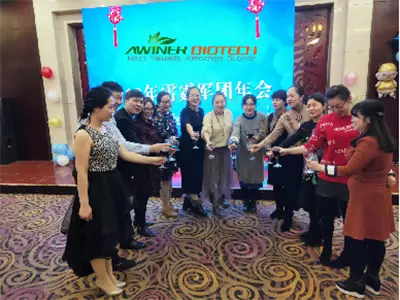
Up to now, we have won customers from Iraq, Iran, Afghanistan, Pakistan, India, Libya, Syria, Turkey, Yemen, Ukraine, Russia, Kazakhstan, Uzbekistan, Chile, Bolivia, Mexico, Brazil, Paraguay, Nigeria, Djibouti, Rwanda, Somalia, Malaysia, Cambodia, Nepal, Myanmar, and beyond.
We actively participate in global agricultural chemical exhibitions to demonstrate our technological innovations and connect with distributors. Key exhibition locations include Turkey, Iran, Pakistan, Nigeria, Russia, Cambodia, Malaysia, Uzbekistan, and other regional agricultural hubs.
We send dedicated agronomic engineering teams directly to customer countries to conduct in-person market inspections, analyze regional pest resistance profiles, solve application challenges on site, and monitor product performance in real-world orchard environments.
Navigating the future of industrial crop protection through zero-residue target synthesis, nanotechnology delivery, and AI-integrated spraying optimization.
Future insecticide formulations focus on targeted micro-encapsulation triggered by enzymatic activity within the insect pest's gut. This minimizes non-target impact on beneficial pollinators while extending canopy protection duration by over 40% per application.
Synthesizing botanical extracts and peptide-based biologicals that leave zero chemical residue on fruit surfaces, enabling orchard operators to comply effortlessly with increasingly stringent global export standards and organic transition protocols.
Formulating chemical physical properties specifically tailored for smart drone spray nozzles and sensor-guided canopy sprayers. High-viscosity drift control agents ensure zero off-target loss, optimizing pesticide utilization efficiency to maximum thresholds.
Browse our complete range of technical grade actives and commercial formulations tailored for worldwide agricultural distributors and crop protection partners.
Detailed technical, procurement, and regulatory answers for commercial agrochemical importers, wholesalers, and agricultural managers.
 Awiner Biotech