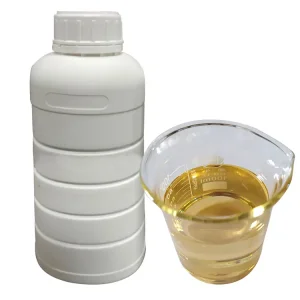
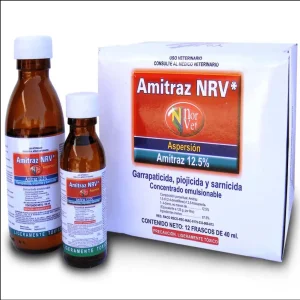
High-purity chemical formulations, growth regulators, and protective solutions tailored for large-scale agricultural enterprises.
Addressing thermal stress, rapid leaf senescence, and lint quality preservation across Uzbekistan, Kazakhstan, Turkmenistan, and Tajikistan cotton basins.
Central Asia stands as one of the world's premier cotton-producing hubs, spearheaded by Uzbekistan's massive cultivation in Fergana, Tashkent, Syrdarya, and Kashkadarya regions, alongside southern Kazakhstan (Turkestan). However, the shift toward 100% mechanized cotton picking (spindle and stripper harvesting) requires complete, uniform chemical defoliation prior to machinery entering the field.
Natural leaf drop in continental arid zones is erratic due to sudden autumnal temperature drop-offs. Un-defoliated green leaves lead to severe green stain during mechanical harvesting, elevating leaf trash ratios, increasing moisture content, and degrading raw lint grades (from Higher Quality Class down to Industrial Grade), causing multi-million dollar economic losses for cotton clusters and processing gins.
Awiner Biotech’s proprietary cotton defoliant formulations combine advanced active ingredients like Thidiazuron (TDZ), Diuron, and Ethephon. The dual biochemical pathway operates by:
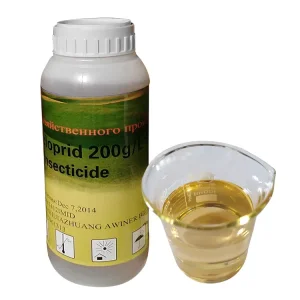
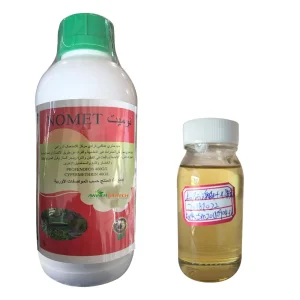
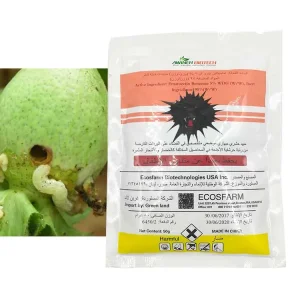
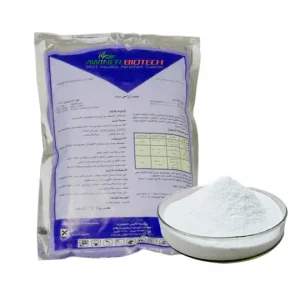
Tailored liquid (SC/SL) and water-dispersible (WDG/WP) chemistries optimized for variable temperature regimes in Silk Road climates.
| Formulation Name | Active Ingredient Combination | Recommended Dosage | Optimal Application Temp. | Primary Agronomic Benefit |
|---|---|---|---|---|
| Awiner Defo-Pro 500 SC | Thidiazuron 360 g/L + Diuron 180 g/L | 0.4 - 0.6 L/ha | > 18 °C | Complete leaf drop, strong anti-regrowth inhibition, minimum green staining. |
| Awiner FastRip 720 SL | Ethephon 720 g/L SL | 1.5 - 2.5 L/ha | > 20 °C | Rapid boll opening, accelerates bottom-to-top uniform harvest readiness. |
| Awiner Thermo-Defo Ultra | Thidiazuron + Ethephon + Synergistic Adjuvant | 1.0 - 1.5 L/ha | 12 °C - 16 °C (Low Temp Zone) | Engineered specifically for cold snap conditions in late autumn Central Asia. |
| Awiner Bio-Shield Surfactant | Organosilicone Penetrant & Drift Control | 0.1% - 0.2% v/v spray solution | All Temperature Ranges | Enhances canopy penetration, rainfastness within 2 hours, anti-evaporation. |
Adapting chemical application parameters to high-capacity aerial spraying and ultra-low volume (ULV) ground boom machinery.
With drone adoption soaring across Uzbekistan's cotton clusters, low-volume spraying requires smaller droplet spectrums (150–220 microns). Awiner’s customized SC and SL formulations are anti-clogging, preventing micro-nozzle blockage while maximizing canopy penetration to lower leaves.
For large-scale agricultural state farms and private agro-holding entities using John Deere or Case IH sprayers, our formulations exhibit excellent dilution stability in high-mineral, hard water typical of the Amu Darya and Syr Darya basin irrigation networks.
Relative humidity in Central Asian steppe zones frequently drops below 30% in September. Incorporating specialized organosilicone tank-mix additives reduces droplet surface tension by 70%, guaranteeing uniform foliar coverage before water loss occurs.
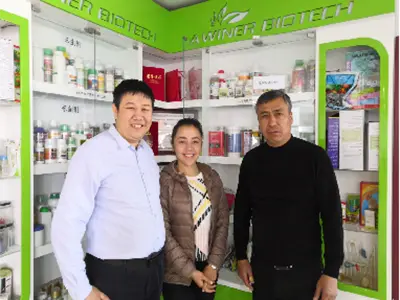
Awiner Biotech was founded in 2006, located in north China—Shijiazhuang, Hebei Province. The city is close to our capital Beijing, with highly convenient transportation and industrial supply chain integration.
Awiner Biotech is committed to research, manufacture, and distribute agrochemicals worldwide. We mainly deal with high-efficacy pesticides, herbicides, fungicides, plant growth regulators (PGRs), and public health pesticides.
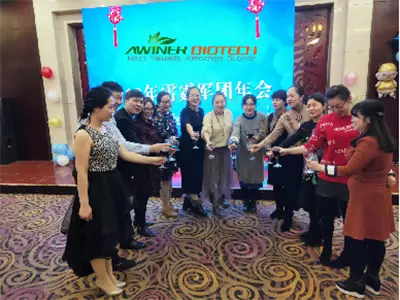
We actively visit customer countries to conduct detailed market inspections, analyze regional pest/weeding/defoliation challenges on-site, and solve technical hurdles directly in the field. By understanding local crop usage patterns, we ensure tailored formulation adjustments while hosting client delegations at our modern production bases in China.
Our dedicated regulatory support team provides full technical dossiers (GLP data, ICAMA certificates, COA, MSDS) to guarantee rapid product registration across Central Asian agrarian ministries and customs authorities.
Streamlined supply chain execution through China-Central Asia freight corridors with full regulatory compliance.
Full compliance with Eurasian Economic Union (EAEU) standards, including GOST-R certification, toxicological dossiers, and eco-impact assessments mandatory for registration in Kazakhstan and Uzbekistan.
Strategic location near Beijing allows rapid multimodal transport via Alashankou / Khorgos land ports straight to Tashkent, Chimkent, Samarkand, and Ashgabat within 12-18 days.
Specialized COEX HDPE bottles, fluorinated drums, and UN-certified 1000L IBC totes designed to withstand transit vibrations and intense temperature fluctuations.
Pioneering sustainable, low-dosage, high-impact defoliation and crop protection formulations for the future of global cotton farming.
Developing micro-encapsulated Thidiazuron mixtures that release active molecules gradually upon leaf surface contact. This extends chemical persistence during erratic thermal fluctuations and reduces application frequency by 30%.
Integrating plant-derived bio-stimulants with standard defoliants to accelerate natural senescence without causing heavy chemical accumulation in cotton seeds or soil ecosystems.
Formulating chemical matrices with custom fluorometric markers compatible with satellite NDVI imagery and drone sensors, enabling precision variable-rate defoliation across heterogeneous field blocks.
Engineering novel adjuvants that maintain 90%+ leaf drop efficacy even when daytime temperatures dip below 12°C, safeguarding late-planted crops against sudden autumn frost.
Expert insights on technical application, tank mixing, regional logistics, and wholesale purchasing.
Complete crop protection options for comprehensive pest management and yield maximization.
 Awiner Biotech