Direct Factory Supply of High-Purity Plant Growth Regulators, Selective Herbicides, and Crop Management Solvents
Addressing Macroeconomic Pressures, Agricultural Labor Shortages, and Quality Grade Optimization in Modern Agronomy
The global cotton production landscape is undergoing an unprecedented structural shift. Historically reliant on intensive manual labor, international cotton farming across regions such as North America, Central Asia, South America, and East Asia is rapidly shifting toward 100% mechanical harvest automation. Driven by rising labor costs, unpredictable autumn rainfall patterns, and the stringent quality standards demanded by modern high-speed textile spinning mills, optimizing cotton harvest efficiency has evolved from a field management choice into a core commercial necessity.
Mechanical harvesting—whether utilizing spindle pickers or mechanical strippers—demands strict pre-harvest crop conditioning. Unprepared cotton fields exhibit excessive green foliage, non-uniform boll maturity, high moisture levels, and sticky honeydew exudates from late-season pests. When processed by high-capacity mechanical harvesters without prior chemical defoliation and ripening management, the resulting lint suffers from elevated trash levels (leaf fragments), fiber staining, lower ginning efficiency, and severe market price discounts.
Achieving premium cotton grades (Classer's Grade 11/21) requires artificial synchronization of crop maturity. Chemical defoliation using highly concentrated plant growth regulators (PGRs) such as Thidiazuron (TDZ), Diuron, Ethephon, and natural physiological signals like S-Abscisic Acid (S-ABA) induces targeted foliar abscission without causing physiological leaf freezing (sticking of dead leaves to the plant stem).
By securing direct factory supply lines for high-purity harvest aids, commercial farming conglomerates and international agricultural chemical distributors can systematically reduce operational field passes, optimize fuel efficiency for heavy machinery, and lock in peak seed-cotton prices before severe weather degrades lint color grade.
Mechanical harvesters operating in non-defoliated fields consume up to 22% more diesel fuel per hectare due to increased torque load when processing dense vegetative canopy. Furthermore, green leaf moisture transferred to fiber during mechanical compaction inside picker baskets causes heat accumulation during module storage, triggering irreversible yellow fiber discoloration (b-value degradation). Chemical conditioning prevents this micro-thermal degradation entirely.
Harnessing Advanced Plant Growth Regulators and Selective Desiccants for Precision Abscission Zone Activation
Synthetic defoliants act by stimulating ethylene synthesis within the leaf petiole while simultaneously inhibiting auxin transport from the leaf blade. This physiological shift triggers the synthesis of endogenous enzymes—specifically cellulase and pectinase—which dissolve the middle lamella in the petiole abscission layer, permitting clean green leaf drop under wind action.
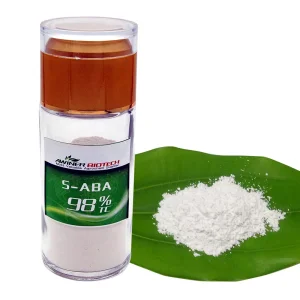
Applying tank-mixed Ethephon releases ethylene gas directly into plant tissue, accelerating the vascular drying of mature boll carpers. This physiological pressure forces uniform carpel splitting and rapid lint fluffing. Paired with stress-signaling agents like S-ABA (S-Abscisic Acid 98% TC), the crop rapidly enters end-of-season senescence in an orderly, controlled manner.
Late-season rainfall or excessive nitrogen lingering in the soil frequently induces unwanted secondary regrowth (juvenile leaf sprout). High-efficiency chemical combinations incorporating dual-action inhibitors (e.g., Thidiazuron + Diuron WDG) systemically suppress terminal bud meristematic activity, ensuring zero fresh green leaves contaminate late-season mechanical picking runs.
| Active Ingredient Compound | Formulation Type | Optimal Dosage Rate / Ha | Temperature Window | Primary Agronomic Function |
|---|---|---|---|---|
| Thidiazuron (TDZ) + Diuron | 500g/L SC / 80% WDG | 150 - 300 mL (g) | > 18°C (Night Min > 12°C) | Clean green leaf defoliation & regrowth inhibition |
| Ethephon | 480g/L - 720g/L SL | 1500 - 2500 mL | > 20°C (Requires sunshine) | Accelerates boll dehiscence & opening rate |
| S-Abscisic Acid (S-ABA) | 98% TC / 10% SP | 15 - 30 g | Broad Adaptability (12°C - 35°C) | Stress signal activation & natural leaf drop synergy |
| Pyrithiobac-sodium + Adjuvants | 75% WDG | 40 - 60 g | 15°C - 30°C | Late-season broadleaf weed clearance prior to pick |
Why Global Importers and Agrochemical Wholesale Brands Partner with Hebei Manufacturing Clusters
China maintains an indisputable comparative advantage in global agrochemical chemical synthesis, formulation development, and international export logistics. Operating from major industrial chemical hubs—most notably in Shijiazhuang, Hebei Province—manufacturers like Awiner Biotech integrate upstream raw chemical synthesis directly with specialized downstream formulation plants.
This integration eliminates intermediary pricing markups, provides absolute quality control over chemical active ingredient (AI) purity via advanced High-Performance Liquid Chromatography (HPLC) testing, and guarantees scalable volume output capable of meeting time-critical agricultural windows across the Northern and Southern Hemispheres.
To ensure zero chemical precipitation or nozzle clogging during high-capacity drone or tractor spraying operations, our modern production lines enforce rigorous quality control benchmarks:
Adapting Chemical Defoliation and Harvest Improvement Strategies to Varied Global Microclimates
Field Characteristics: Ultra-high density planting (approx. 180,000 to 220,000 plants/ha) with dense foliage canopy under drip tape irrigation.
Operational Solution: Two-step aerial drone application strategy. Initial application of TDZ 50% WDG + Ethephon 480g/L at 30% boll open stage, followed 7 days later by a secondary booster application to clear dense lower canopy leaves. Enables 95%+ mechanical spindle picking efficiency within 15 days.
Field Characteristics: Extremely large fields requiring rapid cotton harvest to allow timely secondary crop planting (Soybean/Corn succession).
Operational Solution: Rapid desiccation regimen using fast-acting tank mixes of active plant defoliants alongside surfactant adjuvants. Rapid leaf abscission is achieved within 5 to 7 days, avoiding sudden tropical downpours that could wash away unharvested fiber or cause boll rot.
Field Characteristics: Rapid night-time temperature drop during September-October harvest season (temperatures falling below 15°C).
Operational Solution: Temperature-compensated formulations incorporating S-Abscisic Acid (S-ABA) combined with high-grade Ethephon. S-ABA maintains plant physiological responsiveness even during cold snaps, ensuring petiole separation layer formation when traditional chemical defoliants stall.
Understanding Key Cost Drivers, Packaging Options, and International Logistics Optimization
Navigating global wholesale pricelists for crop harvest aids requires a clear understanding of active ingredient economics and manufacturing inputs. Prices quoted by Chinese factories are influenced by four primary commercial variables:
The Convergence of Unmanned Aerial Vehicles (UAVs), Multispectral Crop Monitoring, and Low-Toxicity Chemical Synthesis
Modern commercial farms are replacing ground rigs with agricultural spray drones. This shift requires agrochemical factories to engineer ultra-low volume (ULV) spray aids containing anti-evaporation agents and drift control polymers that prevent micro-droplet vaporization under ambient heat.
By pairing satellite NDVI greenness maps with drone prescription systems, growers apply chemical harvest aids dynamically across the field. Highly vegetative, late-maturing zones receive tailored, higher dosage concentrations while naturally senescing zones receive lower rates, cutting overall chemical expenditure by up to 25%.
Regulatory frameworks across international markets are accelerating the replacement of traditional nonylphenol ethoxylates (NPEs) with bio-degradable methyl esterified seed oils (MSO) and sugar-derived alkyl polyglucosides (APG), reducing environmental persistence without sacrificing chemical absorption.
A Premier North China Agrochemical Pioneer Delivering Excellence Since 2006
Awiner Biotech was founded in 2006, located in the north of China—Shijiazhuang, Hebei Province. The city is close to our capital Beijing, and transportation is exceptionally convenient. Awiner Biotech is committed to research, produce, and distribute agrochemicals, mainly dealing with pesticides, herbicides, fungicides, plant growth regulators, and public health pesticides.
Our commitment to global agriculture is demonstrated through consistent participation in premier international trade expos. The countries where we participate in industry exhibitions include Turkey, Iran, Pakistan, Nigeria, Russia, Cambodia, Malaysia, Uzbekistan, and more.
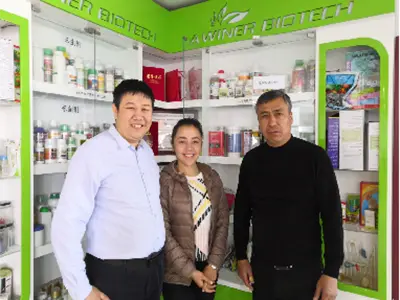
We go directly to our customers' countries to conduct on-site market inspections, analyze agronomic conditions, solve complex application problems for growers, and evaluate real-world product usage under local soil and climate conditions. Furthermore, international partners routinely visit our Shijiazhuang manufacturing facilities for technical audits and strategic contract signing.
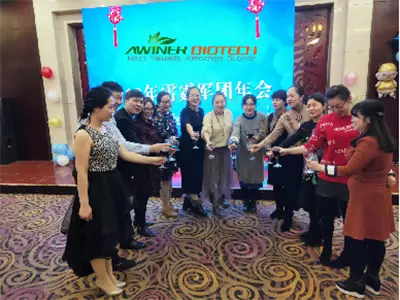
Up to now, we have won trusted customers across more than 27 countries worldwide, including:
Expert Answers to Technical, Commercial, and Logistical Inquiries Regarding Wholesale Cotton Defoliants
Explore Direct Factory Offerings Across Herbicides, Insecticides, and Specialized Crop Solutions
 Awiner Biotech