Direct supply from ISO 9001 certified manufacturing plants with full CoA, MSDS, and field performance validation data.
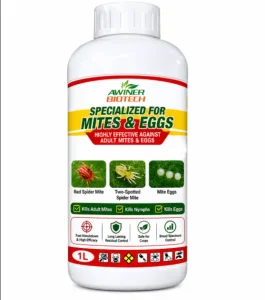
Spider mites, primarily the Two-Spotted Spider Mite (Tetranychus urticae), Citrus Red Mite (Panonychus citri), and European Red Mite (Panonychus ulmi), represent one of the most economically devastating pest threats to modern high-value horticulture, cotton, greenhouse floriculture, and orchards. Due to their rapid lifecycle (completing a generation in 5–7 days under high temperatures) and extraordinary fecundity, spider mites develop resistance to single-mode-of-action miticides faster than almost any other agricultural pest class.
For global distributors, commercial farm managers, and agrochemical importers, sourcing an effective insecticide for spider mites requires a shift from legacy organophosphates and synthetic pyrethroids toward specialized, multi-stage acaricides with tailored Insecticide Resistance Action Committee (IRAC) modes of action. This technical guide outlines chemical selection matrices, cost-effective wholesale pricing structures, and smart manufacturing parameters.
To prevent control failure, commercial spraying programs must utilize chemical rotations across non-overlapping IRAC groups. Broad-spectrum insecticides often eradicate predatory mites (e.g., Phytoseiulus persimilis, Neoseiulus californicus), exacerbating spider mite resurgences. Sourcing precise, selective acaricides ensures target selectivity and maximum field efficiency.
| Active Ingredient | IRAC Group | Target Stage (Egg/Nymph/Adult) | Mode of Action (MOA) | Residual Duration |
|---|---|---|---|---|
| Etoxazole (110g/L SC / 30% SC) | Group 10B | Eggs, Nymphs, Larvae | Inhibits chitin biosynthesis and embryogenesis. Prevents molting. | 30 – 45 Days |
| Abamectin (1.8% EC / 5% EC) | Group 6 | Nymphs, Adults | Allosteric activation of glutamate-gated chloride channels (GluCl). | 7 – 14 Days |
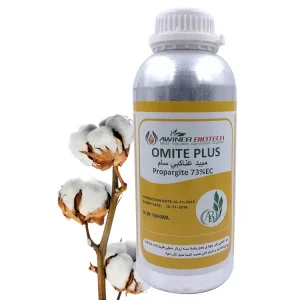
| Propargite (57% EC / 73% EC) | Group 20B | Nymphs, Adults | Inhibitor of mitochondrial ATP synthase. Fast-acting knockdown. | 14 – 21 Days |
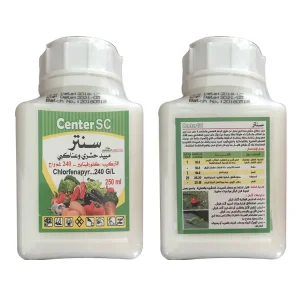
| Chlorfenapyr (360g/L SC) | Group 13 | All Lifecycle Stages | Uncoupler of oxidative phosphorylation via disruption of proton gradient. | 14 – 28 Days |
| Bifenazate (480g/L SC) | Group 20D | All Stages (Strong Ovicide) | Neuronal transmission inhibitor at mitochondrial complex III. | 21 – 30 Days |
Molecules like Etoxazole disrupt egg chorion development and larva eclosion. By eliminating the egg bank, growers stop the next generation before foliage damage occurs.
Sulfite ester miticides such as Propargite deliver high vapor pressure contact action, disrupting respiration in mobile adult mites within 2 to 6 hours after spray contact.
Advanced Suspension Concentrates (SC) allow active ingredients to pass through the leaf cuticle to the lower abaxial surface, where spider mite colonies reside protected from direct contact sprays.
Global warming patterns have accelerated spider mite reproduction rates. Ambient temperatures exceeding 30°C coupled with low relative humidity shorten egg-to-adult emergence to under 5 days. High-volume commercial farming requires an integrated macro-solution combining specialized agrochemicals, adjuvants, and precision canopy application methods.
High surface tension of aqueous sprays often causes beads to roll off glossy leaves (e.g., citrus, brassicas). Integrating organosilicone non-ionic surfactants reduces dynamic surface tension to below 22 mN/m. This ensures:
Repeated applications of single actives trigger rapid point mutations in mite sodium channels or chitin synthase enzymes. Awiner Biotech recommends pre-formulated dual-action co-formulations (e.g., Abamectin + Acetamiprid or Etoxazole + Chlorfenapyr).
Mixing target-specific ovicides with fast-acting adulticides collapses both current infestation spikes and secondary emergence waves in a single spray cycle.
The legacy market of emulsifiable concentrates (EC) utilizing aromatic solvent carriers (xylene, toluene) is rapidly transitioning toward eco-benign, water-based, and microencapsulated systems. Awiner Biotech’s R&D roadmap focuses on zero-VOC delivery platforms and target-specific micro-release mechanisms.
Polyurea shell technology encapsulates volatile or light-sensitive active molecules. Capsules adhere to plant foliage, releasing technical active ingredient linearly over 45 days under UV exposure.
Milling particles down to D90 < 2 microns increases specific surface area by 400%, improving biological availability and reducing active ingredient active rate requirement per hectare.
Dust-free, highly soluble WDG formulations eliminate operator inhalation risks, improve storage stability in extreme tropical climates, and ensure zero phase-separation during transit.
Located in Northern China's agricultural industrial heartland (Shijiazhuang, Hebei Province), Awiner Biotech leverages upstream chemical synthesis hubs and advanced continuous-flow formulating automation. This structural vertical integration secures critical technical-grade (TC) intermediates even during global chemical raw material fluctuations.
Our manufacturing complex operates fully enclosed, automated blending and packaging suites. Smart sensors monitor shear rate, temperature, viscosity, and particle size distribution in real time during Suspension Concentrate (SC) formulation, preventing crystal growth and sedimentation in long-term storage.
Every batch of miticide undergoes strict analytical validation via High-Performance Liquid Chromatography (HPLC) and Gas Chromatography-Mass Spectrometry (GC-MS). We guarantee active ingredient content tolerances within strictly defined FAO/WHO specifications (±2.5% for high concentration actives).
Awiner Biotech provides end-to-end B2B services, supporting commercial distributors, governmental agricultural tenders, and private label brand owners with flexible volume pricing, custom packaging design, and UN-certified export logistics.
100mL, 250mL, 500mL, 1L HDPE / Fluorinated Bottles, Aluminum Foil Bags for WDG/WP. Custom full-color printing with localized languages and anti-counterfeiting QR codes.
200L Steel / HDPE Drums, 1000L IBC Totes, 25kg Fiber Drums for TC technical material. Engineered for long-distance maritime transport with heavy-duty palletization.
Dangerous Goods (DG) certified packaging compliance under IMO/ICAO guidelines. Fast customs clearance processing out of Tianjin, Qingdao, and Shanghai ports.
Navigating complex agrochemical registration frameworks requires robust scientific data. Awiner Biotech supports our local partners worldwide by providing comprehensive registration packages generated by GLP-accredited laboratories.
We send specialized agronomic teams to partner territories in South America, Southeast Asia, Central Asia, and Africa. We conduct field trials, analyze local pest resistance, assist with government authorization filings, and lead distributor training workshops.
Awiner Biotech was founded in 2006, located in north of China-Shijiazhuang, Hebei Province. The city is close to our capital Beijing, transportation is convenient. Awiner Biotech is committed to research, produce and distribute agrochemicals, mainly dealing with pesticides, herbicides, fungicides, plant growth regulators, and public health pesticides.
Up to now, we have won customers from Iraq, Iran, Afghanistan, Pakistan, India, Libya, Syria, Turkey, Yemen, Ukraine, Russia, Kazakhstan, Uzbekistan, Chile, Bolivia, Mexico, Brazil, Paraguay, Nigeria, Djibouti, Rwanda, Somalia, Malaysia, Cambodia, Nepal, Myanmar, and beyond.
We actively participate in premier agricultural chemical expos globally, including key trade fairs in Turkey, Iran, Pakistan, Nigeria, Russia, Cambodia, Malaysia, Uzbekistan, and other regional hubs.
We regularly travel to customer regions to conduct field inspections, analyze localized pest pressure, optimize tank-mix protocols, and resolve end-user application challenges side-by-side with our local distributors.
Explore our extended catalog of high-efficiency acaricides, crop protection formulations, and technical-grade active ingredients.
 Awiner Biotech