Explore our premium crop protection products, high-grade active ingredients, and industrial harvest-aid supplies.
Understanding the physiological triggers, hormonal manipulation, and chemical synergy behind high-efficiency crop leaf stripping and mechanical harvest optimization.
Modern commercial farming demands rapid, synchronized crop maturation to maximize mechanical harvesting efficiency. The term #fastdefoliation represents a refined agrochemical strategy aimed at triggering premature, stress-free leaf shedding in broadleaf cash crops such as cotton, soybeans, chili peppers, and nursery stocks.
By applying specialized plant growth regulators (PGRs) and contact defoliants—such as Thidiazuron (TDZ), Diuron, and Ethephon—growers synthesize a localized hormonal shift within the plant canopy. This stimulates the enzymatic degradation of cell walls in the petiole abscission layer, resulting in clean leaf drop without damaging unopened crop bolls or seeds.
For commercial farms, agricultural cooperatives, and distributors, raw defoliation performance directly translates to crop profitability and operational overhead control. Slow or incomplete defoliation leads to severe financial penalties at harvest:
Choosing the correct chemical balance depends on crop species, ambient field temperature, crop canopy density, and humidity conditions. Below is a engineering comparison matrix utilized by industrial formulation chemists:
| Active Ingredient (AI) | Formulation Types | Primary Mode of Action | Optimal Temp Range | Target Crop Applications |
|---|---|---|---|---|
| Thidiazuron (TDZ) | 500g/L SC, 50% WP | Cytokinin mimic; stimulates ethylene synthesis, inhibits leaf auxin transport | > 18°C (Requires warmth) | Cotton, Deciduous Fruit Trees, Nursery Stock |
| TDZ + Diuron Premix | 360g/L SC (240+120) | Dual-action: Photosynthesis inhibition (Diuron) + Hormonal abscission (TDZ) | 12°C - 25°C (Enhanced low-temp performance) | High-density Cotton, Late-season Harvests |
| Ethephon | 480g/L SL, 720g/L SL | Ethylene releaser; accelerates boll opening, fruit ripening, and leaf senescence | 15°C - 35°C | Cotton boll opening, Chili peppers, Tomatoes, Tobacco |
| Cyclanilide + Ethephon | Mixture SC / EC | Auxin transport inhibitor combined with ethylene releaser for synergistic drop | 14°C - 32°C | Broadleaf cash crops, Uniform boll opening |
How Awiner Biotech leverages upstream chemical synthesis, massive scaling, and strategic port logistics to empower global buyers.
China produces over 70% of the world's agrochemical technical active ingredients (TC). Located in Shijiazhuang, Hebei Province—the core of Northern China's chemical synthesis hub—Awiner Biotech enjoys direct access to raw intermediates. This eliminates intermediary markups and guarantees stable batch-to-batch chemical purity.
Our industrial chemical facilities utilize automated nano-milling equipment for Suspension Concentrates (SC) and fluid bed granulation for Water Dispersible Granules (WDG). We achieve stable particle size distributions below 2.5 microns, preventing nozzle clogging during high-speed aerial drone spraying.
Situated near major export maritime hubs including Tianjin Port and Qingdao Port, we streamline seamless container loading, dangerous goods (DG) compliance handling, custom clearance protocols, and rapid vessel scheduling to meet strict seasonal agricultural windows.
Tailored Agrochemical Manufacturing Solutions for Importers, Brand Owners, and Large-Scale Distributors.
Procuring fast defoliants internationally requires flexibility in formulation stability, shelf life optimization, and customized packaging. Awiner Biotech provides end-to-end B2B contract manufacturing options:
Every commercial batch undergoes strict quality control checks before release:
Validates exact active ingredient concentration down to ±0.1% tolerance margin.
Ensures liquid SC/EC formulations remain fully suspended for 24 hours without oil-water separation or bottom caking.
Storage validation under 54°C high-temperature conditions for 14 days to guarantee 2-year shelf life stability in tropical ports.
Navigating global agrochemical registration barriers with certified GLP data, FAO specs, and local regulatory dossiers.
We assist our regional distributors by providing full registration packages, including GLP-accredited acute toxicity studies, environmental impact profiles, Certificate of Analysis (COA), Certificate of Origin (COO), and ICAMA certificates.
Global shipping compliance requires immaculate hazard documentation. Awiner Biotech supplies updated Globally Harmonized System (GHS) Safety Data Sheets (SDS) in English, Spanish, Russian, Arabic, and French.
Our localized support isn't limited to paperwork. We organize joint field inspections, evaluate tank-mix compatibilities, and conduct dosage calibration trials across varied climate zones in South America, Central Asia, and Africa.
Adapting chemical defoliation strategies to diverse crop varieties and modern aerial farming technologies.
Applied when boll opening reaches 60-70%. Spraying Thidiazuron + Diuron SC accelerates remaining boll maturation while dropping leaves intact. This eliminates green leaf staining inside cotton ginning equipment.
Uniform canopy desiccation permits earlier combine harvester deployment, eliminating late-season weed greenness and preventing pod shattering caused by irregular dry-down rates.
Defoliation permits rapid automated or manual pepper picking without foliage obstructing fruit selection, significantly cutting field labor costs per metric ton harvested.
The global agrochemical sector is undergoing a massive shift towards drone-assisted precision spraying (Unmanned Aerial Vehicles - UAVs). Aerial defoliant application introduces unique chemical engineering requirements:
Expert answers to critical technical, agronomic, and commercial questions for B2B buyers.
Awiner Biotech was founded in 2006, located in north of China—Shijiazhuang, Hebei Province. The city is close to our capital Beijing, transportation is convenient. Awiner Biotech is committed to research, produce and distribute agrochemicals. mainly deal with pesticides, herbicides, fungicides, plant growth regulator and public health pesticides.
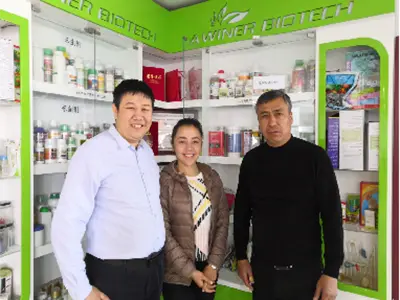
With an extensive trade footprint, Awiner Biotech supplies premium chemical products across diverse international markets.
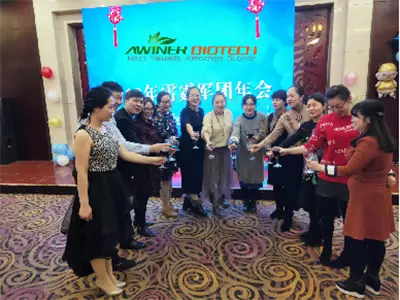
Up to now, we have won customers from Iraq, Iran, Afghanistan, Pakistan, India, Libya, Syria, Turkey, Yemen, Ukraine, Russia, Kazakhstan, Uzbekistan, Chile, Bolivia, Mexico, Brazil, Paraguay, Nigeria, Djibouti, Rwanda, Somalia, Malaysia, Cambodia, Nepal, Myanmar and so on.
Our countries participating in international agrochemical exhibitions include Turkey, Iran, Pakistan, Nigeria, Russia, Cambodia, Malaysia, Uzbekistan, etc.
We go to the customer's country to conduct market inspections, analyze and solve problems for them, understand their product usage, and customers will also visit us in China.
Explore our complete range of fungicides, insecticides, growth regulators, and public health supplies.
 Awiner Biotech