An authoritative analysis of gray mold pathology, fungicide chemistry innovation, resistance mitigation pathways, and global B2B procurement strategies for commercial agriculture.
Botrytis cinerea, commonly known as gray mold or botrytis rot, represents one of the most economically devastating necrotrophic fungal pathogens affecting modern horticulture and viticulture. Capable of infecting over 1,400 plant species—including table grapes, strawberries, greenhouse tomatoes, blueberries, ornamental flowers, and cannabis—the pathogen triggers cellular necrosis, rapid tissue degradation, and catastrophic post-harvest losses.
The physiological adaptability of Botrytis cinerea stems from its polycyclic life cycle, abundant airborne conidia production, and exceptional capacity to enter quiescent states within plant tissues. Under favorable microclimatic conditions (relative humidity >90% and temperatures between 15°C to 23°C), spore germination leads to rapid appressorium formation and cell wall degradation via secreted pectinases and lytic enzymes.
The primary challenge confronting commercial growers and agricultural chemical distributors is the unprecedented speed at which Botrytis cinerea develops resistance to single-site synthetic fungicides. Mutations in the CYP51 gene, alterations in the succinate dehydrogenase (SDH) subunit proteins (B, C, or D), and overexpression of ATP-binding cassette (ABC) transporters (e.g., AtrD) have rendered traditional single-action chemistries obsolete in high-intensity cropping zones.
As a premier wholesale gray mold fungicide factory, Awiner Biotech designs advanced co-formulated active ingredients combining structural FRAC (Fungicide Resistance Action Committee) modes of action. By coupling multi-site protectants with systemic SDHI or Anilino-pyrimidine chemistries, our solutions interrupt fungal respiration and membrane integrity simultaneously, mitigating resistance risks.
A deep breakdown of technical active ingredients engineered in our synthesis plants for maximum field bio-efficacy and tank-mix compatibility.
| Active Ingredient (AI) | FRAC Code & MoA Group | Biochemical Action Mechanism | Key Formulations | Target Crops & Application Stage |
|---|---|---|---|---|
| Fluopyram | FRAC 7 (SDHI) | Inhibits Complex II succinate dehydrogenase in mitochondrial respiration | 41.7% SC, 500g/L SC | Grapes, Tomatoes, Strawberries (Early Bloom to Pre-Harvest) |
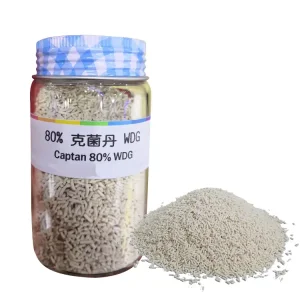
| Captan | FRAC M04 (Multi-Site) | Thiol-reactant interrupting multiple metabolic enzymatic pathways | 80% WDG, 50% WP | Apples, Berries, Stone Fruits (Protective Cover Spray) |
| Pyrimethanil | FRAC 9 (Anilino-pyrimidine) | Inhibits methionine biosynthesis and secretion of cell-wall enzymes | 400g/L SC, 50% WDG | Wine Grapes, Greenhouse Vegetables (Veraison Stage) |
| Fludioxonil + Cyprodinil | FRAC 12 + FRAC 9 (Dual MoA) | Disrupts signal transduction (MAP kinase) and amino acid synthesis | 62.5% WDG (37.5% + 25%) | High-Value Fruit Exports (Pre-Harvest Quality Protection) |
| Boscalid + Pyraclostrobin | FRAC 7 + FRAC 11 (SDHI + QoI) | Dual-site respiratory block at mitochondrial Complexes II & III | 38% WDG, 50% WDG | Vegetables, Citrus, Floriculture (Pre-Spore Germination) |
Our micro-milled SC formulations utilize specialized wetting agents and lignosulfonate dispersants to guarantee particle sizes under 2.5 microns. This ensures superior leaf blade coverage, rainfastness within 2 hours of application, and extended physical suspension stability in tank mixes without crystallization.
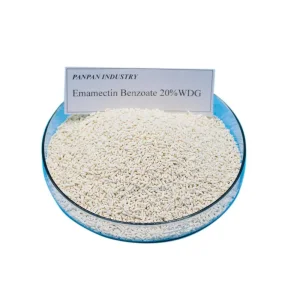
Synthesized via fluid-bed spray granulation technology, Awiner WDG products feature zero-dust production during loading, instant disintegration upon contact with water, and complete non-clogging performance in high-pressure boom sprayers or drone delivery systems.
To maximize foliar penetration through dense crop canopies and wax layer barriers, our technical team provides integrated surfactant co-formulations (organosilicone spreaders) that reduce surface tension to less than 22 mN/m, enhancing active ingredient systemic absorption.
Precision crop protection schedules designed to minimize chemical residues, preserve beneficial fauna, and ensure complete Maximum Residue Limit (MRL) compliance for global agricultural export markets.
Botrytis rot in grapes (caused by fungal infection during flowering that stays dormant until berry softening) requires a multi-stage preventative strategy. Our factory supplies crop-tailored chemical packs engineered for crucial growth windows:
Controlled environment agriculture faces intense stem canopy botrytis lesions due to continuous ambient humidity. Awiner Biotech's macro solution integrates dual chemical and bio-stimulant pathways:
Awiner Biotech was founded in 2006, located in north of China—Shijiazhuang, Hebei Province. The city is close to our capital Beijing, transportation is convenient. Awiner Biotech is committed to research, produce and distribute agrochemicals, mainly dealing with pesticides, herbicides, fungicides, plant growth regulators, and public health pesticides.
Up to now, we have won trusted customers across more than 80 nations including Iraq, Iran, Afghanistan, Pakistan, India, Libya, Syria, Turkey, Yemen, Ukraine, Russia, Kazakhstan, Uzbekistan, Chile, Bolivia, Mexico, Brazil, Paraguay, Nigeria, Djibouti, Rwanda, Somalia, Malaysia, Cambodia, Nepal, Myanmar, and so on.
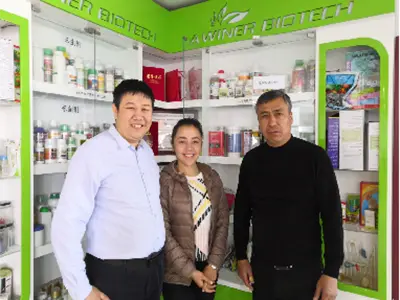
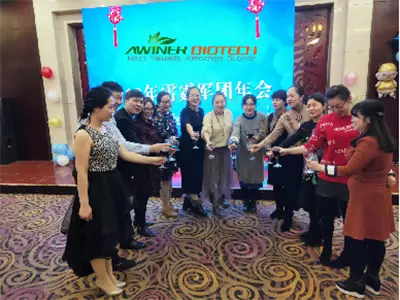
Up to now, we have win customers from Iraq, Iran, Afghanistan, Pakistan, India, Libya, Syria, Turkey, Yemen, Ukraine, Russia, Kazakhstan, Uzbekistan, Chile, Bolivia, Mexico, Brazil, Paraguay, Nigeria, Djibouti, Rwanda, Somalia, Malaysia, Cambodia, Nepal, Myanmar and so on.
Our countries participating in the exhibition are Turkey, Iran, Pakistan, Nigeria, Russia, Cambodia, Malaysia, Uzbekistan, etc., where we connect with regional agricultural leaders and bulk importers.
We go to the customer's country to conduct market inspections, analyze and solve problems for them, understand their product usage under localized soil conditions, and customers will also visit our state-of-the-art facility.
Awiner Biotech R&D division is pioneering next-generation biological, bio-chemical, and nanotechnology pathways for zero-residue mold management.
Developing spray-induced gene silencing (SIGS) solutions targeting essential virulence genes in Botrytis cinerea without impacting beneficial insects or soil microbiome.
Incorporating lipopeptides derived from specialized Bacillus subtilis strains that lyse botrytis cell membranes upon contact for organic export compliance.
Polymeric nanoparticle delivery systems that trigger active release exclusively under high relative humidity conditions, reducing total active chemical load by up to 40%.
Collaborating with regional distribution partners to run localized genomic sequencing on resistant botrytis strains, matching specific FRAC rotation packs to field mutations.
Streamlined industrial synthesis, flexible packaging options, and full regulatory dossier support for international agrochemical buyers.
Operating automated liquid SC/EC formulation lines and dry WDG/WP production units. We deliver customized active concentration levels tailored to specific market registration requirements and target crop safety profiles.
From 100mL aluminum bottles to 1000L IBC totes for liquid formulations, and 100g foil bags to 25kg fiber drums for granular products. All packaging materials undergo rigorous drop testing and chemical compatibility validation for tropical shipping.
Every batch undergoes HPLC and GC-MS chromatographic purity checks in our ISO 17025 accredited laboratory. Certificates of Analysis (COA) are provided alongside detailed CIPAC method validation reports before shipment clearance.
Expert answers regarding bulk order specifications, custom formulation engineering, regulatory dossier support, and gray mold management strategy.
 Awiner Biotech