An in-depth whitepaper on sourcing active ingredients (TC), formulated solutions (SC, WDG, EC, SL, GR), supply chain mechanics, and regulatory framework alignment.
The global agrochemical landscape is undergoing a systemic transformation driven by shifting pest vectors, climate variation, stringent environmental regulations, and the imperative for sustainable crop protection. As global buyers look for an insecticide supplier in China, procurement decisions have evolved beyond basic unit price comparisons. Modern enterprise sourcing requires a rigorous evaluation of active ingredient (AI) synthesis purity, formulation stability, supply chain transparency, international compliance, and environmental stewardship.
Information Gain Insight: China produces over 70% of the world's agrochemical technical active ingredients. However, procurement risk is shifted when buyers fail to account for backward integration into key chemical intermediates—such as 2-chloro-5-chloromethylpyridine for neonicotinoids or diethyl chlorothiophosphate for organophosphates. Partnering with a fully integrated manufacturer in primary industrial hubs like Hebei ensures continuous supply chain resilience during environmental enforcement actions or raw material price spikes.
The global demand for high-efficacy insecticides—spanning broad-spectrum neurotoxins, selective chitin synthesis inhibitors, and biological agents—is accelerating across Latin America, Asia-Pacific, the Middle East, and Africa. Sourcing teams must navigate three primary macroeconomic vectors:
Fluctuations in yellow phosphorus, bromine, and chlorine derivatives directly impact the synthesis costs of pyrethroids, organophosphates, and neonicotinoids. Backward-integrated manufacturers mitigate these price spikes through long-term raw material contracts.
Global regulatory pushback against high-VOC aromatic solvents has accelerated the migration from traditional Emulsifiable Concentrates (EC) toward eco-friendly Suspension Concentrates (SC), Water Dispersible Granules (WDG), and Microencapsulated Suspensions (CS).
National ministries of agriculture now enforce strict FAO/WHO specification alignment, requiring GLP (Good Laboratory Practice) tox and eco-tox data, batch analytical validation, and 2-year storage stability testing before granting import licenses.
Inside the automated synthesis, precision milling, and quality-controlled formulation facilities powering global food security.
Modern formulation plants employ high-shear emulsification, horizontal sand milling, and fluidized bed granulation systems. For products like Imidacloprid 20% SL or Carbendazim 50% SC, automated particle size monitoring ensures D90 < 5 microns, maximizing foliar coverage, rainfastness, and bio-efficacy while preventing nozzle clogging during aerial or tractor application.
Top-tier manufacturers maintain ISO 17025 accredited laboratories equipped with High-Performance Liquid Chromatography (HPLC), Gas Chromatography (GC), and laser diffraction particle analyzers. Every batch undergoes rigorous testing for active content, pH stability, persistent foaming, and wet sieve residue prior to certificate of analysis (COA) issuance.
Transitioning from broad-spectrum neurotoxins to targeted, resistance-breaking, micro-encapsulated biological and synthetic chemistries.
As target pests develop resistance against first-generation synthetic pyrethroids and organophosphates, Chinese technical chemical manufacturers are pioneering advanced synthesis routes and novel multi-component pre-mixtures. The technological roadmap focuses on three crucial dimensions:
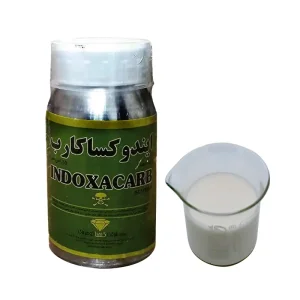
Implementation of diamides (e.g., Chlorantraniliprole), oxadiazines (e.g., Indoxacarb), and semi-synthetic macrocyclic lactones (e.g., Emamectin Benzoate). These molecules target ryanodine receptors and voltage-gated sodium channels, delivering superior control over lepidopteran pests while maintaining safety for non-target beneficial insects.
Integration of biological pest control agents like Bacillus thuringiensis kurstaki (Bt). Bt spore crystals selectively disrupt the midgut membrane of *Tuta absoluta*, *Plutella xylostella*, and *Spodoptera frugiperda*, making it an essential, zero-residue component in IPM programs for organic and export crops.
Engineered binary mixtures—such as Indoxacarb 12% + Emamectin Benzoate 4% SC or Imidacloprid 15% + Lambda-Cyhalothrin 5% WP—combine systemic translocation with quick contact knockdown. This dual-action approach prevents insect resistance development across multiple generations.
Choosing the correct formulation type is essential for field performance, shelf-life, and environmental safety. The matrix below outlines primary technical choices available from leading Chinese suppliers:
| Formulation Code | Description | Key Advantages | Recommended Application |
|---|---|---|---|
| SC (Suspension Concentrate) | Solid active ingredient dispersed in water with surfactants. | Non-flammable, solvent-free, high foliar retention, safe for crops. | Systemic insecticides, broadacre crops, fruit orchards. |
| WDG / DF (Water Dispersible Granules) | Dry granules that disintegrate rapidly in water. | Dust-free, low transport weight, high AI concentration, long shelf-life. | High-value horticulture, rice blast & insect management. |
| SL (Soluble Concentrate) | Clear liquid formulation containing water-soluble AI. | Instant dilution, excellent systemic root absorption. | Soil drenching, seed treatment, systemic aphid control. |
| EC (Emulsifiable Concentrate) | Active ingredient dissolved in organic solvent with emulsifiers. | Fast cuticle penetration, immediate knockdown action. | Public health vector control, dense foliage treatment. |
| GR (Granules) | Ready-to-use solid granules applied directly to soil or foliage. | Sustained root-zone release, targeted pest barrier, minimal drift. | Soil pest suppression (e.g., Fipronil 0.05% GR in rice/sugarcane). |
Tailored pest management programs designed for commercial agriculture, public health, and vector control.
Cereal crops, cotton, corn, and soybeans require persistent control against stem borers, bollworms, and sap-sucking insects. Utilizing dual-systemic formulations like Imidacloprid + Lambda-Cyhalothrin provides dual-action protection: systemic movement via xylem to protect new growth, combined with pyrethroid contact action for instant drop-down.
Vegetable, grape, and citrus growers demand zero-phytotoxicity and low pre-harvest intervals (PHI). Biological solutions such as Bacillus thuringiensis coupled with selective chemistry like Indoxacarb effectively target tomato leafminer (*Tuta absoluta*) and diamondback moth (*Plutella xylostella*) without triggering secondary mite outbreaks.
Beyond agricultural fields, public health agencies require specialized insecticides for mosquito, tick, and rodent control. Formulations such as Permethrin powder, Beta-cypermethrin Gas, and Flumethrin 1% EC serve as key defenses against malaria, dengue fever, and livestock ectoparasites, conforming to WHO vector control guidelines.
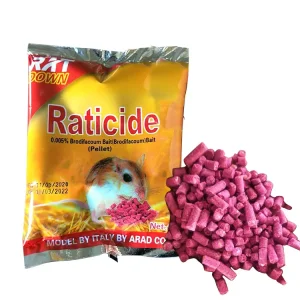
Integrated agricultural security involves protecting post-harvest grain reserves from rodent degradation. Second-generation anticoagulant baits containing Brodifacoum or Bromadiolone engineered into weather-resistant wax blocks ensure single-feed efficacy in humid warehouse and field conditions.
Empowering local distributors and global importers with complete regulatory documentation, laboratory data, and customized compliance packages.
Navigating country-specific agrochemical registration is one of the most substantial hurdles for chemical importers. A competent insecticide supplier in China must act not merely as a manufacturer, but as an international regulatory partner capable of providing full dossier packages aligned with FAO, WHO, and regional Ministries of Agriculture guidelines.
Provision of 5-batch analytical reports, GLP toxicological data, environmental fate studies, physical-chemical properties, and 2-year accelerated storage stability reports formatted for seamless dossier submission.
Complete packaging customization from 10ml ampoules, 100ml HDPA bottles, 1L co-ex bottles to 200L drums, alongside customized multi-lingual label art designed to meet local regulatory language requirements.
Deployment of agricultural experts for field trials, product efficacy demonstrations, distributor sales force training, and farmer educational workshops to maximize market penetration.
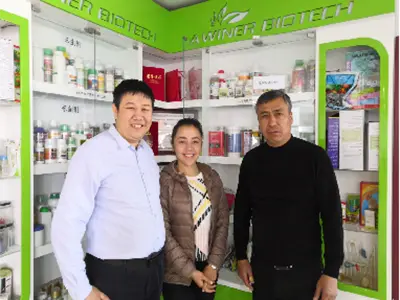
Awiner Biotech was founded in 2006, located in the north of China—Shijiazhuang, Hebei Province. The city is close to our capital Beijing, offering convenient logistics and seamless port access via Tianjin. Awiner Biotech is dedicated to research, production, and distribution of high-grade agrochemicals, specialized in pesticides, herbicides, fungicides, plant growth regulators (PGR), and public health pesticides.
We operate dynamic market expansion initiatives, conducting on-site customer inspections, solving technical challenges, evaluating crop field results, and welcoming clients to tour our manufacturing units.
Up to now, we have established long-term strategic relationships with customers across: Iraq, Iran, Afghanistan, Pakistan, India, Libya, Syria, Turkey, Yemen, Ukraine, Russia, Kazakhstan, Uzbekistan, Chile, Bolivia, Mexico, Brazil, Paraguay, Nigeria, Djibouti, Rwanda, Somalia, Malaysia, Cambodia, Nepal, Myanmar, and many other nations.
Our active presence at major international agrochemical trade shows spans key regional hubs including Turkey, Iran, Pakistan, Nigeria, Russia, Cambodia, Malaysia, and Uzbekistan. We regularly travel directly to customer countries to perform market surveys, evaluate application technology, and optimize chemical strategies for localized crop environments.
Technical & Commercial Clarifications for B2B Insecticide Sourcing
 Awiner Biotech