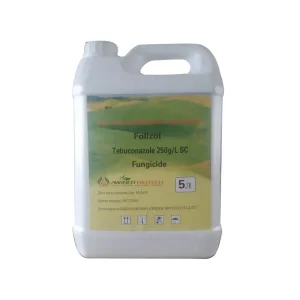
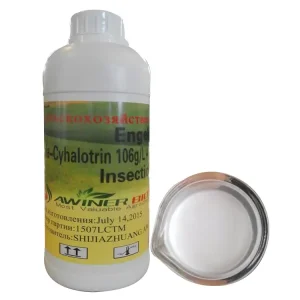
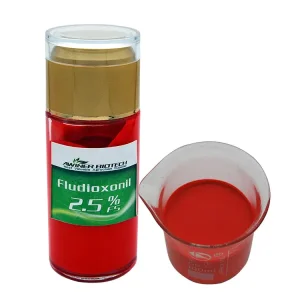
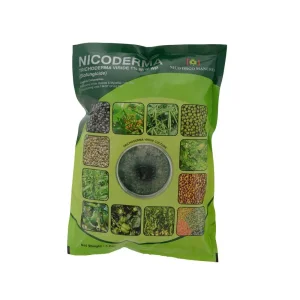
Explore our primary export-grade agrochemical products engineered for maximum field stability, targeted pest mortality, and minimal environmental residue. Manufactured under rigorous ISO 9001 and FAO quality benchmarks.
Phytophagous mites, belonging primarily to the families Tetranychidae (spider mites), Eriophyidae (rust and gall mites), and Tenuipalpidae (false spider mites), represent one of the most severe biological constraints to global agricultural productivity. Characterized by exceptionally short life cycles, high fecundity, and a rapid propensity for metabolic adaptation, these micro-pests cause multi-billion-dollar economic losses annually across high-value cash crops including citrus, cotton, tea, top fruit, and protected greenhouse horticulture.
The international market for wholesale mite control pesticides is experiencing a systemic evolution. Driven by strict regulatory pressure regarding Maximum Residue Limits (MRLs), rapid escalation of target pest resistance, and climate-induced population shifts, chemical manufacturers must pivot from legacy single-site active ingredients to complex, multi-modal, eco-efficient formulation technologies. Global supply chains now demand reliable B2B chemical partners capable of ensuring chemical purity, formulation stability, and robust regulatory documentation.
Projected global market size for crop-protection acaricides by 2030, registering a CAGR of 5.8% driven by intensive horticulture in LATAM and Asia-Pacific.
Under optimal temperatures (30°C+), spider mites complete a full generation in under two weeks, accelerating resistance generation up to 3x faster than macro-pests.
Commercial preference shifting rapidly toward Suspension Concentrates (SC) and Water Dispersible Granules (WDG) due to operator safety and lower solvent footprints.
Achieving definitive, long-term control over mite populations requires an intimate understanding of their bio-physiological mechanisms. Unlike insects, mites possess distinct physiological pathways for lipid synthesis, neuromuscular signaling, and mitochondrial energy production. Continuous, single-mode chemical pressure inevitable selects for resistant genotypes carrying target-site point mutations or upregulated cytochrome P450 detoxifying enzyme pathways.
To assist global distributors, agronomical buyers, and commercial agricultural enterprises in formulating effective Integrated Pest Management (IPM) rotation schemes, our chemical engineering teams strictly align synthetic manufacturing with the Insecticide Resistance Action Committee (IRAC) classifications:
| IRAC Group | Primary Target MoA | Representative Active Ingredients | Biological Target Stage | Field Resistance Risk |
|---|---|---|---|---|
| Group 6 | Glutamate-gated chloride channel (GluCl) allosteric modulators | Abamectin, Emamectin Benzoate | Nymphs & Adults (Minimal Ovicidal) | Moderate to High (Requires rotation) |
| Group 10B | Mite growth inhibitors (Chitin biosynthesis inhibition) | Etoxazole, Hexythiazox, Clofentezine | Eggs, Larvae, Early Nymphs | High (Strict 1x per season limit) |
| Group 21A | METI acaricides (Mitochondrial complex I electron transport inhibitors) | Pyridaben, Fenpyroximate, Tebufenpyrad | All Motile Stages (Knockdown) | High cross-resistance vulnerability |
| Group 23 | Inhibitors of acetyl CoA carboxylase (Lipid synthesis inhibition) | Spirodiclofen, Spiromesifen | Eggs, Nymphs, Female Fecundity | Low to Moderate |
| Group 25A | Mitochondrial complex II electron transport inhibitors | Cyflumetofen, Cyenopyrafen | All Motile Stages | Low (Ideal modern rotation tool) |
Our enterprise manufacturing facilities specialize in creating co-formulated active matrix systems. By pairing a fast-acting knockdown agent (such as a METI inhibitor or Avermectin derivative) with a persistent, trans-ovarial growth regulator (such as Etoxazole or Buprofezin), our products deliver immediate adult mortality while breaking the reproductive cycle at the egg stage. This dual-action approach drastically lowers the survival rate of double-mutant resistant individuals.
Agricultural ecosystems present vastly disparate environmental stresses, crop morphology challenges, and micro-climate conditions. A standard chemical formulation that performs exceptionally in temperate orchards may experience severe volatility or rapid photo-degradation in equatorial environments. Enterprise pesticide application requires tailored formulation chemistry matching local field parameters:
Primary Targets: Panonychus citri (Citrus Red Mite), Aculops pelekassi (Pink Citrus Rust Mite).
Agronomic Challenge: Dense leaf canopies and thick waxy cuticles prevent deep chemical penetration.
Formulation Solution: High-penetration Suspension Concentrates (SC) combined with organosilicone spreaders that ensure complete foliar coverage and rainfastness within 60 minutes of application.
Primary Targets: Tetranychus urticae (Two-Spotted Spider Mite) on tomatoes, cucumbers, and ornamentals.
Agronomic Challenge: Elevated greenhouse temperatures trigger exponential population growth; worker safety and low residue requirements are paramount.
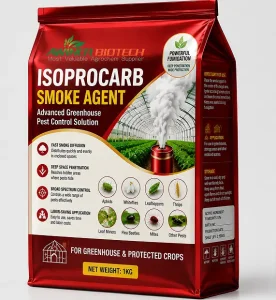
Formulation Solution: Water Dispersible Granules (WDG) and microencapsulated smoke agents (e.g., Isoprocarb/Pyrethroid smoke mixtures) ensuring complete space coverage with minimal solvent exposure.
Primary Targets: Carmine Spider Mites, Broad Mites.
Agronomic Challenge: Ultra-low-volume (ULV) aerial spraying and boom spraying require non-clogging formulations capable of withstanding intense UV radiation.
Formulation Solution: Photostable Emulsifiable Concentrates (EC) with advanced UV-blocking stabilizers and specialized emulsifiers designed for variable water hardness levels.
The future of wholesale chemical manufacturing relies on engineering formulations that maximize active ingredient bioavailability while drastically minimizing environmental impact. Raw chemical synthesis is no longer sufficient; precision physical processing and nano-scale engineering define the modern state of the art.
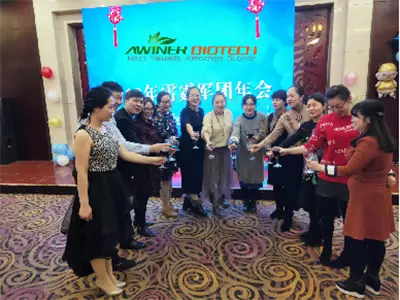
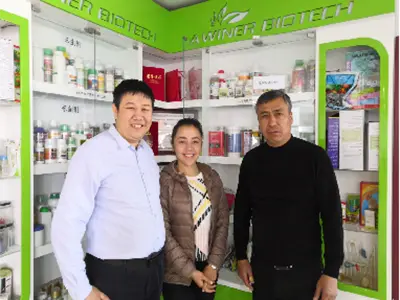
Awiner Biotech was founded in 2006, located in the north of China—Shijiazhuang, Hebei Province. The city is strategically close to our capital Beijing, with convenient access to major shipping ports and international logistics networks.
Awiner Biotech is deeply committed to researching, producing, and distributing premium agrochemicals worldwide. We main deal with comprehensive crop protection lines including pesticides, acaricides, herbicides, fungicides, plant growth regulators (PGR), and public health pesticides.
Our company operates modern automated synthesis reactors, ultra-fine air-jet milling lines, and multi-tier quality control laboratories equipped with High-Performance Liquid Chromatography (HPLC) and Gas Chromatography (GC) infrastructure. Every batch of product undergoes rigorous testing to guarantee exact concentration, emulsion stability, and shelf-life performance before shipment.
Up to now, we have won trusted customers across 30+ countries including Iraq, Iran, Afghanistan, Pakistan, India, Libya, Syria, Turkey, Yemen, Ukraine, Russia, Kazakhstan, Uzbekistan, Chile, Bolivia, Mexico, Brazil, Paraguay, Nigeria, Djibouti, Rwanda, Somalia, Malaysia, Cambodia, Nepal, Myanmar, and beyond.
We maintain an active physical presence in major global agrochemical trade expos. Our team regularly participates in key industry exhibitions in Turkey, Iran, Pakistan, Nigeria, Russia, Cambodia, Malaysia, Uzbekistan, establishing direct dialogues with local distributors and agricultural enterprises.
We go directly to our customers' countries to conduct on-the-ground market inspections, analyze regional pest pressure, solve localized application problems, and evaluate product performance under real climatic conditions. We frequently host global partners at our Shijiazhuang manufacturing facilities.
Discover our specialized portfolio of plant growth regulators, broad-spectrum fungicides, systemic insecticides, and public health pest management products.
Clear, authoritative answers regarding chemical compatibility, custom OEM synthesis, container logistics, and resistance mitigation strategies.
Our factory utilizes advanced wet-milling equipment to achieve sub-2-micron particle sizes. We incorporate premium non-ionic and anionic surfactant packages (e.g., tristyrylphenol ethoxylates and block copolymers) that create sterically hindered electrostatic barriers. This prevents particle agglomeration, Ostwald ripening, and hard-packing sediment formation, ensuring 24-month shelf stability under ambient conditions.
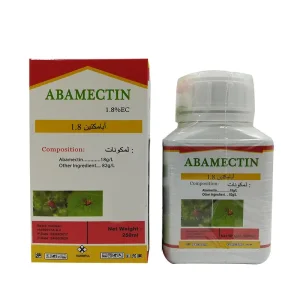
Abamectin (IRAC Group 6) targets glutamate-gated chloride channels. To prevent high-level metabolic resistance, we recommend limiting Abamectin applications to 1–2 times per growing season. It should be rotated in sequence with IRAC Group 10B growth inhibitors (e.g., Etoxazole) during early egg/nymph build-up, and IRAC Group 25A compounds (e.g., Cyflumetofen) during peak adult outbreaks.
Yes. We provide complete OEM/ODM customized packaging solutions ranging from 10ml ampoules, 100ml–1L fluorinated HDPE bottles to 200L bulk drums. Furthermore, our regulatory compliance team provides detailed technical dossiers (GLP analytical reports, Certificate of Analysis, MSDS, FAO specification alignment) to support registration with Ministries of Agriculture across Middle Eastern, South American, and African nations.
Mites reside heavily on the abaxial (underside) surfaces of leaves. Modern organosilicone trisiloxane alkoxylate surfactants drastically lower water surface tension (from ~72 mN/m down to <22 mN/m), enabling "super-spreading" action. This allows the spray solution to flow into stomata and reach hidden micro-habitats, increasing biological mortality by 35%–50% compared to standard water sprays.
All chemical shipments strictly comply with UN International Maritime Dangerous Goods (IMDG) codes. Liquid formulations containing volatile organic solvents are shipped in UN-certified UN-approved pressure tested steel or reinforced fluorinated containers with leak-proof secondary seals, ensuring zero cross-contamination or degradation during long-transit ocean voyages.
 Awiner Biotech