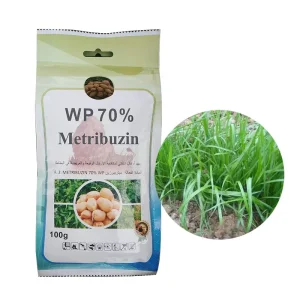
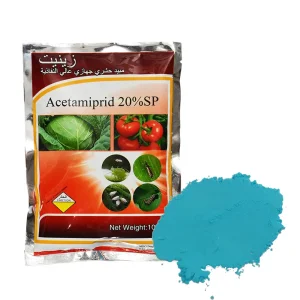
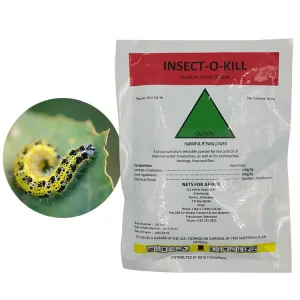
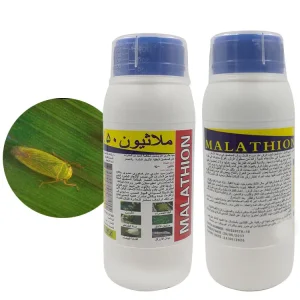
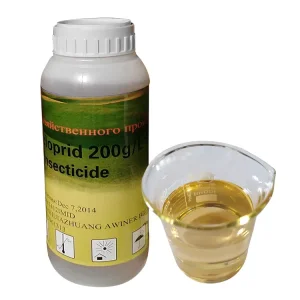
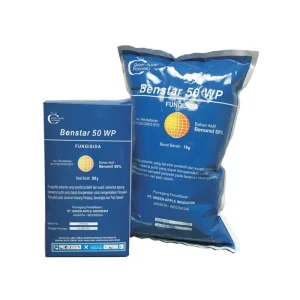
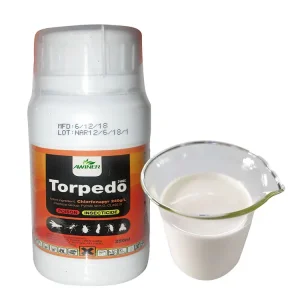
Explore our wholesale insect and pest control portfolio engineered for global agricultural distribution and commercial crop protection.
Understanding the entomological threat of hemipteran vectors and the commercial necessity for targeted chemical management.
Psyllids (family Psyllidae and Triozidae), particularly the Asian Citrus Psyllid (Diaphorina citri), Pear Psylla (Cacopsylla pyricola), and Potato/Tomato Psyllid (Bactericera cockerelli), are devastating sap-sucking pests. Beyond direct phloem feeding, their primary commercial damage stems from serving as biological vectors for unculturable phloem-restricted bacteria such as Candidatus Liberibacter asiaticus (CLas), the causal agent of Huanglongbing (HLB) or Citrus Greening disease. Effective wholesale chemical suppression is the primary line of defense to prevent catastrophic crop failure globally.
Once a commercial orchard or field is infected with vector-borne pathogens, curative solutions are non-existent. Commercial growers must maintain vector populations near zero during critical vegetative flush cycles. This economic reality demands access to highly reliable, bulk-manufactured insecticide formulations (including systemic Neonicotinoids, Pyrroles, and Synthetic Pyrethroids) backed by dependable factory pricing and uninterrupted global logistics chains.
A comprehensive analysis of geographic commercial pressure and vector distribution across key global agricultural basins.
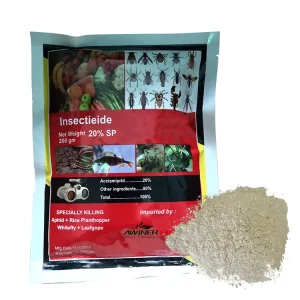
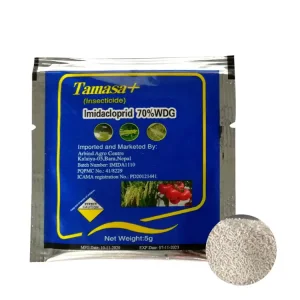
In regions such as Brazil (São Paulo state citrus belt) and North America (Florida, California, and Texas), Diaphorina citri management dominates orchard expenditure. Large-scale enterprise growers require high-purity bulk actives like Imidacloprid 75% WDG, Acetamiprid 20% SP, and Chlorfenapyr 36% SC to maintain aggressive rotation schedules and mitigate resistance.
Pear Psylla (Cacopsylla pyricola) poses a severe economic threat in Southern Europe and the Middle East, causing "psylla shock" and soot mold via honeydew exuding. Growers across Italy, Turkey, Syria, and Iraq demand fast-acting knockdowns paired with persistent systemic control to protect pome fruit quality.
Rapid expanding commercial orchards in Southeast Asia (Vietnam, Cambodia, Myanmar) and sub-Saharan Africa (Nigeria, Rwanda) face increasing vector densities. Demand in these markets focuses on broad-spectrum, cost-effective formulations with reliable shelf life and adaptable tank-mix compatibilities.
Procurement Trend Note: Modern global agricultural enterprises are shifting from single-agent chemical controls toward systematic rotational programs. Bulk purchasing strategies now prioritize multi-mode-of-action packages to ensure continuous suppression of juvenile and adult psyllid populations.
Preventing chemical resistance through scientific active ingredient selection and precise targeted applications.
| IRAC Group | Active Ingredient & Formulation | Target Stage | Primary Action Mechanism | Agronomic Utility |
|---|---|---|---|---|
| Group 4A (Neonicotinoids) | Imidacloprid (75% WDG, 20% SL) Acetamiprid (20% SP) |
Nymphs & Adults | Nicotinic acetylcholine receptor (nAChR) competitive modulators | Exceptional systemic xylem transport; ideal for soil drench & flush-shoot foliage spray. |
| Group 13 (Pyrroles) | Chlorfenapyr (36% SC) | Nymphs & Adults | Uncoupler of oxidative phosphorylation via disruption of proton gradient | Translaminar activity; critical rotational tool for breaking Neonicotinoid-resistant strains. |
| Group 3A (Pyrethroids) | Alpha-Cypermethrin (5% EC, 10% EC) Permethrin / Lambda-Cyhalothrin |
Adult Vectors | Voltage-gated sodium channel modulators | Rapid contact knockdown and repellent barrier effect on orchard perimeters. |
| Group 1B (Organophosphates) | Malathion, Diazinon (95% TC, 600g/L EC) | Broad Spectrum Nymphs/Adults | Acetylcholinesterase (AChE) inhibitors | High vapor activity and quick suppression during heavy pest population outbreaks. |
Psyllids feed exclusively on vascular phloem sap. Active ingredients like Imidacloprid and Acetamiprid provide systemic xylem uptake and translaminar distribution within tender young leaf tissue (flush), ensuring that feeding nymphs ingest lethal doses quickly before vectoring pathogens.
Synthetic pyrethroids such as Alpha-cypermethrin act as contact knockdowns and deterrents. Applying perimeter sprays during adult migration periods creates a protective barrier around commercial groves, drastically reducing vector entry rates.
Field-tested field management frameworks optimized for commercial orchards and high-density crops worldwide.
Target: Asian Citrus Psyllid (Diaphorina citri)
Protocol: Timing is aligned with feather-stage spring, summer, and autumn leaf flushes. Soil drenches of Imidacloprid 20% SL are followed by foliar applications of Acetamiprid 20% SP combined with organosilicone surfactants to penetrate leaf wax.
Target: Pear Psylla (Cacopsylla pyricola)
Protocol: Pre-bloom dormant oil sprays followed by early post-bloom rotational treatments using Chlorfenapyr 36% SC. This avoids pyrethroid-induced resurgence of secondary mite pests while penetrating dense honeydew layers.
Target: Potato/Tomato Psyllid (Bactericera cockerelli)
Protocol: Vector suppression in potato fields to prevent Candidatus Liberibacter solanacearum transmission. Rotation between Alpha-Cypermethrin 10% EC and neonicotinoid foliar sprays during early emergence.
How Awiner Biotech leverages automated smart synthesis, vertical integration, and stringent QA/QC to serve global B2B partners.
Located in Shijiazhuang, Hebei Province (near Beijing), Awiner Biotech has been an agrochemical innovation leader since 2006.
Key financial and operational factors influencing your agrochemical pricelist structures.
Technical-grade active ingredient pricing directly impacts formulated product costs. By maintaining direct strategic chemical reserves in Hebei, Awiner Biotech buffers clients against upstream supply disruptions.
Water Dispersible Granules (WDG) and Suspension Concentrates (SC) require advanced emulsifiers and dispersants compared to basic Soluble Powders (SP) or Emulsifiable Concentrates (EC), influencing unit economics.
Order volumes, customized bottle molds, co-polymers, and multi-color label requirements alter final FOB/CIF pricing. Bulk container loading significantly optimizes per-unit freight costs.
Complementary insecticides, herbicides, plant growth regulators, and fungicides from our factory lines.
Awiner Biotech: A trusted agrochemical manufacturer bridging Northern China with agricultural hubs across 5 continents.
Founded in 2006 in Shijiazhuang, Hebei Province (close to Beijing), Awiner Biotech is dedicated to the research, production, and international distribution of agrochemical solutions. Our comprehensive portfolio encompasses insecticides, herbicides, fungicides, plant growth regulators, and public health products engineered to solve complex agricultural challenges.
We regularly conduct direct market surveys and field consultations in our key market destinations. Our teams participate in major international agricultural exhibitions across Turkey, Iran, Pakistan, Nigeria, Russia, Cambodia, Malaysia, Uzbekistan, and more. This localized experience enables us to understand exact regional crop protection needs and tailor chemical formulations accordingly.
Established Market Presence: Our products are registered and trusted by agricultural distributors across Iraq, Iran, Afghanistan, Pakistan, India, Libya, Syria, Turkey, Yemen, Ukraine, Russia, Kazakhstan, Uzbekistan, Chile, Bolivia, Mexico, Brazil, Paraguay, Nigeria, Djibouti, Rwanda, Somalia, Malaysia, Cambodia, Nepal, Myanmar, and beyond.
Expert answers to critical B2B questions regarding psyllid control chemical selection, pricing, resistance, and shipping.
 Awiner Biotech