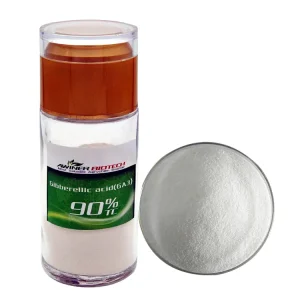
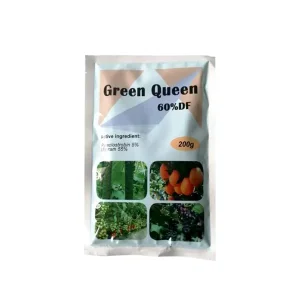
Explore our premium grade agrochemical active ingredients and end-use formulations manufactured to international FAO and WHO standards.
In modern industrial agriculture, particularly large-scale mechanized cotton farming, the combination of Thidiazuron (TDZ) and Diuron represents the gold standard for pre-harvest defoliation and boll ripening. As global cotton production shifts heavily toward automated mechanical harvesting—to reduce labor overhead, accelerate harvest windows, and preserve lint color grade—the market demand for high-efficiency plant growth regulator (PGR) tank mixes and co-formulations has surged exponentially.
Thidiazuron operates as a highly active substituted phenylurea plant growth regulator that mimics cytokinin activity, triggering the synthesis of endogenous ethylene within the plant's leaf petioles. This process induces the natural formation of an abscission layer at the base of the leaf stem, causing green leaves to drop cleanly without desiccating or sticking to the plant. However, TDZ alone exhibits temperature dependency, showing reduced efficacy under cooler ambient conditions (below 18°C/64°F). To overcome this physiological limitation, agricultural chemists introduced Diuron—a substituted urea photosystem II (PSII) inhibitor herbicide.
Agronomic Information Gain: When combined with Thidiazuron, Diuron enhances leaf permeability, accelerates chlorosis, and neutralizes the temperature sensitivity of TDZ. This powerful dual-action synergy guarantees rapid leaf drop, inhibits regrowth of juvenile foliage, and accelerates the natural opening of mature cotton bolls without compromising fiber length or tensile strength.
The global market for wholesale Thidiazuron Diuron mixtures (commonly available as 500 g/L SC, 540 g/L SC, 360+180 g/L SC, or 50%+25% WP/WDG) is heavily concentrated across major cotton-producing zones including North America (US Sunbelt), South America (Brazilian Cerrado), Central Asia (Uzbekistan, Turkmenistan), South Asia (India, Pakistan), and East Asia (China's Xinjiang Autonomous Region). B2B procurement managers and commercial importers actively evaluate quotes and pricelists based on active ingredient purity, suspension stability, cold-water dispersibility, and regulatory compliance dossiers.
Understanding the precise biochemical synergy between Thidiazuron and Diuron is vital for institutional buyers, agricultural distributors, and farm management enterprises seeking to maximize return on investment (ROI). Below is an technical parameter breakdown comparing individual active ingredients against their combined commercial co-formulation.
| Parameter / Metric | Thidiazuron (TDZ) Technical Grade | Diuron Technical Grade | Thidiazuron + Diuron Co-Formulation (SC/WP) |
|---|---|---|---|
| CAS Registry Number | 51707-55-2 | 330-54-1 | Mixture Combination (Pre-Mix) |
| Primary Mode of Action | Cytokinin mimicry; triggers ethylene synthesis & abscission layer formation | Photosystem II (PSII) electron transport inhibitor | Dual-action: Hormonal leaf separation + photosynthetic interruption |
| Temperature Sensitivity | High (Requires > 20°C for optimal performance) | Low to Moderate (Active across wider thermal ranges) | Synergistic Stability: Effective down to 12°C - 15°C |
| Vegetative Regrowth Control | Moderate inhibition | Minimal systemic inhibition | Superior Suppression: Prevents secondary terminal sprout regrowth |
| Typical Commercial Form Factor | 98% TC, 50% WP, 500 g/L SC | 98% TC, 80% WDG, 500 g/L SC | 360+180 g/L SC, 50%+25% WP, 12% SC |
| Boll Opening Acceleration | Secondary effect | Minimal direct effect | Accelerated: Promotes uniform boll dehiscence and drying |
Thidiazuron acts on the plant's hormonal signaling pathway. Upon foliar absorption, it signals the plant that leaves have reached physiological senescence. This stimulates cell division in the abscission zone at the base of the petiole, releasing cellulase and pectinase enzymes. These enzymes dissolve the middle lamella connecting the leaf stem to the branch, causing the green leaf to fall under its own weight while remaining structurally intact.
Diuron blocks electron flow in the photosynthetic pathway by binding to the Q_B-binding niche on the D1 protein of photosystem II. This disrupts ATP and NADPH generation, causing an accumulation of reactive oxygen species (ROS) in leaf tissue. When combined with TDZ, this mild, controlled oxidative stress accelerates leaf yellowing and desiccation without killing leaf tissues too rapidly—preventing leaf "freezing" (where dead leaves remain stuck to the vine).
When enterprise buyers evaluate wholesale quotes for Thidiazuron Diuron, the primary procurement hub remains China due to its integrated chemical manufacturing eco-system, raw material upstream synthesis, and advanced formulation technologies. China's agrochemical cluster delivers unmatched cost efficiencies and scale advantages that translate directly into competitive B2B pricelists.
China controls the complete synthetic supply chain for both Thidiazuron (starting from phenyl isocyanate and 5-amino-1,2,3-thiadiazole) and Diuron (synthesized from 3,4-dichloroaniline and dimethylamine). Local availability of basic chemical precursors isolates Chinese factories from global raw material bottlenecks.
Modern Chinese formulation facilities utilize state-of-the-art horizontal sand mills to achieve ultrafine particle sizes (D90 < 5 microns) for Thidiazuron Diuron SC formulations. This guarantees superior rainfastness, zero nozzle clogging during aerial drone spraying, and long-term shelf storage stability.
With automated high-speed liquid filling lines, factories can process 100mL to 1000L HDPE containers, customized fluorinated bottles, and customized multi-layer aluminum foil bags (for WP/WDG) under private label contracts with rapid turnaround times.
Furthermore, major production hubs situated in northern and eastern China enjoy direct logistics corridors to primary ocean freight ports such as Qingdao, Tianjin, and Shanghai. This enables streamlined container loading, automated customs clearance, and reduced inland freight tariffs—enabling agrochemical distributors to secure landed cost advantages.
For B2B buyers requesting an RFQ (Request for Quote) for wholesale Thidiazuron Diuron mixtures, pricing fluctuates based on several core commercial parameters. A structural breakdown of these pricing variables empowers procurement officers to negotiate optimal purchasing terms and manage seasonal inventory risk.
Agricultural efficacy of Thidiazuron Diuron is directly linked to environmental variables including daytime ambient temperature, relative humidity, crop maturity, and canopy density. Below are tailored application guidelines for major regional farming ecosystems:
Application Window: When natural boll opening reaches 60%-70% and upper young bolls are over 21 days old.
Dosage: 300-450 mL/ha of 540 g/L SC diluted in 30-45L water via UAV aerial application (drones) or tractor-mounted boom sprayers.
Result: Rapid leaf drop within 7-10 days, allowing early mechanical harvest with stripper/picker machines before winter frost.
Application Window: Applied during late-season growth where vigorous vegetative canopy risks regrowth.
Dosage: 400-500 mL/ha of TDZ+Diuron SC combined with organosilicone spreaders.
Result: Excellent green leaf drop without leaf burning, maintaining low trash content and high trash-free leaf classification in ginning operations.
Application Window: Applied when night temperatures drop below 15°C.
Dosage: Slightly higher dosage (up to 500-600 mL/ha) or tank-mixed with Ethephon for combined defoliation and boll ripening.
Result: Diuron mitigates TDZ cold-stalling, ensuring predictable abscission layer formation despite thermal fluctuations.
Agronomist Tip for Maximum Efficiency: Avoid application if heavy rain is forecasted within 6 hours. High nitrogen fertilizer residual levels in the soil may delay defoliation response; adjust spray volume to ensure complete coverage of lower inner leaves.
The global market for chemical defoliants is undergoing rapid technological evolution, driven by regulatory changes, precision agriculture adoption, and environmental sustainability demands.
Traditional high-volume ground spraying is being replaced by Ultra-Low Volume (ULV) drone application. Modern Thidiazuron Diuron SC formulations are engineered with specialized drift-reduction agents, enhanced specific gravity, and micro-encapsulation tech to prevent spray drift and ensure droplet adherence at 15-30 L/ha water carrier rates.
Regulatory authorities in the EU, South America, and Asia are tightening restrictions on aromatic solvents and volatile organic compounds (VOCs). The industry is moving away from Emulsifiable Concentrates (EC) toward Solvent-Free Water-Based Suspension Concentrates (SC) and Water Dispersible Granules (WDG), drastically reducing eco-toxicity and applicator hazard profiles.
Awiner Biotech was founded in 2006, located in north of China-Shijiazhuang, Hebei Province. The city is close to our capital Beijing, transportation is convenient. Awiner Biotech is committed to research, produce and distribute agrochemicals, mainly dealing with pesticides, herbicides, fungicides, plant growth regulators, and public health pesticides.
With high-standard analytical laboratories, modern synthesis units, and versatile packaging facilities, Awiner Biotech ensures that every batch of Thidiazuron Diuron and companion agrochemicals adheres strictly to international quality standards.
Up to now, we have won customers from Iraq, Iran, Afghanistan, Pakistan, India, Libya, Syria, Turkey, Yemen, Ukraine, Russia, Kazakhstan, Uzbekistan, Chile, Bolivia, Mexico, Brazil, Paraguay, Nigeria, Djibouti, Rwanda, Somalia, Malaysia, Cambodia, Nepal, Myanmar and so on.
Our company actively participates in international agrochemical exhibitions across Turkey, Iran, Pakistan, Nigeria, Russia, Cambodia, Malaysia, Uzbekistan, etc. We regularly visit customer countries to conduct market inspections, analyze agronomic challenges, and deliver tailored crop protection solutions.
Browse our extensive catalogue of technical grade actives and formulated solutions for global distribution.
 Awiner Biotech