The global agricultural economy faces an unprecedented biological challenge from phloem-feeding hemipteran vectors, specifically the whitefly species complex dominated by Bemisia tabaci (Middle East-Asia Minor 1 and Mediterranean cryptic species complexes) and Trialeurodes vaporariorum (Greenhouse Whitefly). These microscopic pests threaten multi-billion-dollar commercial cropping systems—spanning greenhouse Solanaceae (tomatoes, peppers), Cucurbitaceae (cucumbers, melons), industrial Malvaceae (cotton), and sub-tropical cash crops.
The economic damage inflicted by whiteflies is dual-faceted: direct plant sap depletion causing physiological chlorosis and vigor decay, and indirect transmission of devastating plant viruses. Whiteflies act as primary vectors for over 110 plant viruses, most notably Begomoviruses such as Tomato Yellow Leaf Curl Virus (TYLCV), Criniviruses, and Carlaviruses. Furthermore, the excretion of honeydew fosters dark sooty mold growth, severely compromising photosynthetic capacity and commercial crop grading.
Both adults and nymphs pierce the phloem tissue with stylets, sucking essential amino acids and sugars, leading to stunted plant development, leaf wilt, and dramatic yield loss reaching up to 80% in unprotected fields.
Persistent and semi-persistent transmission of Begomoviruses (e.g., TYLCV) occurs within minutes of feeding. A single whitefly per plant can trigger systemic viral outbreaks across entire commercial greenhouses.
Copious honeydew deposits on foliage and fruit become an ideal substrate for sooty mold (*Capnodium spp.*), reducing photosynthetic photon flux density and rendering fruits unmarketable for fresh exports.
Global pesticide buyers and agricultural distributors require stable, scalable, and highly compliant chemical manufacturing partners. The chemical industrial zone of Shijiazhuang, Hebei Province, China, has emerged as a premier hub for technical-grade active ingredient (TC) synthesis and advanced agrochemical formulation technologies.
China accounts for over 70% of global active ingredient intermediate production. Proximity to primary precursor synthesis (pyridine derivatives, chloronitrobenzene, and neonictinoid intermediate chains) protects Chinese factories from raw material volatility, maintaining stable wholesale pricing structures for B2B buyers.
Strategically linked to Beijing transit hubs and Tianjin Deepwater Port, Chinese agrochemical suppliers streamline international ocean freight logistics. Customized packaging—from 100ml HDPO/Co-ex bottles to 200L steel drums—is filled under automated, zero-contamination conditions.
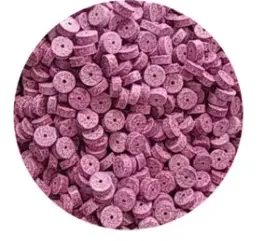
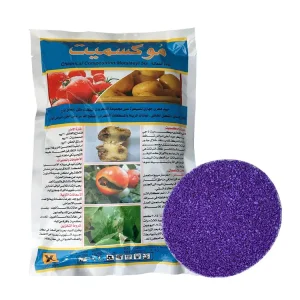
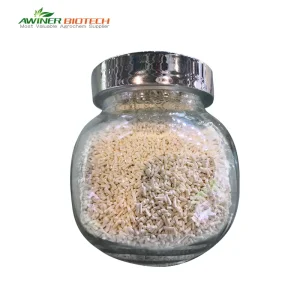
Modern whitefly chemical management extends beyond simple emulsifiable concentrates (EC). Chinese manufacturers excel in environmentally safer, high-efficacy particle formulations:
Combating whitefly populations requires a clear understanding of Insecticide Resistance Action Committee (IRAC) Modes of Action (MoA). Relying on a single chemical class leads to rapid target-site mutations and metabolic resistance. Below is an expert breakdown of active ingredients used in commercial whitefly control, formulation dynamics, and market pricing metrics.
| Active Ingredient | IRAC Group | Primary Mode of Action | Common Formulations | Target Whitefly Stage | Wholesale Cost Metric |
|---|---|---|---|---|---|
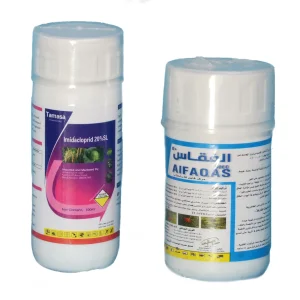
| Imidacloprid | 4A (Neonicotinoid) | Nicotinic acetylcholine receptor (nAChR) agonist | 20% SL, 350g/L SC, 70% WDG | Nymphs & Adults | Competitive / High Volume Benchmark |
| Pymetrozine | 9B (Chordotonal Organ Modulator) | Immediate & irreversible feeding cessation | 25% WP, 50% WDG | Nymphs & Adults | Mid-Tier / Key Resistance Rotator |
| Dinotefuran | 4A (Neonicotinoid 3rd Gen) | High affinity nAChR binding without cross-resistance | 20% WDG, 70% WDG | Adults & Systemic Foliar | Premium / Rapid Knockdown |
| Thiamethoxam | 4A (Neonicotinoid) | Systemic xylem translocation, root dip & spray | 25% WDG, 50% WDG | Early Stage Nymphs | Standard Bulk Commodity |
| Pyriproxyfen | 7C (Juvenile Hormone Mimic) | Inhibits metamorphosis, egg hatching & adult sterility | 10% EC, 100g/L EC | Eggs & Young Instar Nymphs | Specialized Ovicide / IPM Friendly |
| Spirotetramat | 23 (Tetramic Acid Derivative) | Lipid biosynthesis inhibitor (2-way systemic phloem/xylem) | 150g/L SC, 22.4% SC | Hidden Nymphs & Root Feeding | High-End Specialty Active |
When requesting factory quotations for whitefly control solutions, wholesale procurement officers must evaluate multiple commercial parameters that directly dictate FOB/CIF price dynamics:
The purity percentage of raw technical chemical (e.g., Imidacloprid 97% TC vs 95% TC) alters formulation stability and solvent requirements. High purity eliminates toxic isomers and reduces phytotoxicity risks.
Whitefly leaves and insect bodies feature hydrophobic waxy cuticles. Premium formulations incorporate ethoxylated fatty amines or organosilicone spreaders to ensure translaminar penetration, adjusting batch pricing accordingly.
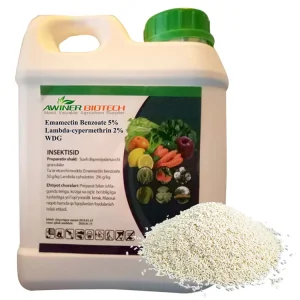
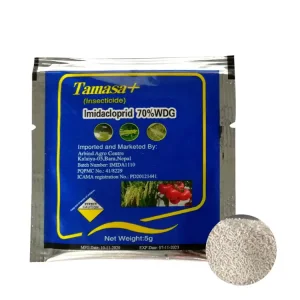
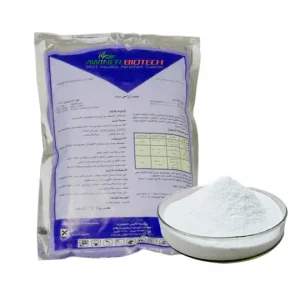
From multi-layer fluorinated HDPE containers to custom-printed aluminum foil sachets for WDG products, packaging integrity prevents chemical degradation during trans-equatorial maritime shipping.
Overreliance on broad-spectrum chemistry has led to whitefly resistance against older synthetic pyrethroids and organophosphates. Modern macro-industry solutions demand strict Integrated Pest Management (IPM) spray regimes tailored to geographical climate conditions and cropping systems.
Challenge: Year-round warm temperatures facilitate up to 12-15 generations of Bemisia tabaci annually under polyhouse structures in regions such as Jordan, Egypt, and Saudi Arabia.
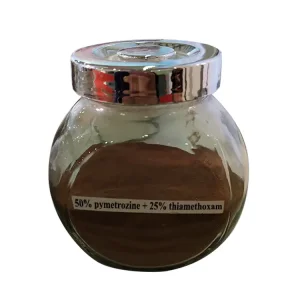
Recommended Solution: Early drip irrigation chemigation using Imidacloprid 20% SL or Thiamethoxam 25% WDG for systemic root uptake. Follow up with foliar sprays of Pymetrozine 50% + Dinotefuran 20% WDG during peak adult flight to arrest feeding within 1 hour.
Challenge: Massive field acreages across Brazil, Paraguay, and Mexico experience intense whitefly pressures that vectors cotton leaf curl viruses and weakens boll development.
Recommended Solution: Tank-mix strategies combining juvenile hormone mimics like Pyriproxyfen ( targeting eggs/nymphs) with fast-acting knockdown agents such as Alpha-cypermethrin or Emamectin Benzoate to break generation overlaps.
To preserve chemical efficacy and maximize ROI on agrochemical purchases, agricultural extensions recommend a 30-day block rotation strategy:
Block 1 (Days 1–15 - Plant Establishment): Systemic root drench (Group 4A: Imidacloprid or Thiamethoxam). Prevents early viral inoculation.
Block 2 (Days 16–30 - Vegetative Growth): Foliar application of Group 9B (Pymetrozine 25% WP). Blocks insect mouthparts; starves adults and nymphs without harming beneficial predatory mites.
Block 3 (Days 31–45 - Flowering & Fruiting): Group 23 (Spirotetramat) or Combination WDG formulations (Dinotefuran + Pymetrozine). Manages hidden populations on lower canopy foliage via 2-way phloem mobility.
Navigating international pesticide registrations requires stringent technical documentation. Professional Chinese agrochemical factories support global distributors by supplying complete regulatory dossiers compliant with national Ministries of Agriculture.
Official ICAMA (Institute for the Control of Agrochemicals, Ministry of Agriculture) export certificates, ISO 9001 quality management compliance, and ISO 14001 environmental standards assurance.
High-Performance Liquid Chromatography (HPLC) assay purity verification, suspensibility tests (>90% WDG stability), emulsion stability, wet sieve residue analysis, and accelerated storage testing at 54°C.
Comprehensive Safety Data Sheets (SDS/MSDS), Certificate of Analysis (COA) per batch, UN-certified hazardous goods packaging (IMDG Code compliance for ocean freight).
Awiner Biotech was founded in 2006, located in the north of China—Shijiazhuang, Hebei Province. The city is close to our capital Beijing; transportation is highly convenient. Awiner Biotech is committed to research, produce, and distribute agrochemicals, mainly dealing with pesticides, herbicides, fungicides, plant growth regulators, and public health pesticides.
Through continuous technological innovation and strict quality management, we provide global agricultural importers and distributors with high-grade active ingredients and tailored end-user formulations.
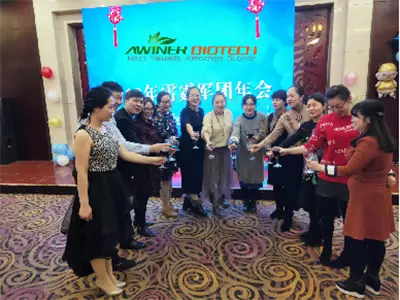
Up to now, we have won trusted long-term clients across international markets, including:
Iraq, Iran, Afghanistan, Pakistan, India, Libya, Syria, Turkey, Yemen, Ukraine, Russia, Kazakhstan, Uzbekistan, Chile, Bolivia, Mexico, Brazil, Paraguay, Nigeria, Djibouti, Rwanda, Somalia, Malaysia, Cambodia, Nepal, Myanmar, and beyond.
International Exhibitions: Our company actively participates in major global agrochemical trade fairs in countries such as Turkey, Iran, Pakistan, Nigeria, Russia, Cambodia, Malaysia, and Uzbekistan.
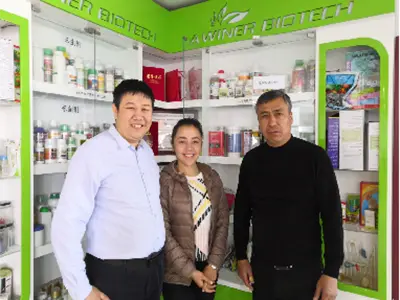
We regularly travel directly to customer countries to conduct comprehensive agricultural market inspections, analyze pest pressure challenges, and solve local field application issues. By understanding regional crop usage patterns firsthand, we build robust commercial relationships, while warmly welcoming international client visits to our Shijiazhuang manufacturing facilities.
 Awiner Biotech