Premium grade plant growth regulators, insecticides, and agricultural acaricide formulations available for export.
Strategic overview of phytophagous mite control, global market shifts, and Chinese chemical manufacturing capability.
Phytophagous mites, belonging primarily to the families Tetranychidae (spider mites), Eriophyidae (gall or rust mites), and Tenuipalpidae (false spider mites), represent one of the most economically devastating threats to global agricultural productivity. Microscopic in size yet capable of exponential population growth, species such as the Two-Spotted Spider Mite (Tetranychus urticae), Citrus Red Mite (Panonychus citri), and European Red Mite (Panonychus ulmi) inflict severe damage on field crops, orchards, vineyards, and greenhouse crops worldwide.
Under optimal thermal conditions (25°C - 35°C), female spider mites complete their life cycle from egg to adult in as few as 7 to 10 days, laying over 100 eggs each. This unchecked fecundity leads to rapid leaf chlorosis, desiccation, defoliation, and catastrophic yield collapse if left unmanaged.
Mites possess high mutation frequencies and short generation times, enabling rapid selection pressure against conventional single-site active ingredients. Resistance to organophosphates, pyrethroids, and older chemistries has elevated demand for modern, multi-stage acaricide modes of action (MOA).
China accounts for over 65% of global active ingredient (AI) manufacturing capacity for specialized acaricides. Chinese chemical clusters provide unrivaled synthesis scale, backward raw-material integration, and customized formulation flexibility for global commercial buyers.
Transparent reference wholesale price index for leading technical concentrates (TC) and key formulated acaricides (FOB China Port standards).
Pricing for agricultural mite pesticides is driven by technical purity grades, global petrochemical intermediate costs, solvent selection (e.g., green methyl esters vs. traditional aromatics), and order volumes. Below is an expert-curated industrial price index reflecting major commercial active ingredients produced by top-tier Chinese manufacturers.
| Active Ingredient (AI) | IRAC Group | Formulation Type / Concentration | Target Life Stages | Est. Wholesale Price Range (FOB China) | Primary Commercial Use |
|---|---|---|---|---|---|
| Abamectin | Group 6 (Glutamate-gated chloride channel allosteric modulators) | 1.8% EC, 5% EC, 95% TC | Adults, Nymphs | $14.50 - $19.20 / L (5% EC) | Broad-spectrum control in cotton, vegetables, citrus |
| Bifenazate | Group 20D (Neuronal inhibitors of complex III) | 430g/L SC, 98% TC | Eggs, Larvae, Nymphs, Adults | $38.00 - $46.50 / L (430g/L SC) | High-value fruits, berries, greenhouse ornamentals |
| Spirodiclofen | Group 23 (Inhibitors of acetyl CoA carboxylase) | 240g/L SC, 97% TC | Eggs, Nymphs (Female Sterility) | $18.50 - $24.00 / L (240g/L SC) | Citrus red mite, apple spider mites, nut crops |
| Pyridaben | Group 21A (Mitochondrial complex I electron transport inhibitors) | 15% EC, 20% WP, 95% TC | All Stages (Fast Knockdown) | $8.80 - $12.50 / kg (20% WP) | Tea plants, fruit trees, open field crops |
| Etoxazole | Group 10B (Mite growth inhibitors) | 110g/L SC, 20% SC, 98% TC | Ovicidal & Early Nymphal Stages | $22.00 - $28.50 / L (110g/L SC) | Long-lasting preventative control in orchards |
| Fenpyroximate | Group 21A (METI acaricide) | 5% SC, 5% EC, 95% TC | Larvae, Nymphs, Adults | $12.20 - $16.80 / L (5% SC) | Vineyards, fruit trees, commercial vegetables |
| Hexythiazox | Group 10A (Mite growth inhibitors) | 5% EC, 10% WP, 98% TC | Eggs, Larvae | $10.50 - $14.20 / kg (10% WP) | Melons, field crops, integrated pest management |
*Note: Prices indicated are indicative based on Q1/Q2 market trends and vary depending on packaging specs (e.g., 100mL bottles vs. 200L drums), surfactant quality, and raw chemical intermediate indices.
Scientific formulation engineering designed to defeat cross-resistance and maximize crop safety.
Modern acaricide delivery has evolved away from solvent-heavy Emulsifiable Concentrates (EC) laden with aromatic hydrocarbons, which cause phytotoxicity under high-temperature orchard conditions. Leading Chinese suppliers like Awiner Biotech now utilize modern Suspension Concentrates (SC) and Water Emulsions (EW).
By particle size reduction down to 1-3 microns, these formulations deliver optimal coverage over hydrophobic leaf surfaces, enhancing translaminar penetration where spider mites colony on the underside of foliage.
To eliminate mite outbreaks permanently, application protocols must combine active ingredients with complementary targeted life-stage efficacy:
Field-proven spray regimes adapted to global climate zones, crop foliage densities, and pest densities.
Challenge: Multi-generational overlap during spring flush and autumn dry weather. Mites hide in interior tree canopies.
Solution: Tank mix of Spirodiclofen 240g/L SC (ovicidal protection) + Bifenazate 430g/L SC (adult knockdown) applied with high-pressure air-assisted orchard sprayers.
Challenge: Rapid lifecycle acceleration due to warm microclimates in tomato and cucumber greenhouses.
Solution: Rotation of Abamectin 5% EC with Etoxazole 110g/L SC. Inclusion of non-ionic silicone penetrants to breach dense webbing layers.
Challenge: Mid-season dry spells trigger population explosions that defoliate cotton bolls prematurely.
Solution: Aerial drone (UAV) ultra-low volume (ULV) application of high-concentrate Pyridaben 15% EC combined with anti-evaporation adjuvants.
Why sourcing from leading agrochemical manufacturers in Shijiazhuang, Hebei offers unmatched stability and commercial value.
As the primary chemical production hub in Northern China, Shijiazhuang, Hebei Province (adjacent to Beijing) has built an integrated ecosystem for synthesis, formulation development, and international logistics. Companies like Awiner Biotech (founded in 2006) leverage this strategic cluster advantage to provide global buyers with superior supply chain security.
Chinese production facilities maintain direct pipelines to fundamental chemical intermediates (such as chlorinated pyrimidines and cyclic ketoenols). This vertical integration insulates buyers from global raw material price shocks and guarantees uninterrupted chemical synthesis even during global supply bottlenecks.
Flexible automated bottling lines support customized retail and commercial packaging—ranging from 50mL aluminum bottles to 1,000L IBC totes. Full UN-certified hazardous materials packaging compliance ensures seamless transport through international ports (Tianjin/Qingdao).
Assisting international importers with FAO quality benchmarks, ICAMA registration data, and regional regulatory compliance.
Navigating global agrochemical registration demands strict adherence to FAO/WHO specifications, 5-batch analysis reports, GLP toxicity studies, and Certificate of Analysis (COA) validations. Chinese manufacturers provide complete GLP dossier packages to support pesticide registration in Ministries of Agriculture across South America, Eurasia, the Middle East, and Africa.
| Target Region | Primary Regulatory Requirement | Key Mite Pesticide Formulations in Demand | Awiner Dossier Support Provided |
|---|---|---|---|
| Latin America (Brazil, Chile, Bolivia) | Equivalence Registration, Impurity Profiling | Bifenazate 430g/L SC, Abamectin 5% EC | Full 5-Batch Analysis, FAO/WHO Specification, GLP Tox Studies |
| CIS & Eastern Europe (Russia, Kazakhstan, Ukraine) | State Field Efficacy Trials, GOST Standards | Spirodiclofen 240g/L SC, Pyridaben 20% WP | ICAMA Export Certificates, Efficacy Data, MSDS, COA |
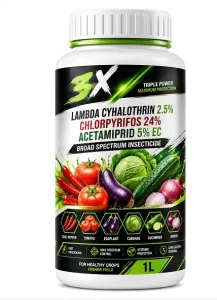
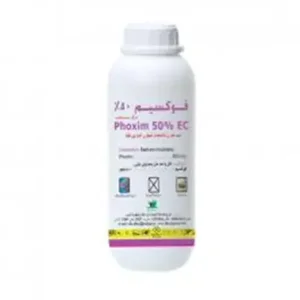
| Middle East (Iraq, Iran, Syria, Turkey, Yemen) | Ministry of Agriculture Import Permits | Lambda-Cyhalothrin + Acetamiprid mixtures, Phoxim 50% EC | Free Sale Certificates, Legalized Certificates of Origin |
| Africa (Nigeria, Rwanda, Djibouti, Somalia) | Pesticide Control Board Authorization | Permethrin EC, Broad Spectrum Combination Miticides | Fast-track Registration Dossiers, Sample Courier Support |
Sustainable pest control through eco-friendly chemistries, beneficial predatory insect preservation, and smart digital farming.
Modern IPM strategies require chemical acaricides that exhibit high selective toxicity toward pest mites while sparing beneficial predatory mites such as Phytoseiulus persimilis and Neoseiulus californicus. Ingredients like Bifenazate and Hexythiazox showcase minimal impact on beneficial pollinators and predatory mites, enabling biological and chemical control to work in synergy.
The integration of agricultural UAVs (drones) equipped with specialized atomizing nozzles allows for pinpoint application of low-volume acaricide suspensions. Micro-droplet deposition guarantees full coverage on foliage undersides while reducing overall water and chemical usage by up to 30%, lowering total operational costs.
Awiner Biotech - Trusted Partner in Agrochemical Innovation Since 2006
Awiner Biotech was founded in 2006, located in north of China-Shijiazhuang, Hebei Province. The city is close to our capital Beijing, transportation is convenient. Awiner Biotech is committed to research, produce and distribute agrochemicals, mainly dealing with pesticides, herbicides, fungicides, plant growth regulators, and public health pesticides.
Up to now, we have won customers from Iraq, Iran, Afghanistan, Pakistan, India, Libya, Syria, Turkey, Yemen, Ukraine, Russia, Kazakhstan, Uzbekistan, Chile, Bolivia, Mexico, Brazil, Paraguay, Nigeria, Djibouti, Rwanda, Somalia, Malaysia, Cambodia, Nepal, Myanmar, and so on.
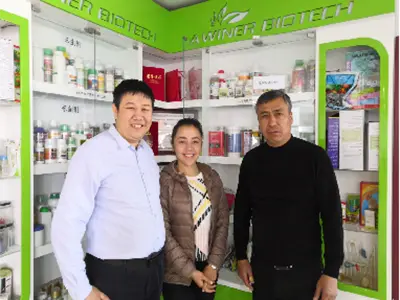
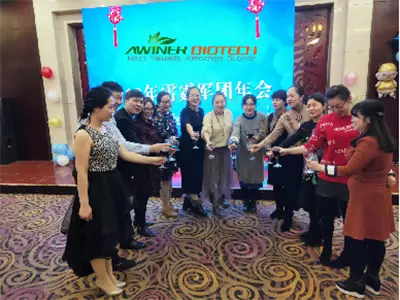
Serving extensive international agricultural markets across Asia, Middle East, South America, and Africa with reliable crop protection delivery.
Our countries participating in the exhibition are Turkey, Iran, Pakistan, Nigeria, Russia, Cambodia, Malaysia, Uzbekistan, etc.
We go to the customer's country to conduct market inspections, analyze and solve problems for them, understand their product usage, and customers will also visit us.
Direct expert responses addressing key commercial, technical, and procurement queries.
Browse our expanded portfolio of fungicides, insecticides, public health chemical solutions, and pest control products.
 Awiner Biotech