Direct factory supply featuring optimized active ingredients, custom tank-mix synergists, and high-purity formulations engineered for extreme thrips and disease control.
Understanding the physiological, economic, and chemical vectors driving global demand for specialized thrips eradication solutions.
Thrips species—specifically Frankliniella occidentalis (Western Flower Thrips), Thrips tabaci (Onion Thrips), and Scirtothrips dorsalis (Chilli Thrips)—represent one of the most economically devastating insect categories in global agriculture. Operating with thigmotactic feeding behavior, these micro-pests puncture plant epidermal tissues, draining cellular fluids and causing irreversible silvering, leaf curling, and fruit deformation.
Beyond direct feeding damage, thrips serve as primary vectors for devastating plant viruses, most notably Tomato Spotted Wilt Virus (TSWV) and Impatiens Necrotic Spot Virus (INSV). Once a crop is infected with TSWV, yield loss can approach 100% within days, making vector suppression an essential requirement for greenhouse and open-field vegetable producers worldwide.
The short life cycle of thrips (14-21 days under warm climates) paired with high fecundity (up to 300 eggs per female) creates ideal conditions for rapid metabolic and target-site gene mutations. Intensive reliance on single-mode organophosphates and traditional pyrethroids has triggered widespread resistance mutations worldwide.
Enterprise vegetable buyers in South America, North Africa, and Southeast Asia face severe profitability drops due to ineffective standard sprays. Bridging this gap requires high-purity chemical actives manufactured in China—synthesized with multi-target adjuvants and rotational chemistries that circumvent detoxification enzymes (cytochrome P450s and esterases).
Direct manufacturer pricing index for key active ingredients used in vegetable thrips management. All prices reflect bulk export standards (FOB Qingdao/Tianjin/Shanghai ports).
| Active Ingredient / Compound | Formulation Concentration | IRAC MoA Group | Primary Crop Application | Target Pests | Est. Bulk Price (FOB USD/kg or L) |
|---|---|---|---|---|---|
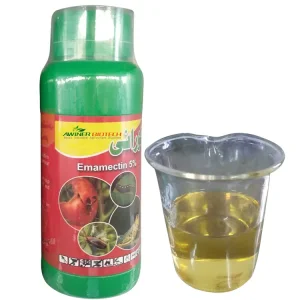
| Emamectin Benzoate | 5% SC / 30% WDG / 2% EC | Group 6 (Avermectins) | Tomato, Pepper, Eggplant, Cucumber | Thrips, Caterpillars, Diamondback Moth | $18.50 - $42.00 / kg |
| Lambda-cyhalothrin + Thiamethoxam | 141g/L + 106g/L SC (247g/L SC) | Group 3A + Group 4A | Onions, Garlic, Cabbage, Brassica | Thrips tabaci, Aphids, Whiteflies | $8.20 - $12.50 / L |
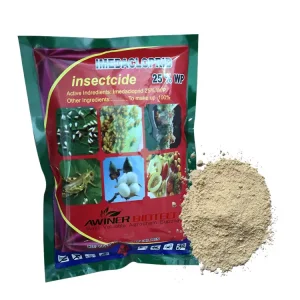
| Imidacloprid | 20% SL / 25% WP / 70% WDG | Group 4A (Neonicotinoids) | Solanaceous & Cucurbit Crops | Early-stage Thrips, Jassids, Aphids | $6.50 - $14.80 / kg |
| Alpha-Cypermethrin | 5% EC / 10% EC / 5% WP | Group 3A (Pyrethroids) | Beans, Peas, Open-field Vegetables | Foliar Thrips, Beetles, Cutworms | $4.10 - $7.80 / L |
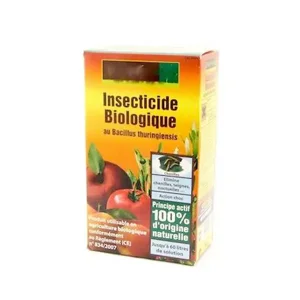
| Bacillus thuringiensis (Bt) | 32000 IU/mg WP / 16000 IU/mg | Group 11 (Microbial) | Organic Vegetables, Greenhouse Lettuce | Thrips larvae, Lepidopteran pests | $9.80 - $15.20 / kg |
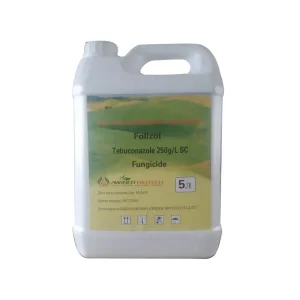
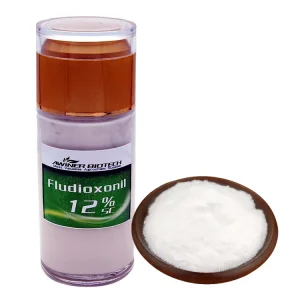
| Fludioxonil + Tebuconazole | 12% SC / Complex Combinations | Group 12 + Group 3 Fungicides | Post-attack secondary disease recovery | Botrytis, Fusarium, Alternaria | $11.40 - $18.00 / L |
Pricing indicated above varies based on raw material upstream chemical precursors (e.g., cyclopentadiene, pyridine intermediates), seasonal demand peaks, and customized packaging configurations (100ml bottles to 200L HDPE drums). Institutional buyers requiring custom OEM branding or blended dual-active solutions can leverage volume discounts up to 18% on orders exceeding 5 metric tons.
Deploying scientifically verified IRAC rotational strategies to halt pest resistance cycles and extend agrochemical field longevity.
Avermectin-class insecticides like Emamectin Benzoate (5% SC, 30% WDG) bind selectively to glutamate-gated chloride channels in the thrips nervous system. This causes an irreversible influx of chloride ions, leading to immediate paralysis and cessation of feeding within 2 to 4 hours post-exposure.
Combining Lambda-cyhalothrin (sodium channel modulator) with Thiamethoxam (nicotinic acetylcholine receptor agonist) provides a devastating dual-action attack. Thiamethoxam delivers rapid root/leaf systemic transport, while Lambda-cyhalothrin provides instant contact knockdown of adult thrips hidden in floral buds.
To comply with stringent EU and North American Maximum Residue Limits (MRLs), biological insecticides such as Bacillus thuringiensis (Bt) are introduced during peak harvesting windows. Bt endotoxins disrupt gut membrane integrity in larval stages without leaving chemical residues on export-bound produce.
Overcoming thrips physical protection mechanisms via droplet physics, surfactant science, and targeted temporal spraying windows.
Thrips nest within tight flower structures and under waxy vegetable leaves (e.g., cabbage, onions). Standard water-based sprays suffer high surface tension, resulting in droplet runoff. Incorporating trisiloxane ethoxylate organosilicone penetrants reduces surface tension to below 22 mN/m, enabling stomatal flooding and complete coverage of hidden pest refuges.
Droplet diameter is critical. Coarse droplets (>350 µm) bounce off hydrophobic leaves, while fine mists (<100 µm) evaporate or drift. Maintaining a volumetric median diameter (VMD) of 150-250 microns using air-induction hollow-cone nozzles maximizes canopy penetration in greenhouse tomato and pepper crops.
Thrips exhibit diurnal migration behavior, moving to outer canopy surfaces during low-light hours (early dawn and late dusk). Spraying during these windows dramatically increases direct chemical contact before pests retreat deep into floral calyxes during peak midday heat.
Many high-potency molecules, including Emamectin Benzoate and organophosphates, undergo rapid alkaline hydrolysis in water with pH > 7.5. Acidifying spray tank water to pH 5.5 - 6.5 using citric acid or specialized buffers prevents active degradation and guarantees full chemical potency upon application.
Customized agrochemical solutions tailored to regional climate challenges, crop portfolios, and local regulatory standards.
High ambient temperatures and intensive greenhouse farming in Turkey, Iran, Iraq, Syria, Yemen, and Libya create ideal breeding conditions for year-round thrips infestations. High-heat stable formulations such as Emamectin Benzoate 30% WDG are engineered to resist rapid UV degradation.
Large-scale commercial vegetable production in Brazil, Chile, Mexico, Bolivia, and Paraguay demands bulk shipments, stable emulsion concentrates, and combined insecticide-fungicide systems to protect massive export-bound tomato and pepper operations.
Protecting open-field brassicas and allium crops across Russia, Kazakhstan, Uzbekistan, Ukraine, India, Pakistan, Malaysia, Myanmar, and Cambodia requires cost-efficient, high-potency products like Lambda-cyhalothrin + Thiamethoxam SC with long shelf stability.
Rigorous lab testing, automated production facilities, and complete ICAMA dossier support for global agricultural importers.
Every production batch undergoes strict High-Performance Liquid Chromatography (HPLC) and Gas Chromatography (GC) analysis to verify active concentration, surface tension, suspensability rate (>95%), and thermal storage stability at 54°C for 14 days. We ensure zero batch-to-batch variation.
Our dedicated regulatory affairs team provides complete ICAMA data packages, five-batch analytical reports, toxicological study summaries, and field efficacy trials required by Ministries of Agriculture in Latin America, Africa, the Middle East, and Asia.
Integrating microencapsulation delivery systems, drone-compatible ultra-low volume (ULV) formulations, and AI-driven pest forecasting.
Polyurethane polymeric shell encapsulation protects active molecules against rapid UV photolysis and thermal breakdown in desert climates, extending active release windows from 5 days up to 21 days with zero crop phytotoxicity.
Formulating crop protection chemicals with anti-evaporation drift control agents designed for aerial UAV application at low water volumes (10–20 L/ha), dramatically cutting operational labor and fuel costs.
Pairing automated computer-vision cameras in greenhouses with precision micro-dosing systems allows growers to spot early thrips population clusters before widespread outbreak, minimizing chemical volume by up to 40%.
Awiner Biotech was founded in 2006, located in the north of China—Shijiazhuang, Hebei Province. The city is close to our capital Beijing, offering highly convenient logistics and export transportation infrastructure.
Awiner Biotech is committed to research, production, and global distribution of advanced agrochemicals. Our primary portfolio includes high-grade pesticides, insecticides, herbicides, fungicides, plant growth regulators (PGR), and public health vector control solutions.
Our Global Reach: Up to now, we have established long-term strategic commercial relationships with enterprise clients across Iraq, Iran, Afghanistan, Pakistan, India, Libya, Syria, Turkey, Yemen, Ukraine, Russia, Kazakhstan, Uzbekistan, Chile, Bolivia, Mexico, Brazil, Paraguay, Nigeria, Djibouti, Rwanda, Somalia, Malaysia, Cambodia, Nepal, Myanmar, and many other regions.
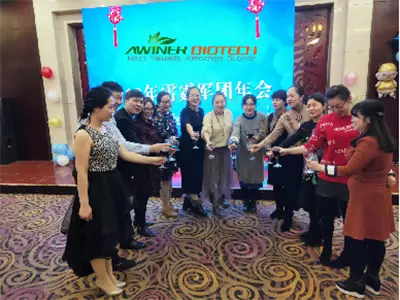
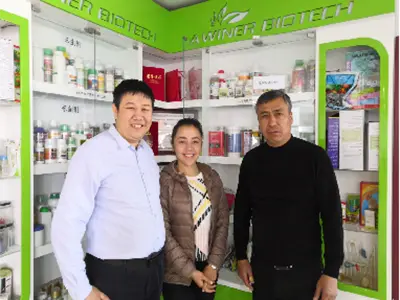
We regularly participate in international agricultural trade exhibitions across Turkey, Iran, Pakistan, Nigeria, Russia, Cambodia, Malaysia, Uzbekistan, connecting directly with regional distributors and growers.
Our senior technical specialists conduct overseas market inspections, visiting customer farms to analyze pest pressure, troubleshoot crop issues, optimize application parameters, and audit product field efficacy.
We warmly welcome global purchasing partners to inspect our state-of-the-art chemical manufacturing facilities, formulation lines, R&D testing labs, and warehouse facilities in Hebei, China.
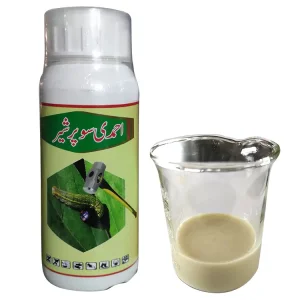
Complete agrochemical solutions spanning broad-spectrum herbicides, systemic fungicides, public health vector control, and targeted bio-insecticides.
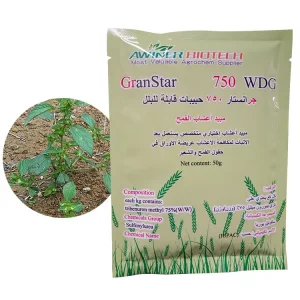
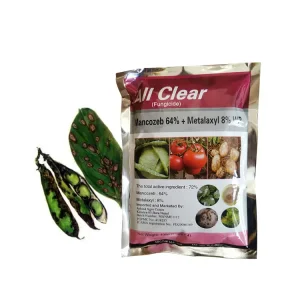
Expert responses addressing chemical selection, resistance mitigation, international shipping, OEM manufacturing, and regulatory support.
Thrips feature extremely short generation cycles (under two weeks at 28°C) coupled with high parthenogenetic reproductive capacity. Over-reliance on single active chemistry (such as organophosphates or pyrethroids alone) leads to rapid selection of target-site mutation genes (e.g., kdr mutations) and overexpression of metabolic detoxification enzymes (cytochrome P450 monooxygenases). To break resistance, growers must rotate IRAC classes, using combinations like Emamectin Benzoate (Group 6) with Lambda-cyhalothrin + Thiamethoxam (Group 3A + 4A).
For immediate knockdown coupled with systemic residual protection, a pre-mixed compound like Lambda-cyhalothrin + Thiamethoxam 247g/L SC delivers exceptional performance. Lambda-cyhalothrin provides instant contact activity against mobile adult thrips on leaves and flowers, while systemic Thiamethoxam is rapidly absorbed into plant tissues, controlling hiding nymphs and larvae via sap ingestion.
Both formulations provide high biological activity via chloride channel activation. Emamectin Benzoate 5% SC (Suspension Concentrate) is liquid-based, offering excellent mixability and easy volumetric dosage for small-to-medium greenhouse setups. 30% WDG (Water Dispersible Granules) features a higher active concentration, reducing transport costs, extending shelf storage stability in hot climates (e.g., MENA region), and producing zero dust during mixing.
Our standard Minimum Order Quantity (MOQ) for bulk technical materials (TC) is typically 500 kg, while formulation products (SC, EC, WDG, WP) start at 1,000 Liters or 1,000 kg depending on package size (100ml to 200L). Standard production lead times range from 15 to 25 days following label approval and deposit receipt, with fast sea freight booking via Qingdao, Shanghai, or Tianjin ports.
Yes. We provide complete OEM/ODM manufacturing services, including custom bottle design (HDPE, Co-ex, Aluminum), multi-language label printing (English, Spanish, French, Arabic, Russian), and specialized outer carton packaging compliant with international dangerous goods shipping regulations (UN packaging specifications).
We provide comprehensive pre-harvest interval (PHI) field application guidelines for every product batch. Furthermore, by incorporating biological options like Bacillus thuringiensis (Bt 32000 IU/mg WP) during the late fruiting stages prior to harvest, growers can maintain zero chemical residue levels while keeping thrips populations below economic damage thresholds.
We support our regional partners with complete registration dossiers, including Certificates of Analysis (COA), Analytical Test Methods, Material Safety Data Sheets (MSDS), ICAMA certificates, Free Sale Certificates (FSC), GLP toxicological data summaries, and field trial reports tailored to local regulatory requirements.
Water hardness (calcium/magnesium ions) and alkaline pH (>7.5) cause rapid chemical degradation of active compounds such as Emamectin Benzoate and pyrethroids via alkaline hydrolysis. We recommend buffering tank water to pH 5.5 - 6.5 and adding non-ionic organosilicone adjuvants to enhance active stability, leaf coverage, and stomatal penetration.
 Awiner Biotech