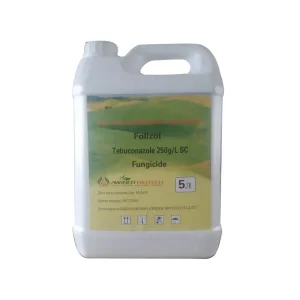
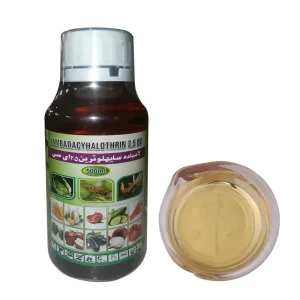
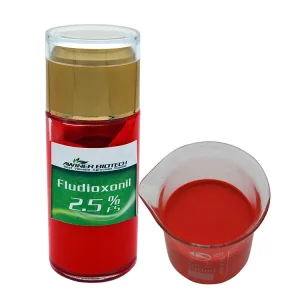
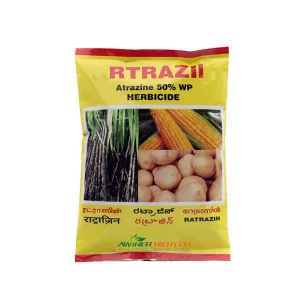
High-purity systemic active ingredients, suspension concentrates (SC), water dispersible granules (WDG), and multi-site protective partners synthesized at our automated Hebei manufacturing facility.
Understanding necrotrophic fungal parasitism, cellular destruction, and why contact protectants fall short in high-density agronomy.
Botrytis cinerea (Grey Mold) is an exceptionally destructive necrotrophic plant pathogen capable of infecting over 1,400 plant species worldwide, including commercial grapevine, strawberry, tomato, blueberry, and ornamental floral crops. The pathogen operates via secretion of cell wall-degrading enzymes (CWDEs)—such as endopolygalacturonases, pectin lyases, and cellulases—alongside reactive oxygen species (ROS) and phytotoxins (botrydial and botcinic acid). This array rapidly triggers host tissue apoptosis, causing soft rot and severe economic loss during pre-harvest and post-harvest transport phases.
Conventional surface protectants (e.g., copper compounds, folpet, mancozeb) form a surface barrier that prevents conidial germination. However, they possess zero vascular mobility. Under rapid crop canopy growth, dense leaf layers, or rain events, contact barriers break down. Internal stem infections, flower receptacle penetration, and calyx micro-wounds remain completely vulnerable. Systemic fungicides engineered in China bridge this gap by penetrating the plant cuticle and translocating internally to neutralize latent fungal mycelium.
A deep technical analysis of systemic active ingredients manufactured in China, detailing target enzymes, cellular dynamics, and translocation efficiency.
| Fungicide Class | FRAC Code | Representative Actives | Biochemical Mode of Action | Vascular Mobility Type |
|---|---|---|---|---|
| Anilino-pyrimidines (AP) | FRAC Group 9 | Cyprodinil, Mepanipyrim, Pyrimethanil | Inhibits methionine biosynthesis and secretion of cell wall degrading enzymes. | Translaminar & Acropetal Xylem Transport |
| SDHI (Succinate Dehydrogenase Inhibitors) | FRAC Group 7 | Boscalid, Fluopyram, Penthiopyrad | Blocks Complex II (succinate dehydrogenase) in the mitochondrial respiratory chain. | Translaminar & Xylem Systemic |
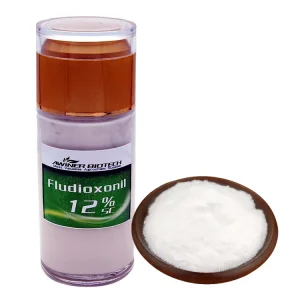
| Phenylpyrroles | FRAC Group 12 | Fludioxonil | Disrupts osmotic signal transduction (MAP kinase cascade involved in glycerol synthesis). | Contact & Surface Penetration (Low systemic, high persistence) |
| DMI (Demethylation Inhibitors / Triazoles) | FRAC Group 3 | Tebuconazole, Difenoconazole, Triadimenol | Inhibits C14-demethylase in ergosterol biosynthesis, compromising membrane integrity. | Strong Acropetal Systemic |
| QoI (Strobilurins) | FRAC Group 11 | Trifloxystrobin, Pyraclostrobin, Azoxystrobin | Blocks electron transport at Qo center of cytochrome bc1 complex (Complex III). | Translaminar & Cuticular Wax Binding |
Systemic fungicides must maintain a balance between lipophilicity (to penetrate the outer cuticular wax layer) and hydrophilicity (to move through the cell wall aqueous phase and xylem vessels). Triazole actives like Tebuconazole exhibit rapid xylem-systemic translocation, protecting newly emerging terminal shoots.
Compounds such as Trifloxystrobin and Pyraclostrobin display strong affinity for the cuticular wax, redistributing across the leaf surface via localized vapor phase action while penetrating to the abaxial leaf surface to stop hidden mycelial networks.
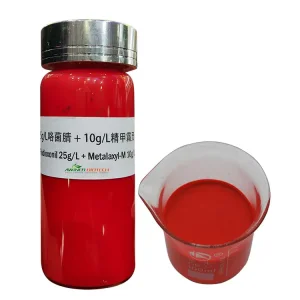
To mitigate single-site mutation risks (e.g., G143A in QoI fungicides or SDHI subunit B/C/D mutations), modern Chinese pesticide factories utilize pre-mix formulations combining systemic actives with protective multi-site partners like Fludioxonil + Metalaxyl-M or Pyraclostrobin + Tebuconazole.
Scale economies, advanced organic synthesis infrastructure, strict quality control (HPLC/GC-MS), and end-to-end formulation mastery.
China’s chemical manufacturing ecosystems in Hebei, Jiangsu, and Shandong provinces supply key intermediates—such as 2-aminopyrimidine derivatives, triazole rings, and substituted aniline precursors. This vertical integration guarantees cost stability and uninterrupted global export supplies even during raw material market fluctuations.
Modern factories have shifted from high-solvent EC (Emulsifiable Concentrate) to eco-friendly, high-efficiency formats:
Leading Chinese manufacturers maintain ISO9001, ISO14001, and GLP-certified analytical laboratories equipped with High-Performance Liquid Chromatography (HPLC) and Gas Chromatography-Mass Spectrometry (GC-MS). This ensures active content compliance, strict limits on toxic impurities (e.g., nitrosamines), and full alignment with EU EFSA and US EPA Maximum Residue Limit (MRL) standards.
Field-tested spray timing, water volume, and fungicide rotation programs for high-value agricultural sectors globally.
Critical Windows: Early Bloom (A), Pre-Bunch Closure (B), Veraison (C), and Pre-Harvest (D).
Protocol: Apply Fludioxonil + Cyprodinil (WDG) at stage B to eliminate latent floral infection within the interior cluster stem. Follow with a systemic Tebuconazole + Trifloxystrobin application at Veraison. Maintain strict Pre-Harvest Intervals (PHI 14-21 days) to prevent fermentation inhibition during enological processing.
Critical Windows: High relative humidity (>85%) periods during winter heating cycles or early morning canopy condensation.
Protocol: Deploy Pyraclostrobin 20% + Tebuconazole 40% WDG via high-pressure misting to penetrate dense foliage. Rotate with Fludioxonil 12% SC stem treatments to treat pruning wounds and prevent stem cancel infections (Ghost Spot mitigation).
Critical Windows: 10% Blooming phase through fruit set.
Protocol: Apply Thiamethoxam + Fungicide tank-mixes where pest vectors overlap, using systemic AP fungicides (FRAC 9) at 70% bloom to protect petals. Transition to multi-site protective partners close to harvest to ensure Zero-Residue compliance for supermarket chains.
Critical Windows: Post-harvest packing room storage and export transport condensation zones.
Protocol: Pre-harvest systemic drenching with Triadimenol 25% EC combined with post-harvest cold-fogging using eco-safe systemic formulations to eliminate petal spotting and stem end rot.
Pioneering molecular delivery systems, bio-rational integration, and smart precision agriculture technologies from China’s leading agrochemical R&D centers.
Development of sub-100nm polymeric nanocarriers that encapsulate systemic actives. These microcapsules protect active molecules from UV degradation while releasing active ingredients in response to fungal enzyme triggers (e.g., pH shifts caused by Botrytis oxalic acid release).
Integration of spray-induced gene silencing (SIGS) via double-stranded RNA (dsRNA) targeting essential Botrytis cinerea Dicer-like genes (DCL1/2). When combined with traditional systemic fungicides, low-dosage synthetic chemistries achieve complete immunity without environmental accumulation.
Precision UAV (Unmanned Aerial Vehicle) spraying demands anti-evaporation, ultra-low-drift adjuvant systems. Next-gen Chinese formulations incorporate modified silicone surfactants and vegetable oil methylated esters to maximize leaf canopy coverage at spray volumes as low as 10-15 L/ha.
Awiner Biotech: Leading Chinese Agrochemical Research, Production, and Global Distribution Enterprise.
Awiner Biotech was founded in 2006, located in north of China—Shijiazhuang, Hebei Province. The city is close to our capital Beijing, and transportation is convenient. Awiner Biotech is committed to research, produce and distribute agrochemicals, mainly dealing with pesticides, herbicides, fungicides, plant growth regulators, and public health pesticides.
Our state-of-the-art production lines handle diverse formulation types (SC, WDG, EC, WP, SP, GR) with stringent batch-to-batch quality guarantees.
Up to now, we have won trusted long-term clients across 30+ nations. Our international trade footprint covers:
Our countries participating in agricultural exhibitions include Turkey, Iran, Pakistan, Nigeria, Russia, Cambodia, Malaysia, Uzbekistan, and more, fostering deep technical exchange with regional distributors and large-scale agricultural operations.
We regularly travel directly to customer countries to conduct market inspections, analyze specific crop pathogen pressures, solve field efficacy problems, understand local product usage conditions, and host international client delegations at our Hebei headquarters.
Explore our complementary technical solutions, including plant growth regulators, specialty systemic insecticides, and target herbicides.
Expert answers on active ingredient purity, FRAC resistance mitigation, custom OEM/ODM packaging, and export logistics.
 Awiner Biotech