Direct Factory Export Lineage — High Standard Active Ingredients & Formulations
Executive Industrial Overview on Sourcing Dynamics, Pricing Factors, and Agronomic Utility
Thidiazuron (CAS NO. 51707-55-2), a highly active phenylurea plant growth regulator (PGR), represents a critical chemical backbone in modern commercial agriculture. Globally, large-scale agricultural enterprises and commercial distributors rely heavily on Chinese synthesis plants due to integrated supply chains and economy-of-scale advantages. Demand is primarily anchored by mechanized cotton defoliation across North America, Central Asia, and Brazil, combined with high-value horticulture (kiwifruit, table grapes, and tissue culture multiplication) in East Asia and Europe.
The price benchmark for China-manufactured Thidiazuron is dictated by raw chemical precursor fluctuations—specifically 5-amino-1,2,3-thiadiazole and phenyl isocyanate. Factors such as environmental compliance overhead, solvent recovery costs, synthesis yield efficiencies, and global shipping logistics directly determine the FOB/CIF price. Bulk pricing for Technical Grade (98% TC) vs formulations (50% WP, 500g/L SC) varies drastically based on particle micronization level, adjuvant technology, and packaging customization.
Biochemical Mechanisms, Chemical Specification Standards, and Formulations Chemistry
Thidiazuron chemically functions as 1-phenyl-3-(1,2,3-thiadiazol-5-yl)urea. It exhibits low water solubility in pure form but demonstrates high solubility in organic polar solvents such as DMF and DMSO. Its unique structural configuration allows high affinity to plant cytokinin receptor sites, inducing rapid physiological responses at extremely low dosage rates (grams per hectare).
TDZ is absorbed by leaves and stems, stimulating endogenous cytokinin accumulation by inhibiting cytokinin oxidase enzymes. In cotton, it triggers ethylene biosynthesis in the petiole abscission zone, causing green leaf drop without killing the plant or forcing premature crop senescence, thus preserving lint purity during mechanical harvesting.
Our industrial production lines engineer highly stable formulations including 50% WP (Wettable Powder), 500g/L SC (Suspension Concentrate), and custom tank-mix micro-emulsions paired with Diuron to broaden effective temperature operational windows under cold climatic conditions.
| Specification Parameter | Thidiazuron 98% TC Standard | Thidiazuron 50% WP Formulated | Thidiazuron 500g/L SC Standard |
|---|---|---|---|
| Active Ingredient Content | ≥ 98.0% | ≥ 50.0% | ≥ 500 g/L |
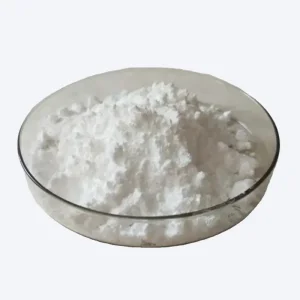
| Appearance | Off-white to light yellow powder | Homogeneous free-flowing powder | Viscous liquid suspension |
| Loss on Drying | ≤ 1.0% | ≤ 2.5% | N/A |
| pH Range | 5.0 – 8.0 | 6.0 – 9.0 | 5.5 – 8.5 |
| Suspensibility / Wetting | N/A | ≥ 85% / ≤ 60 seconds | ≥ 90% |
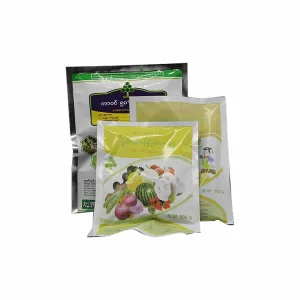
| Packing Solutions | 25kg Fiber Drum / Bag | 1kg Aluminium Bag / 25kg Drum | 1L, 5L, 200L HDPE Drums |
Combining Thidiazuron with Diuron (e.g., Thidiazuron 360g/L + Diuron 180g/L SC) drastically enhances defoliation performance at lower ambient temperatures (<18°C). While pure TDZ activity declines below 20°C, the addition of Diuron acts as a photosystem II inhibitor, creating synergistic leaf stress that accelerates leaf separation layer formation without damaging boll maturation.
Crop-Specific Solutions for Defoliation, Yield Expansion, and Tissue Micropropagation
Applied when boll opening reaches 60–70%. TDZ induces clean green leaf drop without causing leaf scorching or stickiness. Leaves separate cleanly at the abscission zone, significantly lowering mechanical harvester clogging and preventing leaf stain on cotton fibers, thereby improving cotton grading and valuation.
In Kiwifruit, Table Grapes, and Melons, low-concentration sprays of TDZ (3–5 ppm) after full bloom promote cell division, increase individual fruit weight, reduce fruit drop, and enhance dry matter content. It acts with significantly higher potency than traditional CPPU or 6-BA formulations.
In micropropagation laboratories, TDZ is a gold-standard chemical additive for callus induction and shoot regeneration in recalcitrant woody plant species, orchids, and high-value ornamentals, inducing organogenesis at nanomolar levels.
From Raw Chemical Precursors to Fully Certified Export-Grade Cargo
Condensation of 5-amino-1,2,3-thiadiazole with phenyl isocyanate under controlled atmospheric pressure and high-purity catalytic solvents.
Multi-stage solvent washing and low-temperature crystallization to eliminate unreacted intermediate residues, achieving minimum 98% active chemical purity.
Air-jet milling reduces particle size to sub-5 micron standard for maximum wettability, dispersibility, and field bio-activity.
HPLC purity validation, batch-to-batch consistency checking, packaging seal Integrity test, and ISO/FAO compliance verification prior to container loading.
Global Industrial Leadership in Agrochemical Manufacturing & Export
Awiner Biotech was founded in 2006, located in the north of China—Shijiazhuang, Hebei Province. The city is close to our capital Beijing, with extremely convenient transport logistics to major seaports including Tianjin Port.
Awiner Biotech is deeply committed to research, production, and global distribution of crop protection chemical products. We specialize in high-efficacy pesticides, selective herbicides, broad-spectrum fungicides, plant growth regulators (PGRs like Thidiazuron and GA3), and public health vector control chemicals.
Up to now, we have won trusted customers and established commercial distribution networks across: Iraq, Iran, Afghanistan, Pakistan, India, Libya, Syria, Turkey, Yemen, Ukraine, Russia, Kazakhstan, Uzbekistan, Chile, Bolivia, Mexico, Brazil, Paraguay, Nigeria, Djibouti, Rwanda, Somalia, Malaysia, Cambodia, Nepal, Myanmar and beyond.
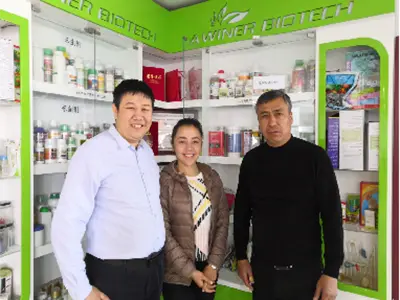
We routinely visit our customers' countries to conduct detailed agronomic field inspections, analyze regional pest/crop challenges on-site, provide technical guidance, evaluate local product usage performance, and invite international partners to inspect our facilities in China.
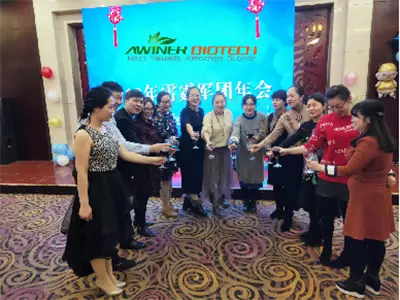
Our technical sales team actively participates in top-tier global agrochemical exhibitions across international hubs including Turkey, Iran, Pakistan, Nigeria, Russia, Cambodia, Malaysia, Uzbekistan, and CAC China.
We provide full dossier support for international product registration, including COA, HPLC analytical reports, MSDS, FAO specification certificates, toxicology summaries, and stability study data packages tailored to local agricultural ministries.
Technical & Commercial Insights for Importers, Distributors, and Agricultural Enterprises
Explore Direct Manufacturer Technical & Formulated Solutions
 Awiner Biotech