Commercial tomato (Solanum lycopersicum) cultivation represents a multi-billion-dollar segment within global intensive horticulture. However, high crop yields, open-field monoculture, and high-density greenhouse production make tomatoes uniquely susceptible to destructive phytophagous insects, leaf-mining lepidoptera, vectoring hemipterans, and complex fungal and bacterial pathogens. In regions across North America, Latin America, the Mediterranean Basin, the Middle East, and Southeast Asia, yield losses attributable to insect-vectored viruses and aggressive foliar blights frequently range from 30% to 100% when unmitigated.
As a major manufacturing hub for active pharmaceutical ingredients (APIs) and advanced agrochemical formulations, China's agrochemical manufacturing ecosystem has transitioned from high-volume synthesis to high-precision, low-residual, and highly bio-available crop protection matrices. Modern chemical factories in China integrate organic synthesis, structural chemical optimization, nanometer-scale suspension concentrates (SC), and water-dispersible granules (WDG) to overcome growing metabolic and target-site pest resistance.
Rapid climate shifts and intensive cropping cycles have accelerated the evolution of resistant populations, particularly in Tuta absoluta (Tomato Leafminer) and Bemisia tabaci (Whitefly B and Q biotypes). Traditional organophosphates and synthetic pyrethroids face target-site insensitivity (kdr mutations). Next-generation factories focus on dual-site active combinations and metabolic enzyme inhibitors.
International crop trade demands strict adherence to Maximum Residue Limits (MRLs). Modern formulation plants employ micro-emulsions (ME), suspension concentrates (SC), and ultra-low dose active ingredient protocols to ensure zero phytotoxicity, minimal environmental persistence, and complete compliance with European Commission and Codex Alimentarius standards.
Leading Chinese chemical manufacturers provide full custom synthesis capabilities. By optimizing wetting agents, dispersants, and anti-freezing matrices, custom formulations (such as Acetamiprid + Abamectin EC, or Pymetrozine + Acetamiprid WDG) achieve superior foliar coverage, rainfastness, and trans-laminar penetration.
To achieve high-efficiency control without triggering field resistance, agricultural managers must align target pests with specific Insecticide Resistance Action Committee (IRAC) and Fungicide Resistance Action Committee (FRAC) modes of action.
| Target Pest / Disease | Agronomic Impact | Recommended Active Ingredient Formulation | IRAC / FRAC Code | Physiological Mode of Action (MoA) |
|---|---|---|---|---|
| Tomato Leafminer (Tuta absoluta) |
Larval foliar mines, fruit tunneling, necrotic leaf breakdown. Yield loss: up to 100%. | Emamectin Benzoate 5% SC / WDG | IRAC Group 6 | Allosteric activation of glutamate-gated chloride channels, causing muscular paralysis and rapid feeding cessation. |
| Tobacco Whitefly (Bemisia tabaci) |
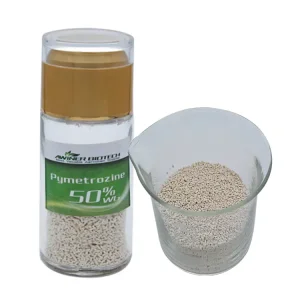
Sap despoilment, honeydew excretion (sooty mold), vector for TYLCV (Tomato Yellow Leaf Curl Virus). | Imidacloprid 35% SC / Pymetrozine 50% WDG | IRAC Group 4A / IRAC Group 9B | nChR competitive modulation paired with selective homopteran feeding inhibition (style blockage). |
| Western Flower Thrips (Frankliniella occidentalis) |
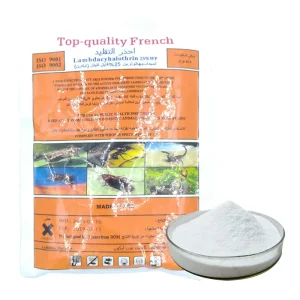
Foliar silvering, fruit scarring, vector for TSWV (Tomato Spotted Wilt Virus). | Lambda-Cyhalothrin 25% WDG + Acetamiprid | IRAC Group 3A + 4A | Axonal sodium channel modulation combined with nicotinic acetylcholine receptor agonism for immediate knockdown. |
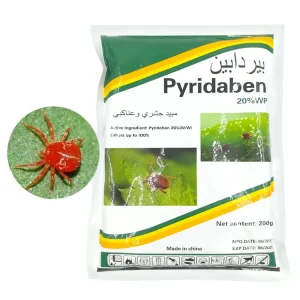
| Two-Spotted Spider Mite (Tetranychus urticae) |
Cell-content depletion, stippling, web webbing, premature defoliation under high thermal stress. | Pyridaben 20% WP / Abamectin 1.8% EC | IRAC Group 21A / IRAC Group 6 | Mitochondrial electron transport inhibitor (Complex I) combined with GABA receptor enhancement. |
| Late Blight & Early Blight (Phytophthora / Alternaria) |
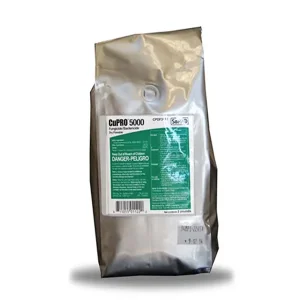
Water-soaked foliar lesions, rapid vine breakdown, complete crop collapse during humid regimes. | Copper Hydroxide 77% WP / Azoxystrobin | FRAC M01 / FRAC Group 11 | Multi-site inorganic ion disruption combined with quinone outside inhibitor (QoI) stopping mitochondrial respiration. |
| Powdery Mildew & Rust (Leveillula taurica) |
White powdery fungal patches on leaves, photosynthetic reduction, fruit sunburn. | Tebuconazole + Trifloxystrobin SC | FRAC Group 3 + 11 | Ergosterol biosynthesis inhibition (DMI) coupled with respiration blockade at cytochrome bc1 complex. |
Traditional emulsifiable concentrates (EC) utilizing volatile organic solvents (Xylene, Toluene) are rapidly being replaced by environmentally stable, high-efficiency delivery systems developed in Chinese agrochemical laboratories.
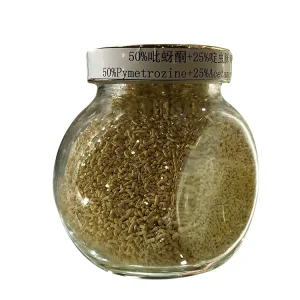
Dust-free micro-granules processed via fluid-bed granulation. Rapid dissolution in water, high concentration of active ingredients (e.g., Pymetrozine 50% WDG), extended storage stability, and zero toxicity to spray operators during tank mixing.
Water-based liquid suspensions utilizing wet-milling technology to reduce active particle sizes down to 1-3 microns. Provides uniform leaf coverage, superior rainfastness, and compatibility with biological adjuvants.
Thermodynamically stable clear dispersions combining aqueous and organic phases at nanoscale. Reduces chemical dosage per hectare while dramatically boosting cuticular wax penetration on host leaves.
Polymeric shell capsules protecting volatile active ingredients against UV degradation. Prolongs field residual activity from 5 days up to 21 days, minimizing re-application frequency.
Crop protection strategies must adapt to regional climatic profiles, agronomic systems, and local pest density thresholds. China exporters design customizable formulations engineered specifically for varying microclimates:
Primary Regions: Mediterranean Basin, Middle East, Central Europe.
Focus: Non-fumigant, low-vapor pressure formulations. Zero phytotoxicity on delicate indoor foliage. High emphasis on systemic insecticides like Imidacloprid 35% SC and targeted soft-bodied pest solutions (Thiocyclam + Acetamiprid) compatible with biological pollinators (Bombus terrestris).
Primary Regions: Latin America (Brazil, Chile, Mexico), Central Asia, South Asia.
Focus: High-volume, rainfast chemical complexes capable of resisting intense thermal breakdown and tropical rainfall. Combined tank-mixes of multi-site inorganic fungicides (Copper Hydroxide 77% WP) with contact pyrethroids (Lambda-Cyhalothrin) for broad-spectrum protection.
Primary Regions: Sub-Saharan Africa, Middle East (Iraq, Yemen, Libya, Syria).
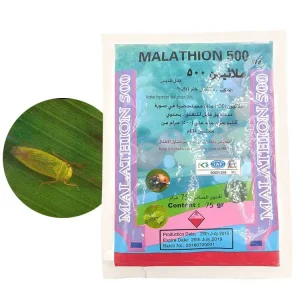
Focus: Heat-stable emulsifiers and anti-evaporative tank additives. Products like Pyridaben 20% WP and Malathion Technical engineered to remain active despite high ambient surface temperatures and intense solar UV index.
Continuous, unilateral application of single-mode actives inevitably results in complete control failure due to target-site mutations and metabolic detoxification gene amplification. Sustainable commercial farming dictates strict adherence to IRM guidelines:
Never apply chemicals with the same IRAC code across consecutive pest generations (typically 30 days). Alternate between diamides, neonicotinoid systemic blockers, and avermectins to reset population susceptibility curves.
Utilize co-formulated active combinations (e.g., Acetamiprid 32g/L + Abamectin 18g/L EC) to attack target pests simultaneously via neurotoxic central nervous disruption and peripheral membrane pore opening.
Maintain spray water pH between 5.5 and 6.5 to prevent alkaline hydrolysis of sensitive molecules like organophosphates and pyrethroids. Incorporate organosilicone super-spreaders for complete leaf coverage.
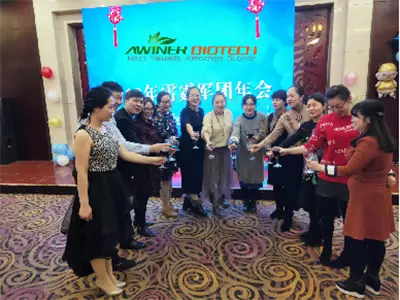
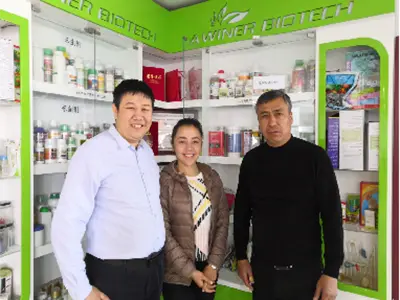
Awiner Biotech was founded in 2006, located in the north of China—Shijiazhuang, Hebei Province. The city is close to our capital Beijing, with convenient transportation networks. Awiner Biotech is committed to research, production, and distribution of premium agrochemicals, specializing in insecticides, herbicides, fungicides, plant growth regulators, and public health pest management solutions.
Our Global Market Reach: Up to now, we have established long-term operational partnerships with clients across Iraq, Iran, Afghanistan, Pakistan, India, Libya, Syria, Turkey, Yemen, Ukraine, Russia, Kazakhstan, Uzbekistan, Chile, Bolivia, Mexico, Brazil, Paraguay, Nigeria, Djibouti, Rwanda, Somalia, Malaysia, Cambodia, Nepal, Myanmar, and beyond.
Exhibition & Local Field Research: We regularly participate in international agricultural exhibitions across Turkey, Iran, Pakistan, Nigeria, Russia, Cambodia, Malaysia, and Uzbekistan. Our technical engineering team conducts on-site market inspections to analyze agronomic bottlenecks, optimize formula application under local climatic regimes, and deliver tailored crop protection strategies directly to growers.
Export formulations undergo stringent CIPAC stability tests, including accelerated heat storage (54°C for 14 days) and cold stability testing (0°C for 7 days). Factories utilize premium anti-caking additives, high-purity emulsifiers, and moisture-proof aluminum foil packaging or fluorinated HDPE bottles to prevent phase separation, crystallization, or container degradation during multi-week ocean transit across equatorial routes.
A highly synergistic tank mix consists of Emamectin Benzoate 5% SC (targeting Tuta absoluta larvae) combined with Copper Hydroxide 77% WP or Azoxystrobin 250g/L SC (for spore destruction). Ensure the spray tank is filled to 50% water capacity, add the WDG/WP formulations first, agitate thoroughly, add SC components, and finally incorporate non-ionic silicone wetting agents. Always verify physical compatibility via a jar test prior to field-scale mixing.
Yes. Modern chemical synthesis plants offer customized ratio adjustments based on regional resistance profiling. For instance, in areas where whiteflies show partial neonicotinoid resistance, factories can synthesize dual-active solutions combining Pymetrozine 50% + Acetamiprid 25% WDG or Thiocyclam-hydrogenoxalate + Acetamiprid SP to circumvent metabolic degradation pathways.
Reputable manufacturers supply full registration dossiers conforming to FAO/WHO specifications. This includes Certificates of Analysis (COA), Analytical Method Validation, FAO specifications, 5-batch analysis reports, acute toxicological study summaries, MSDS, and GLP laboratory test certificates required by Ministries of Agriculture across South America, Eurasia, Africa, and the Middle East.
 Awiner Biotech