Premium grade insecticides, acaricides, fungicides, and herbicides engineered for global agricultural excellence.
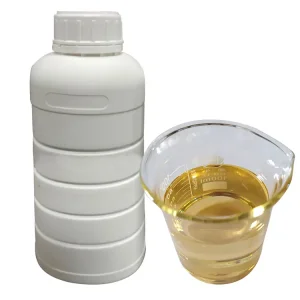
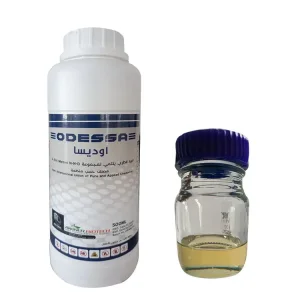
Understanding piercing-sucking pest physiological dynamics to optimize chemical intervention strategies.
Aphids pose a dual agricultural threat: direct vascular damage via phloem sap depletion and indirect destruction as viral vectors. Species like Aphis gossypii and Myzus persicae transmit devastating viruses including Cucumber Mosaic Virus (CMV) and Potato Virus Y (PVY). Their rapid parthenogenesis leads to exponential population spikes, necessitating systematic, translaminar active ingredients that penetrate leaf tissues rapidly.
Thrips, particularly Frankliniella occidentalis (Western Flower Thrips) and Thrips tabaci, utilize rasping-sucking mouthparts to rupture plant cell walls, causing silvering leaf necrosis, fruit scarification, and transmission of Tomato Spotted Wilt Virus (TSWV). Their cryptic feeding habits inside flower buds require insecticides with high vapor activity, systemic mobility, and superior surfactant wetting properties.
Widespread overuse of single-mode synthetic chemicals has accelerated target-site mutations (e.g., kdr mutations in pyrethroids, Insensitive Acetylcholinesterase in organophosphates) and metabolic detoxification via Cytochrome P450 monooxygenases. Awiner Biotech formulates multi-site synergistic cocktails and IRAC mode-of-action rotations to eliminate target populations while preserving chemical efficacy over successive crop seasons.
Comprehensive comparative analysis of active ingredients optimized for controlling resistant aphid and thrips populations.
| Active Ingredient / Formulation | IRAC Code | Primary Target Spectrum | Systemic / Translaminar Index | Rainfastness & Residual | Commercial Status |
|---|---|---|---|---|---|
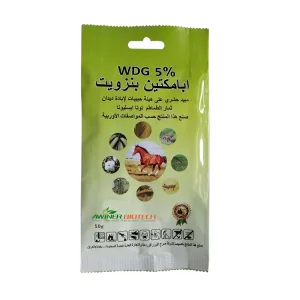
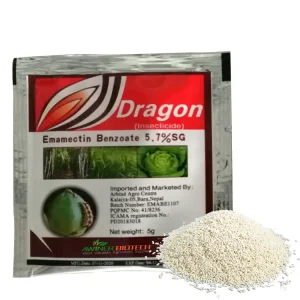
| Emamectin Benzoate 5% WDG | Group 6 | Thrips, Lepidoptera, Leafminers | High Translaminar Movement | Rainfast in 2 Hours / 14-21 Days | Commercial Standard |
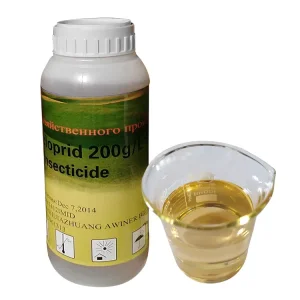
| Imidacloprid 20% SL | Group 4A | Aphids, Whiteflies, Leafhoppers | Acropetal Systemic (Xylem) | Soil Drench: 30+ Days / Foliar: 10 Days | High Demand |
| Thiocyclam-Hydrogenoxalate + Acetamiprid SP | Group 14 + 4A | Resistant Thrips, Aphids, Whiteflies | Dual Systemic & Contact Action | Immediate Knockdown / 14 Days | Synergistic Premix |
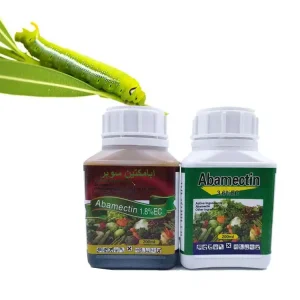
| Abamectin 1.8% EC / 3.6% EC | Group 6 | Two-Spotted Spider Mites, Thrips | Sub-epidermal Reservoir (Translaminar) | UV Sensitive / Requires Adjuvant | Global Benchmark |
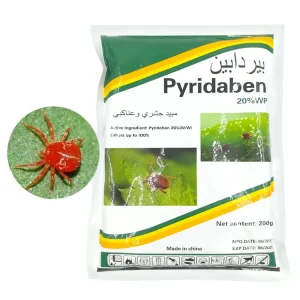
| Pyridaben 20% WP | Group 21A | Nymph & Adult Mites, Thrips Suppression | Contact activity with strong vapor phase | High Lipophilic Wax Binding / 21 Days | Selective Acaricide |
Tailored agronomical strategies adapted to microclimates, cropping systems, and regional pest pressure profiles.
Crops: Bell Peppers, Tomatoes, Cucumbers, Floriculture (Roses, Chrysanthemums).
Challenge: High ambient temperatures accelerate thrips reproductive cycles while closed environments heighten chemical phytotoxicity risks.
Solution Protocol: Application of Thiocyclam-Hydrogenoxalate + Acetamiprid SP combined with organosilicone spreaders. Provides rapid paralysis of flower thrips while remaining safe for crop foliage when applied during low irradiance hours.
Crops: Cotton, Wheat, Soybeans, Maize.
Challenge: Early-season aphid colonization vectoring crop stunt viruses across immense acreage, where application costs require long residual protection.
Solution Protocol: Seed treatment or early foliar spray using Imidacloprid 20% SL or Emamectin Benzoate 5% WDG. The acropetal movement ensures new terminal growth stays protected against aphid vectors for up to three weeks.
Crops: Citrus, Grapes, Olives, Mangoes.
Challenge: Dense canopy structure prevents spray droplets from reaching pests sheltered on underside of leaves and inside cluster buds.
Solution Protocol: High-pressure blast spraying using Abamectin 3.6% EC paired with a non-ionic penetrant. Translaminar absorption builds active reservoirs within the leaf parenchyma, killing hidden thrips and mites feeding on leaf undersides.
Integrating green formulation chemistry, smart delivery systems, and precision crop protection technologies.
Awiner Biotech is actively pioneering green formulation engineering. By replacing toxic organic solvents (Xylene, Toluene) with water-based suspension concentrates (SC) and water-dispersible granules (WDG), we reduce environmental phytotoxicity while maximizing biological active loading. Our smart microencapsulation technologies shield active molecules from ultraviolet degradation, extending field persistence while minimizing off-target chemical drift.
Leveraging industrial integration, continuous flow synthesis, and rigorous quality control for reliable international supply.
Awiner Biotech was founded in 2006, located in north of China-Shijiazhuang, Hebei Province. The city is close to our capital Beijing, transportation is convenient. Awiner Biotech is committed to research, produce and distribute agrochemicals. mainly deal with pesticides, herbicides, fungicides, plant growth regulator and public health pesticides.
Our manufacturing complex utilizes state-of-the-art continuous fluid bed granulators, high-shear emulsifiers, and automated multi-head packaging lines. Backward integration into raw technical grade AI synthesis guarantees cost stability and supply security for large-scale enterprise buyers worldwide.
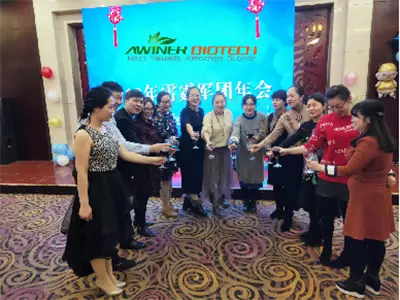
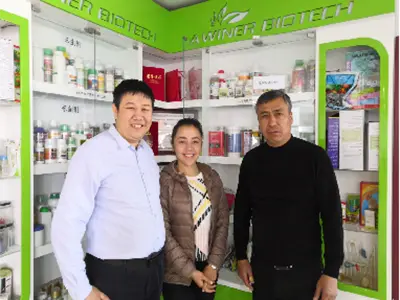
Our Market: Up to now, we have win customers from Iraq, Iran, Afghanistan, Pakistan, India, Libya, Syria, Turkey, Yemen, Ukraine, Russia, Kazakhstan, Uzbekistan, Chile, Bolivia, Mexico, Brazil, Paraguay, Nigeria, Djibouti, Rwanda, Somalia, Malaysia, Cambodia, Nepal, Myanmar and so on.
Exhibition: Our countries participating in the exhibition are Turkey, Iran, Pakistan, Nigeria, Russia, Cambodia, Malaysia, Uzbekistan, etc.
Customer market survey: We go to the customer's country to conduct market inspections, analyze and solve problems for them, understand their product usage, and customers will also visit us for technical alignment and contract manufacturing agreements.
Streamlining international trade through full dossier support, FAO/WHO quality adherence, and custom packaging customization.
We provide comprehensive registration support for national agricultural ministries. Our regulatory team prepares complete technical dossiers including GLP-accredited acute oral/dermal/inhalation toxicity data, environmental fate reports, physical-chemical specifications, and Certificate of Analysis (COA) matching ICAMA and FAO requirements.
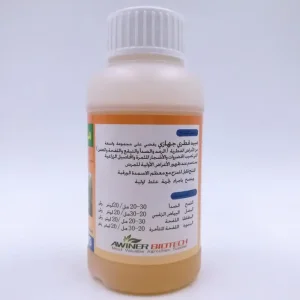
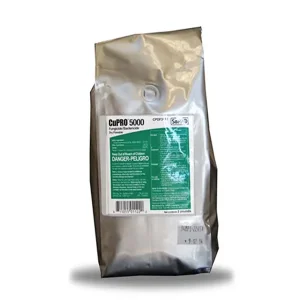
To ensure local market compliance, we offer customized retail and industrial packaging options ranging from 10mL ampoules and 100mL-1L HDPE bottles to 200L drums and 25kg aluminum foil bags. Labels are tailored with multi-language safety warnings, GHS pictograms, regional barcoding, and localized usage dosage instructions.
Every production batch undergoes analytical testing using High-Performance Liquid Chromatography (HPLC), Gas Chromatography (GC), and laser diffraction particle size analyzers. We guarantee active ingredient retention, rapid disintegration for WDG formulations, and emulsification stability under extreme temperature ranges.
Expert insights on product formulation selection, tank-mixing compatibility, and resistance mitigation.
This premix combines two distinct modes of action: Thiocyclam-hydrogenoxalate acts as a nicotinic acetylcholine receptor blocker (IRAC Group 14), causing immediate muscular paralysis and fast contact knockdown. Acetamiprid (IRAC Group 4A) delivers acropetal systemic absorption, targeting hidden feeding nymphs over an extended timeframe. This dual-action mechanism bypasses existing neonicotinoid resistance, delivering over 95% mortality within 24 hours.
To prevent resistance build-up, growers must avoid consecutive applications of products within the same IRAC chemical class. We recommend rotating active chemical groups between spray windows—for example, following an early treatment of Imidacloprid 20% SL (Group 4A) with Emamectin Benzoate 5% WDG (Group 6) or Pyridaben 20% WP (Group 21A). Incorporating biological adjuvants and physical barriers also slows selection pressure.
Yes. Our WDG (Water Dispersible Granules) and SC (Suspension Concentrates) are specifically micronized using ultra-fine laser milling to achieve particle sizes under 5 microns. This ensures complete water solubility, zero nozzle clogging in ultra-low volume (ULV) drone spray systems, and superior canopy penetration under downwash air pressure.
Located in Shijiazhuang, Hebei Province, Awiner Biotech operates close to Tianjin and Qingdao sea ports, enabling efficient ocean freight dispatch. We offer FCL (Full Container Load) and LCL shipments under FOB, CIF, or CFR terms, providing full UN-certified hazard packaging for hazardous chemicals alongside complete shipping documentation (MSDS, COA, Bill of Lading, Certificate of Origin).
Explore our comprehensive portfolio of systemic insecticides, broad-spectrum fungicides, and selective herbicides.
 Awiner Biotech