Wholesale Strong Insecticide for Whiteflies Factory & Suppliers

Industrial-Grade Agrochemical Solutions, Advanced Insecticide Resistance Management (IRM), and Enterprise-Level Supply Chain Infrastructure for Global Agribusinesses

1. Executive Summary & Macro Agrochemical Landscape

Whiteflies—predominantly species complexes such as Bemisia tabaci (Silverleaf whitefly, including MEAM1 and MED cryptic species) and Trialeurodes vaporariorum (Greenhouse whitefly)—represent one of the most economically devastating phloem-feeding pest threats across modern broad-acre and protected agriculture globally. Annual crop losses driven by direct feeding damage, honeydew accumulation leading to Sooty Mold (Capnodium spp.), and phytopathogenic viral transmission (e.g., Tomato Yellow Leaf Curl Virus [TYLCV], Cucurbit Yellow Stunting Disorder Virus [CYSDV], and Cotton Leaf Curl Virus [CLCuV]) exceed billions of USD across the Americas, Europe, Africa, the Middle East, and Asia-Pacific.

600+
Host Plant Species Targeted
110+
Plant Viruses Vectored
50%
Potential Yield Loss without IRM
>50
Countries with Active Export Supply

For commercial agricultural chemical distributors, large-scale plantation operators, regional formulators, and institutional procurement directors, securing a strong insecticide for whiteflies is no longer simply a matter of acquiring a single active ingredient. High reproductive rates, multi-generational overlapping cycles under warmer microclimates, and rapid development of metabolic and target-site resistance to legacy active ingredients (such as simple organophosphates or single-site synthetic pyrethroids) necessitate sophisticated chemical engineering, novel co-formulations, and stringent resistance management protocols.

"Effective long-term suppression of whitefly populations requires a structural shift from single-active knockdowns to multi-target chemistry combinations, integrating systemic translocation, translaminar penetration, and insect growth regulation (IGR)."

2. Chemical Modes of Action & Synergistic Whitefly Control Solutions

To overcome resistance mechanisms and secure fast knockdown alongside residual protection, high-efficiency commercial whitefly insecticides leverage distinct Insecticide Resistance Action Committee (IRAC) mode-of-action classifications. Modern manufacturing protocols combine complementary biochemical pathways to arrest adult feeding within minutes while breaking the egg-to-nymph lifecycle.

Neonicotinoids & Modulators (IRAC Group 4A)
Act as agonists on nicotinic acetylcholine receptors (nAChR). Active substances such as Thiamethoxam and Acetamiprid provide systemic xylem mobility,迅速 targeting adults and nymphs residing on the undersides of leaf foliage.
Chordotonal Organ Feeding Blockers (IRAC Group 9B/29)
Compounds like Pymetrozine and Flonicamid instantly paralyze the insect's stylet mechanism, stopping feeding and virus transmission within 15–30 minutes, followed by irreversible starvation.
Insect Growth Regulators - IGRs (IRAC Group 7C/16)
Juvenile hormone mimics (e.g., Pyriproxyfen) and chitin biosynthesis inhibitors (e.g., Buprofezin) prevent nymphal molting, sterilize adult female whiteflies, and destroy egg viability for up to 30 days.
Lipid Biosynthesis Inhibitors (IRAC Group 23)
Ketoenol formulations (e.g., Spiromesifen, Spirotetramat) block acetyl-CoA carboxylase, severely inhibiting lipid synthesis in juvenile stages and reducing female fecundity.

Synergistic Enterprise Formulations Breakdown

In wholesale commercial contexts, tank mixing single actives often leads to compatibility issues and irregular particle suspension. Factory-premixed formulations engineered under strict QC parameters provide optimal particle sizes (D90 < 5 microns) and superior wetting agents.

Formulation Profile Target Whitefly Stage Translocation Type Primary Application Crops Resistance Risk Level
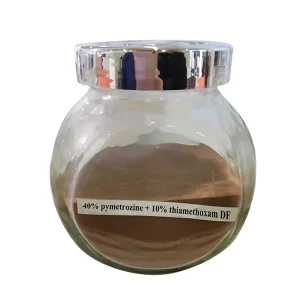
Pymetrozine 40% + Thiamethoxam 10% DF Adults, Nymphs Systemic & Translaminar Vegetables, Cucurbits, Tomatoes Low (Dual Mode)
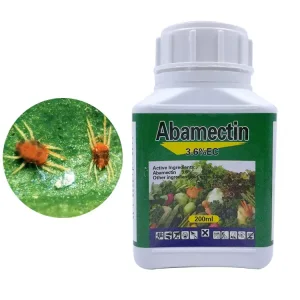
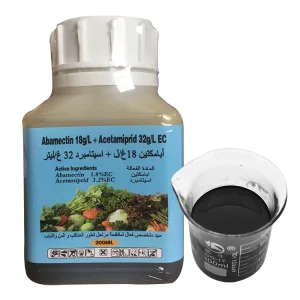
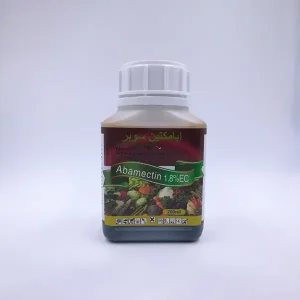
Acetamiprid 32g/L + Abamectin 18g/L EC Adults, Eggs, Mites Translaminar Contact Cotton, Citrus, Greenhouse Floral Medium-Low
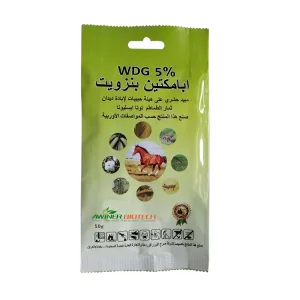
Emamectin Benzoate 5% WDG Lepidoptera / Secondary Whitefly Translaminar Foliar Store Soybean, Corn, Vegetables Low
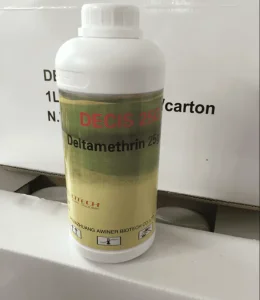
Deltamethrin 2.5% EC Adult Flash Knockdown Contact Spray Public Health, Field Buffer Zones Moderate (Use in Rotation)

3. Industrial Insecticide Resistance Management (IRM) Protocols

Repeated applications of identical chemical classes inevitably select for resistant alleles in Bemisia tabaci populations. Over-reliance on basic pyrethroids or imidacloprid has led to elevated LC50 threshold values in intensive agricultural zones across southern Europe, North Africa, and South America.

The 4-Window Rotational Framework

To preserve chemical efficacy and ensure guaranteed control for enterprise growers, factory supply partners advocate a strict multi-window rotation schedule based on IRAC mode-of-action grouping:

  1. Window 1 (Early Season / Seedling Phase): Drench or foliar application of Neonicotinoids (e.g., Thiamethoxam) combined with IGRs (Pyriproxyfen) to suppress early colonization without harming beneficial parasitoids like Encarsia formosa.
  2. Window 2 (Vegetative Peak / High Pressure): Switch to Chordotonal Organ Modulators (Pymetrozine 40% + Thiamethoxam 10% DF) or Ketoenols to stop feeding immediately and prevent viral transmission.
  3. Window 3 (Reproductive Phase): Utilize translaminar macrocyclic lactone blends (Acetamiprid 32g/L + Abamectin 18g/L EC) to control overlapping adult whitefly generations and secondary pest spikes (spider mites, thrips).
  4. Window 4 (Pre-Harvest Cleanout): Apply short-half-life contact chemistry or low-residue options strictly adhering to Maximum Residue Limits (MRL) and Pre-Harvest Intervals (PHI).

4. Regional Application Scenarios & Global Regulatory Compliance

Whitefly pressures and regulatory boundaries vary significantly between geographic production zones. B2B agrochemical buyers must balance knockdown efficacy against stringent export compliance parameters.

Latin America (Brazil, Mexico, Chile)
Focuses on extensive soybean, cotton, and open-field tomato production. Requires rain-fast, high-load WDG and EC formulations capable of maintaining chemical stability under intense ultraviolet radiation and high tropical moisture levels.
Middle East & North Africa (MENA)
High ambient temperatures accelerate pest reproductive cycles. Continuous cropping in glasshouses (Turkey, Jordan, Egypt) demands systemic formulations with high thermal stability and zero phytotoxicity risks on tender leaves.
European Union & Strict MRL Zones
Requires strict adherence to low active ingredient residue limits. Emphasizes bio-rational synthetic tools, short-PHI insecticides, and clean-dissolving dry flowable (DF) formats that minimize operator exposure.

5. Next-Generation Technology Roadmap in Whitefly Insecticides

As regulatory scrutiny tightens and pest genetics evolve, the future of industrial agrochemical manufacturing focuses on precision delivery systems, biological synergism, and environmental footprint reduction:

  • Microencapsulated Suspension (CS) Technologies: Enclosing sensitive active molecules within polyurea shells to ensure controlled, slow release, extending residual field life from 7 days to 21 days while reducing environmental runoff.
  • Adjuvant and Penetration Enhancers: Incorporation of trisiloxane organosilicon surfactants that reduce surface tension of spray droplets to < 22 mN/m, forcing insecticides deep into dense crop canopies and underside leaf crevices.
  • RNA Interference (RNAi) Biopesticides: R&D pipelines targeting double-stranded RNA (dsRNA) designed to silence specific essential genes in Bemisia tabaci without affecting honeybees or beneficial fauna.
  • AI-Assisted Formulation Optimization: Utilizing computational modeling to evaluate surfactant-active compatibility, optimizing storage stability between -10°C and +50°C.

6. Enterprise Infrastructure & Global Supply Capability: Awiner Biotech

Awiner Biotech was founded in 2006, located in the north of China—Shijiazhuang, Hebei Province. Positioned close to the national capital Beijing, logistics and export transportation channels are convenient and highly efficient.

Awiner Biotech is committed to research, production, and worldwide distribution of agrochemicals. We specialize in comprehensive plant protection portfolios including pesticides, herbicides, fungicides, plant growth regulators, and public health pesticides.

Through rigorous Quality Assurance (QA) and Quality Control (QC) frameworks, state-of-the-art HPLC and GC analytical testing, customized package design (ranging from 10ml ampoules to 200L drums), and full ICAMA/FAO documentation support, Awiner Biotech guarantees enterprise-grade consistency for international partners.

Awiner Agro Market Reach Map
Awiner Global Customer Survey and Market Presence

Global Footprint & Customer Partnerships

Up to now, Awiner Biotech has won long-term trusted customers across more than 30 nations across Latin America, CIS, the Middle East, Africa, and Asia, including:

Iraq, Iran, Afghanistan, Pakistan, India, Libya, Syria, Turkey, Yemen, Ukraine, Russia, Kazakhstan, Uzbekistan, Chile, Bolivia, Mexico, Brazil, Paraguay, Nigeria, Djibouti, Rwanda, Somalia, Malaysia, Cambodia, Nepal, Myanmar, and beyond.

We actively participate in key international agrochemical exhibitions in Turkey, Russia, Pakistan, Nigeria, Uzbekistan, and Malaysia. Furthermore, our agronomists perform localized on-site market surveys, field trials, and diagnostic support to ensure our formulations solve real-world grower challenges effectively.

7. Frequently Asked Questions (FAQ) for Agro-Procurement Managers

What makes a whitefly insecticide formulation "strong" or high-performing?
A strong whitefly insecticide must possess three core characteristics: high translaminar/systemic mobility to reach pests on the undersides of leaves, dual mode-of-action chemistry targeting both adults and immature stages (eggs/nymphs), and resistance-breaking stability against detoxification enzymes (such as Cytochrome P450).
Why is Pymetrozine + Thiamethoxam DF highly recommended for greenhouse crops?
This combination pairs a systemic neonicotinoid (Thiamethoxam) with a specialized nerve/feeding inhibitor (Pymetrozine). It quickly stops whitefly sap feeding (halting viral transfer within minutes) while ensuring extended systemic protection through the vascular system without causing phytotoxicity on greenhouse crops.
How does Awiner Biotech support compliance with regional MRL requirements?
Awiner Biotech provides complete analytical certificates (COA), HPLC purity verification, precise Pre-Harvest Interval (PHI) guidance, and customized active concentration options tailored to regional regulatory frameworks (such as EU, EPA, or LATAM directives).
Can wholesale buyers request customized bottle designs and specialized packaging?
Yes. We offer complete OEM/ODM solutions, including fluoride bottles, aluminum bottles, high-density polyethylene (HDPE) containers, water-soluble bags, and customized outer cartons with multi-lingual label printing designed to meet local registration laws.
What is the recommended tank-mixing policy for whitefly sprays?
Always perform a jar test for physical compatibility before bulk mixing. Maintain tank pH between 5.5 and 6.5, add organosilicon adjuvants for superior coverage, and avoid combining strong alkaline materials (e.g., Bordeaux mixture) with sensitive EC or WDG formulations.