China Herbicidas diuron 80 wp thidiazuron+diuron 119.75+59.88 g/l powder wheat herbicides for maize Pricelist, Factories

Product Description

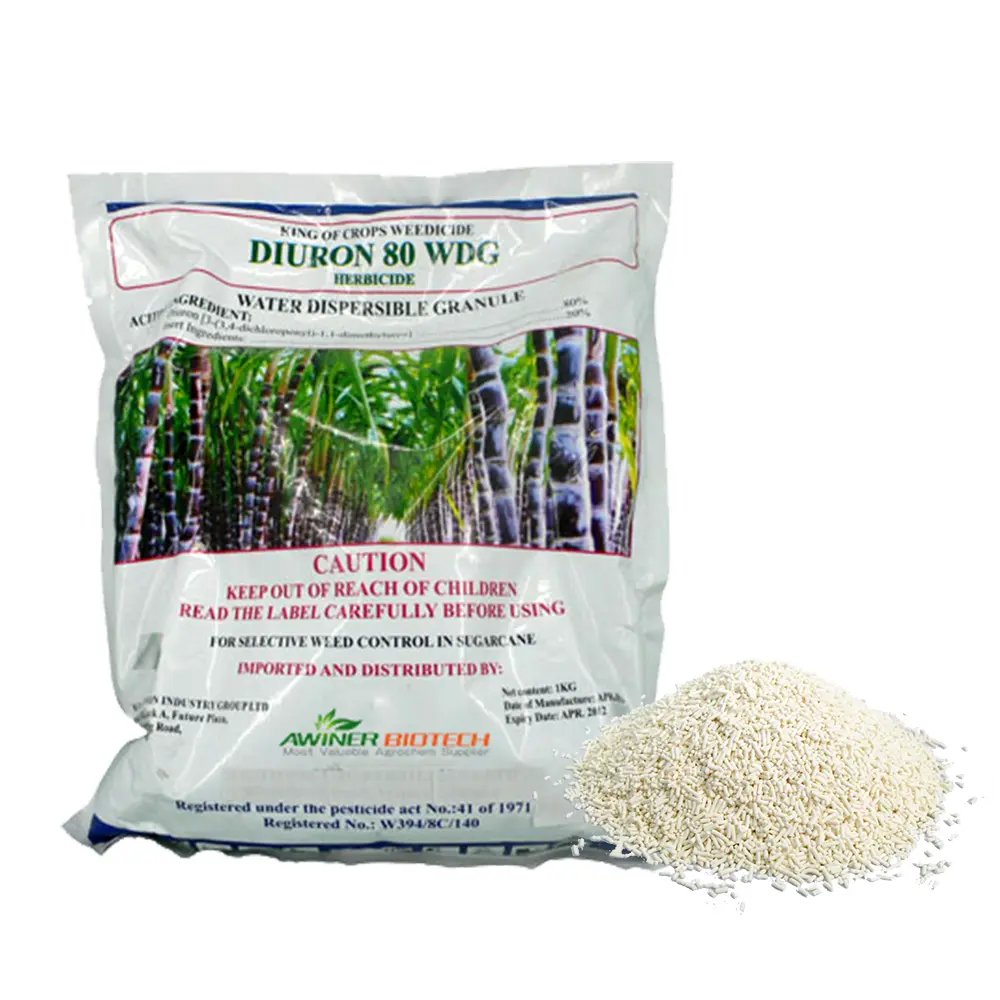
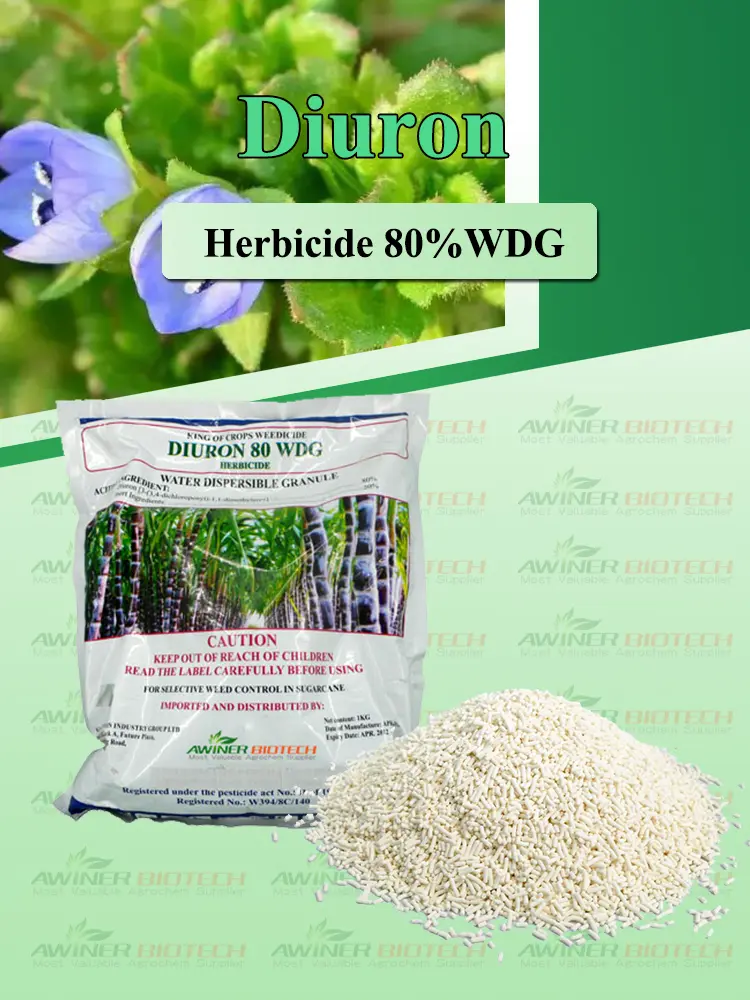
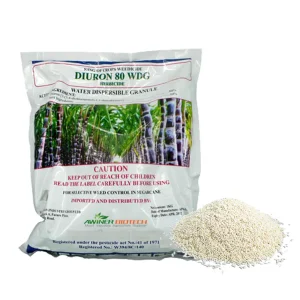
Product Name Diuron 80% WDG
CAS No. 330-54-1
Specification (COA) Content: ≥80%
Suspensibility: ≥85%
Water: ≤2.0%
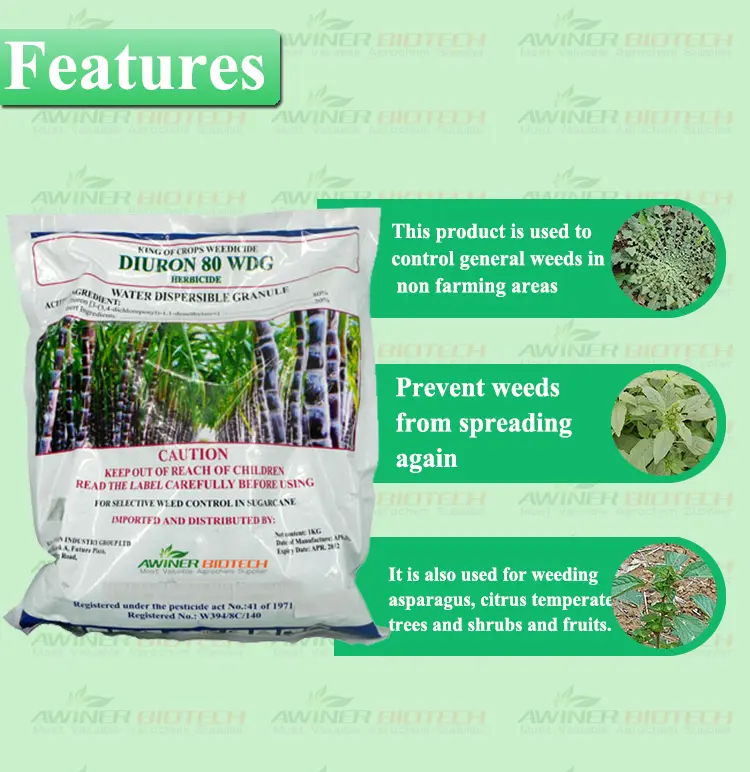
Mode of Action For weed control in non-cultivated land in general, and selective weed control for cotton.
Targets Grass
Crops Sugarcane fields
Main Customer Benefits • Longer Lasting Control
• Consistent Performance
• Secures Yield
• New Mode of Action
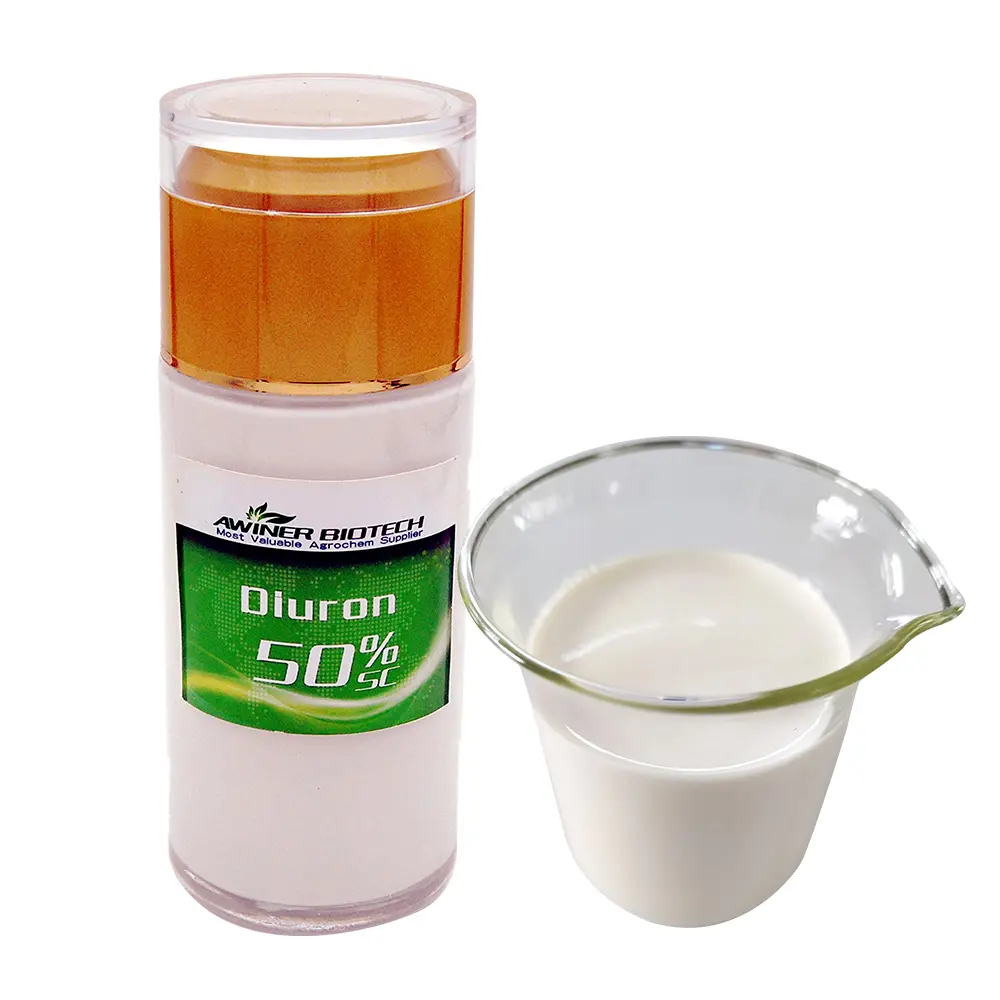
Dosage Form 98%TC, 97%TC, 95%TC, 50%WP, 80%WP, 80%WDG, 80%SC, 20%SC
Product Description & Mechanism

Diuron, imuron, and rituron are three commonly used substituted urea herbicides. Diuron is a systemic herbicide with a certain contact activity and can be absorbed by the roots and leaves of plants, with root absorption being the primary factor. After the weed root system absorbs the pesticide, it spreads to the leaves above ground and along the veins to the surrounding tissue, inhibiting the Hill reaction of photosynthesis. This causes the leaves to lose chlorophyll, with the tips and edges fading, eventually turning yellow and dying.

Diuron can be used as a selective herbicide at low doses and as a total herbicide at high doses. It is suitable for use in rice, cotton, corn, sugarcane, fruit, gum, mulberry, and tea gardens to control barnyardgrass, crabgrass, foxtail, Polygonum, Chenopodium, and eye vegetables. It features low toxicity to humans and animals (acute oral LD50 of rats is 3400mg/kg), though high concentrations may irritate eyes and mucous membranes.

Diuron has no significant negative effect on seed germination and root systems, and its efficacy period can last for more than 60 days. For example, using 25% Diuron wettable powder at 30-45g/100m² in cotton fields before emergence sprayed with 7.5kg of water evenly on the soil surface yields a control effect of over 90%. For fruit trees and tea gardens at the peak of weed germination, using 25% wettable powder at 30-37.5g/100m² with 5.3kg of water sprayed on the soil surface after intertillage and weeding provides excellent results.
Application Guidelines & Precautions
  • Diuron has a killing effect on wheat seedlings, so it is strictly forbidden for use in wheat fields. In tea, mulberry, and orchards, it is advisable to use the poisonous soil method to avoid phytotoxicity.
  • Diuron has a strong contact effect on cotton leaves; the pesticide must be applied strictly to the soil surface. Diuron should not be used after cotton seedlings have unearthed.
  • For sandy soil, the dosage should be appropriately reduced compared to clay soil. It is not suitable for sandy paddy fields with water leakage.
  • Diuron has strong lethality to the leaves of fruit trees and various crops. Prevent the liquid from drifting onto crop leaves. Peach trees are particularly sensitive to Diuron; exercise extreme care.
  • All spraying equipment used with Diuron must be washed repeatedly with clean water after use.
  • When used alone, Diuron is not easily absorbed by the leaves of most plants. A suitable surfactant should be added to improve leaf absorption capacity.
Frequently Asked Questions (FAQ)
Q1: What crops can Diuron 80% WDG be safely applied to?
Diuron is suitable for selective weed control in cotton, sugarcane, rice, corn, fruit trees, gum, mulberry, and tea gardens, as well as non-cultivated land for general weed control.
Q2: How long does Diuron remain effective in the soil?
Diuron provides long-lasting residual control, with an efficacy period lasting for more than 60 days after application.
Q3: Why shouldn't Diuron be used in wheat fields?
Diuron exhibits a strong killing effect on wheat seedlings, causing severe phytotoxicity. Therefore, it is strictly forbidden for use in wheat fields.
Q4: Should I add a surfactant when spraying Diuron?
Yes, when applied alone, Diuron is not readily absorbed by plant leaves. Adding an appropriate surfactant significantly enhances leaf absorption capacity.
Q5: How does Diuron kill targeted weeds?
Diuron is absorbed primarily through plant roots and foliage. It inhibits the Hill reaction of photosynthesis, causing leaves to lose green color, turn yellow, and eventually die.
Q6: How should Diuron dosage be adjusted for different soil types?
The dosage should be reduced in sandy soil compared to clay soil. Additionally, it should not be applied to sandy paddy fields prone to water leakage.

Related Products