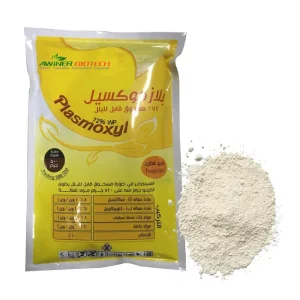
Direct Factory Supply for Greenhouse Crop Protection and Resistance Management
Understanding Etiology, Microclimatic Proliferation, and Economic Risk Profiles
Two-spotted spider mites (Tetranychus urticae) and carmine spider mites (Tetranychus cinnabarinus) represent the most economically destructive pest complex in protected horticulture globally. Modern high-tech greenhouses maintain constant temperatures ($24^\circ\text{C}$ to $32^\circ\text{C}$) and relative humidity levels that paradoxically accelerate mite reproductive cycles.
Under optimal greenhouse dynamics, the complete life cycle of T. urticae collapses from 21 days down to just 5 to 7 days. A single female laying up to 200 eggs over her lifespan can lead to exponential population growth exceeding 2,000,000 descendants within a single 30-day window if unmanaged.
Spider mites utilize piercing-sucking mouthparts (cheliceral stylets) to penetrate plant epidermal cells, extracting parenchyma fluid and destroying chloroplasts. Initial symptoms manifest as micro-chlorotic stippling on leaf surfaces, quickly progressing to full leaf necrosis, severe desiccation, and complete defoliation.
In high-value crops—such as hydroponic tomatoes, cucumbers, bell peppers, floriculture roses, and medical cannabis—infestations cause severe yield penalties. Heavy webbing creates micro-transpiration barriers that disrupt stomatal conductance and photosynthesis, resulting in commercial crop loss rates exceeding 40% to 85%.
Scientific Precision in Overcoming Insecticide and Acaricide Resistance
Continuous overuse of single-site chemical active ingredients has created rampant resistance among greenhouse mite populations. Achieving durable control requires a structured anti-resistance rotation strategy based on the Insecticide Resistance Action Committee (IRAC) classifications. Below is the industrial technical specification matrix provided by our manufacturing facility:
| Active Ingredient | IRAC Group | Primary Target Stage | Mode of Action Breakdown | Formulation Types |
|---|---|---|---|---|
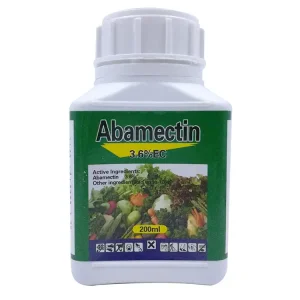
| Abamectin | Group 6 | Nymphs & Adults | Allosteric modulator of glutamate-gated chloride channels; induces paralysis. | 1.8% EC, 3.6% EC, 5.4% EC, Microencapsulated (CS) |
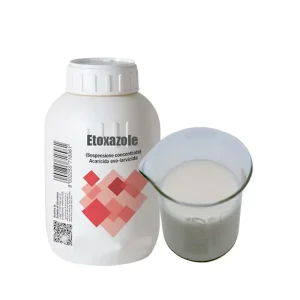
| Etoxazole | Group 10B | Eggs & Larvae (Ovicidal) | Inhibits chitin synthase 1; completely halts molting process and egg hatching. | 110 g/L SC, 20% SC, 50% WDG |
| Spirodiclofen | Group 23 | Eggs, Larvae, Nymphs | Inhibits acetyl-CoA carboxylase (ACC); blocks lipid biosynthesis in mites. | 240 g/L SC, 500 g/L SC |
| Bifenazate | Group 20B | All Motile Stages | Neurotoxic action at mitochondrial complex III electron transport chain site. | 240 g/L SC, 50% WDG |
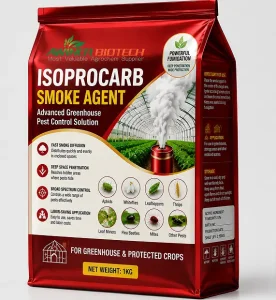
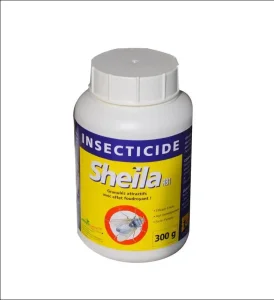
| Isoprocarb | Group 1A | Adults (Fast Knockdown) | Acetylcholinesterase (AChE) inhibitor via vaporized smoke dispersion. | Smoke Agents, Thermal Fumigants |
Ovicides like Etoxazole penetrate the outer chorion layer of spider mite eggs, neutralizing embryogenesis. By eliminating the generation pool before adult emergence, total chemical application frequencies drop by up to 60% per season.
Macrocyclic lactones (Abamectin) and carbamates (Isoprocarb Vapor) act rapidly on the nervous system of motile adults. In dense greenhouse canopies, thermal smoke agents bypass leaf coverage limitations, achieving total knockdown in under 2 hours.
Mites primarily inhabit the abaxial (underside) leaf surface. Our advanced Water-Dispersible Granule (WDG) and Suspension Concentrate (SC) technologies feature high translaminar activity, absorbing into the upper leaf cuticles and diffusing downward to kill hidden feeding mites.
Direct Bulk Agrochemical Manufacturing Powerhouse in Shijiazhuang, Hebei
Founded in 2006, Awiner Biotech operates at the epicenter of China's chemical synthesis corridor in Shijiazhuang, Hebei Province.
Spanning state-of-the-art synthesis laboratories and automated formulation facilities, our infrastructure guarantees stable chemical purity, rigorous batch-to-batch consistency, and robust global delivery pipelines. Positioned near Beijing's transport network, we connect direct factory floor output with international sea and air shipping logistics.
Turnkey Regulatory Documentation and Customized Agrochemical Export Support
All commercial formulation batches are engineered to conform strictly to FAO/WHO specifications for pesticide quality control. We provide verified Certificates of Analysis (COA), Safety Data Sheets (SDS), and structural isomer analytical reports.
We empower regional distributors and commercial brands by furnishing comprehensive regulatory Dossiers (GLP toxicity tests, environmental fate studies, stability testing under ICAMA protocol) to accelerate national registration processes.
From high-barrier HDPE Fluorinated bottles to water-soluble bags and specialized aerosol smoke cannisters, our packing lines support private labeling tailored to regional retail and commercial agriculture specifications.
AI-Driven Precision Delivery, Bio-Engineered Peptides, and Zero-Residue Greenhouses
Next-gen crop protection utilizes dsRNA topically applied to silence vital metabolic genes within Tetranychus urticae. This technology offers 100% target specificity with zero non-target toxicity to beneficial predatory mites like Phytoseiulus persimilis.
Integrating IoT climate sensors with automated high-pressure micro-fogging systems. Infrared spectral camera arrays detect early mite hotspot clusters, triggering targeted automated dosage before colony expansion occurs.
Polymeric lipid nanoparticles enclose volatile active compounds, protecting them from photolytic degradation caused by UV sunlight and high greenhouse temperatures. This increases residual action window while reducing chemical input by 35%.
Field-Tested Agrochemical Solutions Across 25+ International Agricultural Markets
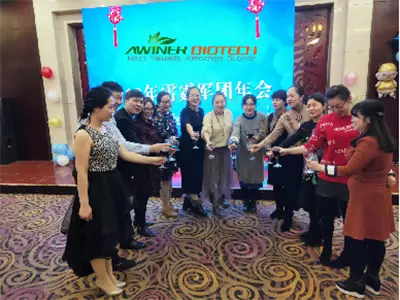
Up to now, we have won trusted long-term commercial customers from Iraq, Iran, Afghanistan, Pakistan, India, Libya, Syria, Turkey, Yemen, Ukraine, Russia, Kazakhstan, Uzbekistan, Chile, Bolivia, Mexico, Brazil, Paraguay, Nigeria, Djibouti, Rwanda, Somalia, Malaysia, Cambodia, Nepal, Myanmar, and beyond.
Our core technical teams regularly participate in flagship international agrochemical expos in Turkey, Iran, Pakistan, Nigeria, Russia, Cambodia, Malaysia, Uzbekistan, and other major hubs.
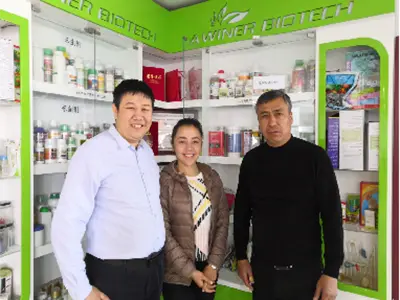
We actively travel to customer sites for on-the-ground market inspections, analyzing local crop conditions, evaluating pest resistance vectors, and configuring tailored chemical solutions for greenhouse growers.
Expert Guidance on Greenhouse Spider Mite Eradication and Purchasing
Comprehensive Insecticide, Herbicide, Fungicide & Public Health Formulations
 Awiner Biotech