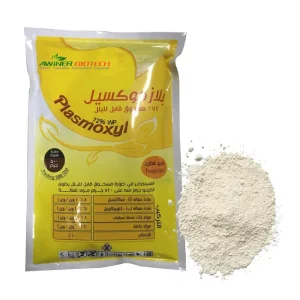
Targeted solutions for Indus Basin rice, wheat, cotton, and horticultural disease prevention.
Addressing fungal resistance, climate stress, and yield security across Punjab and Sindh farming provinces.
Pakistan’s agricultural sector remains the backbone of its national economy, contributing over 22% to GDP and employing nearly 37% of the labor force. The fertile plains fed by the Indus River System—spanning Punjab’s wheat-cotton belts (Faisalabad, Multan, Sahiwal, Bahawalpur) and Sindh’s paddy and fruit growing regions (Sukkur, Larkana, Hyderabad)—face intensifying pathogen challenges. Tropical humidity spikes, coupled with unseasonal monsoonal rainfall, have accelerated the incidence of devastating fungal epidemics.
For B2B importers, agrochemical distributors, and formulators operating in Pakistan, securing reliable, high-potency fungicide quotes directly from Chinese manufacturing synthesis centers is no longer just about lowest cost—it is a critical imperative for crop security and regulatory survival. Fungal pathogens such as Puccinia striiformis (Yellow Rust in wheat), Magnaporthe oryzae (Rice Blast), Phytophthora infestans (Late Blight in potatoes), and Colletotrichum gloeosporioides (Mango Anthracnose) cause annual yield reductions ranging from 18% to 42% when inadequately managed.
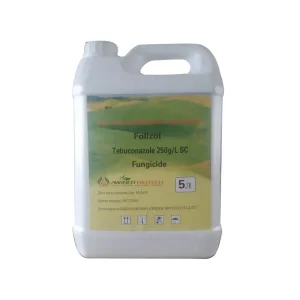
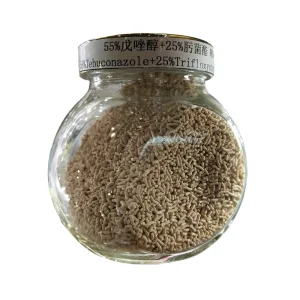
High-efficacy Triazole and Strobilurin blends (Tebuconazole + Trifloxystrobin WDG) engineered to halt stripe and leaf rust in Punjab’s mega-varieties under humid spring conditions.
Specialized Azoxystrobin SC and Tricyclazole mixes to suppress neck blast and panicle decay without chemical burn or unwanted residue levels exceeding MRL limits.
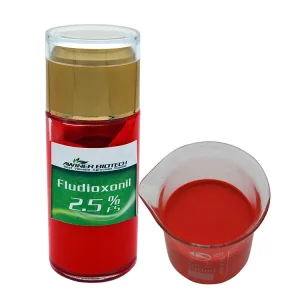
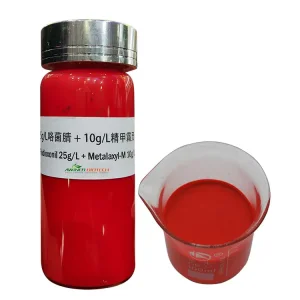
Metalaxyl-M + Fludioxonil FS seed dressings ensuring seed germination integrity against damp-off (Pythium/Rhizoctonia) in heavy soils.
Importing agrochemicals into Pakistan requires navigating strict regulatory oversight governed by the Department of Plant Protection (DPP), Ministry of National Food Security & Research under the Agricultural Pesticides Ordinance (APO) of 1971 and Rules 1973. Factory quotations must align with Form 7 (Brand Import) and Form 8 (Generic Technical / Formulation Registration) compliance metrics. Key parameters specified by DPP include active ingredient assay stability, active suspension percentage, maximum moisture thresholds, and micro-particle size distribution (D90 < 5 microns for SC formulations to ensure spray drift efficiency).
Global manufacturing capabilities customized to meet the demanding shelf-life standards of Pakistan’s high-temperature climate (up to 50°C storage resilience).
| Active Ingredient (AI) | Formulation Type | Target Pathogens | Pakistani Crop Focus | FRAC Action Group |
|---|---|---|---|---|
| Azoxystrobin 250 g/L | SC (Suspension Concentrate) | Rice Blast, Sheath Blight, Powdery Mildew | Rice, Tomato, Citrus | Group 11 (QoI Inhibitor) |
| Tebuconazole 50% + Trifloxystrobin 25% | WDG / DF (Water Dispersible Granule) | Stripe Rust, Scab, Anthracnose | Wheat, Mango, Apple | Group 3 (DMI) + Group 11 |
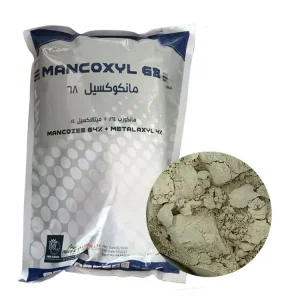
| Metalaxyl 8% + Mancozeb 64% | WP (Wettable Powder) | Downy Mildew, Late Blight, Phytophthora | Potato, Tobacco, Onion, Grapes | Group 4 (PA) + Group M03 (Multi-site) |
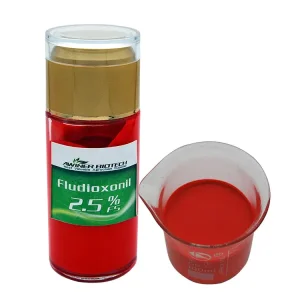
| Fludioxonil 2.5% + Metalaxyl-M 1.0% | FS (Flowable Concentrate for Seed Treatment) | Damping-off, Seed-borne Bunt, Fusarium | Cotton, Maize, Wheat Seed | Group 12 + Group 4 |
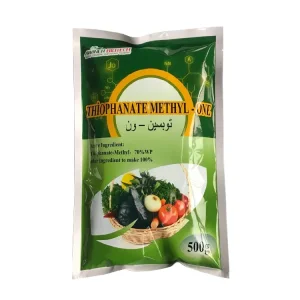
| Thiophanate-Methyl 70% | WP (Wettable Powder) | Stem Rot, Wilt, Leaf Spot | Sugarcane, Pulses, Vegetables | Group 1 (MBC Fungicide) |
Awiner Biotech was founded in 2006, located in north of China—Shijiazhuang, Hebei Province. The city is close to our capital Beijing, with convenient transportation networks connecting directly to Xingang and Tianjin ports for fast international shipping.
Awiner Biotech is committed to research, produce, and distribute agrochemicals worldwide. We mainly deal with high-efficacy pesticides, herbicides, fungicides, plant growth regulators, and public health pesticides tailored for extreme climatic conditions.
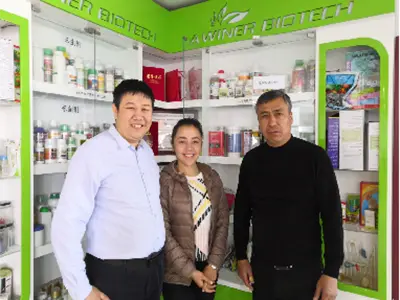
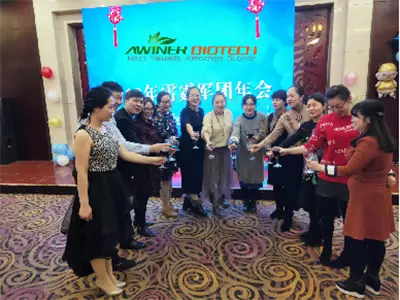
Up to now, we have won loyal commercial customers from Pakistan, Iraq, Iran, Afghanistan, India, Libya, Syria, Turkey, Yemen, Ukraine, Russia, Kazakhstan, Uzbekistan, Chile, Bolivia, Mexico, Brazil, Paraguay, Nigeria, Djibouti, Rwanda, Somalia, Malaysia, Cambodia, Nepal, Myanmar, and so on.
Our company actively participates in major global agricultural machinery & agrochemical exhibitions across Turkey, Iran, Pakistan (Lahore & Karachi Agro Expos), Nigeria, Russia, Cambodia, Malaysia, Uzbekistan, and beyond.
We regularly travel directly to customer countries (including field visits in Punjab and Sindh) to conduct market inspections, analyze regional pest pressure, resolve technical issues, inspect product usage, and host client delegations at our Chinese manufacturing facility.
Full spectrum of customized technical and formulated agrochemicals tailored for Pakistani importers, wholesale distributors, and local brand owners.
Strategic deployment of multi-site and systemic fungicides for optimized field efficacy in Pakistan.
The "Kalar Bowl" region of Punjab, famous for producing aromatic Super Basmati rice, experiences acute leaf and neck blast outbreaks when relative humidity exceeds 85% during August and September. Continuous reliance on single-site systemic fungicides has led to early resistance signals. We recommend a tank-mix or co-formulated strategy combining Azoxystrobin 20% + Difenoconazole 12.5% SC or Tricyclazole 75% WP. Applying at early boot stage and 10% flowering provides 28-day protective shielding and yields up to 15% higher head rice recovery.
Early-season cotton stands in Southern Punjab suffer heavy seedling loss due to soil-borne Rhizoctonia solani and Fusarium oxysporum. Our flowable seed treatments (Fludioxonil 2.5% FS + Metalaxyl-M 1.0% FS) form an impenetrable chemical halo around the germinating seed coat, guaranteeing uniform plant population densities even in salinity-affected soils.
When temperatures fluctuate between 10°C and 15°C accompanied by heavy morning dew in February, wheat crops are vulnerable to rapid stripe rust epidemics. Factory quotes for Tebuconazole 50% + Trifloxystrobin 25% WDG deliver immediate curative action (eradicating established mycelium) alongside long-lasting preventative protection (inhibiting spore germination).
Direct responses regarding pricing quotes, DPP documentation, container logistics, and formulation customization.
You can send an inquiry directly through our website contact link or via email detailing your required active concentration, target formulation type (SC, WDG, WP, FS), packaging size, and estimated volume. Our B2B export team provides binding C&F or CIF Karachi / Port Qasim quotes within 24 hours.
Yes. We provide comprehensive technical dossier packages required by Pakistan’s Department of Plant Protection (DPP), including COA (Certificate of Analysis), FAO standard test reports, stability study data, manufacturing process flowcharts, and 5-batch analysis reports for Form 7 and Form 8 registration.
We offer full OEM customization. This includes aluminum foil sachets (10g to 500g) for WDG/WP, high-density HDPE bottles (100ml to 1L) with anti-counterfeit induction sealing for liquid SC/EC, and bulk 25kg fiber drums. Packaging artwork can be fully localized with Urdu safety instructions and DPP registration numbers.
Our formulation lab incorporates specialized thermal stabilizers, anti-caking agents, and high-grade emulsifiers tested under accelerated storage conditions (54°C for 14 days) to ensure zero active degradation, phase separation, or crystallization in hot warehouse environments.
Standard synthesis and formulation lead time is 15 to 20 days following design approval and LC opening. Shipping from Tianjin/Xingang port to Karachi Port typically takes an additional 18 to 22 transit days.
Yes, we ship free express sample kits (via DHL/FedEx) to accredited importers and distributors in Lahore, Karachi, Multan, and Faisalabad for independent HPLC lab analysis and field efficacy trials prior to commercial ordering.
 Awiner Biotech