 Awiner Biotech
Premium grade post-emergent and pre-emergent active ingredients tailored for desert farming, drip irrigation, and high-yield crop security.
An in-depth analysis of crop protection requirements, climate-driven weed pressures, and procurement strategies in the Israeli agricultural ecosystem.
Israel's pioneering subsurface drip irrigation (SDI) demands herbicides with optimized soil mobility, low photodegradation, and ultra-high chemical stability under harsh Mediterranean sunshine and high thermal variance.
Intensive rotation of citrus, avocado, wheat, and cotton in the Negev and Galilee regions has heightened the risk of ACCase and ALS resistant broadleaf weeds, driving demand for multi-mechanism tank mixes.
Importers must adhere to rigorous residue limits (MRLs) set by the Israel Ministry of Agriculture and Rural Development (MOAG) and Plant Protection and Inspection Services (PPIS), emphasizing high active ingredient purity.
Israel represents one of the world's most technologically advanced agricultural markets. Characterized by high capital investment per hectare, limited arable land, and hyper-efficient water utilization, the nation’s agrochemical demand is uniquely sophisticated. Israeli farmers cannot afford crop yield loss due to weed competition or crop phytotoxicity caused by low-grade agrochemical formulations. As a result, herbicide procurement in Israel focuses not merely on cost per liter, but on active ingredient purity, formulation micro-emulsification, batch-to-batch chemical stability, and precise solubility in fertigation systems.
Key cash crops across the Israeli agricultural spectrum—such as citrus groves in the Sharon plain, commercial date palms in the Arava valley, processed field crops (wheat, barley, cotton, and sunflower) in the Jezreel Valley, and high-value fruit orchards in the Upper Galilee—face severe weed pressure from aggressive endemic and invasive species. Problematic weeds including Phalaris paradoxa (hooded canarygrass), Avena sterilis (animated oat), Conyza canadensis (horseweed), and Sorghum halepense (Johnsongrass) require highly targeted selective herbicides.
Under solar radiation intensity exceeding 2,200 kWh/m² annually in southern Israel, conventional EC (Emulsifiable Concentrate) formulations often suffer from accelerated photo-degradation and solvent evaporation. Advanced China 4.0 factories utilize high-molecular-weight non-ionic surfactants and customized anti-photolysis stabilizers to maintain active ingredient integrity over extended soil contact times.
To maximize economic returns, Israeli distributors and large agricultural cooperatives look toward direct factory manufacturing partners in China capable of providing custom-formulated solutions. By leveraging advanced analytical testing (HPLC, GC-MS) and stringent Quality Assurance (QA) protocols, chemical factories can deliver bulk active ingredients (Technical Grade) and end-use formulations (EC, SC, SL, WG, WP) that perfectly align with local registration frameworks.
How state-of-the-art continuous flow manufacturing and end-to-end quality control empower global B2B procurement for Israeli enterprises.
Our chemical production clusters in Hebei Province, China, benefit from complete backward integration into key chemical intermediates—including phosphorus chemistry, triazine ring precursors, and specialized halogenated building blocks. This vertical alignment buffers Israeli buyers from international market volatility, guaranteeing continuous supply even during global supply chain bottlenecks.
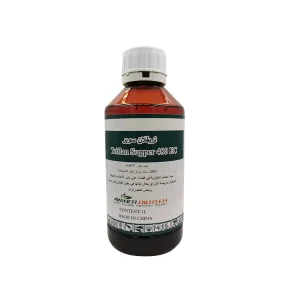
Equipped with fully automated robotized bottling, UN-certified high-density fluorinated containers (COEX), and nitrogen-purged filling lines, our factory mitigates cross-contamination risks and guarantees a 2-year minimum shelf life under extreme climatic conditions common to the Port of Haifa and Ashdod warehousing facilities.
Engineered formulations for targeted broadleaf, grass control, and total vegetation management.
Comprehensive guide to chemical active choices, application timing, and crop safety parameters for commercial farm operators.
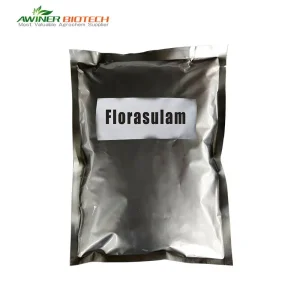
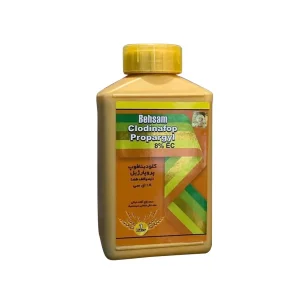
Winter wheat production in Israel relies heavily on early-stage grass and broadleaf management before crop canopy closure. Active ingredients such as Clodinafop-propargyl (12% EC) and Florasulam provide exceptional selectivity against wild oats and ryegrass without causing crop stunting during cold snaps.
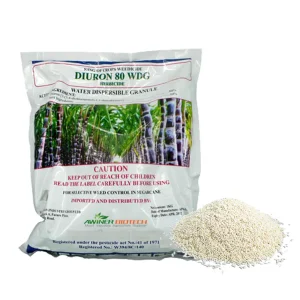
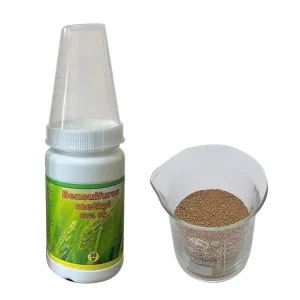
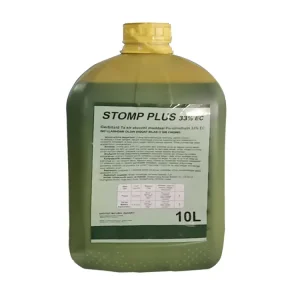
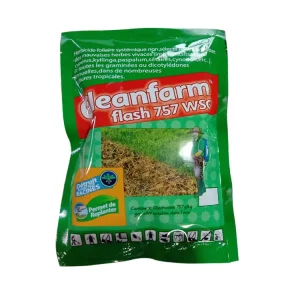
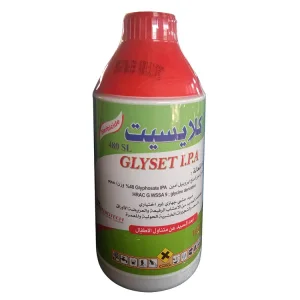
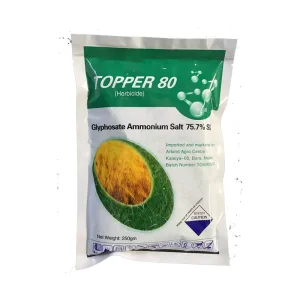
Perennial tree crops require residual floor control to prevent moisture competition during dry summer months. Combinations of Diuron 80 WP, Pendimethalin 330g/L EC, and targeted applications of Glyphosate 480 SL / 757 SG ensure long-term clean orchard floors.
Founded in 2006, Awiner Biotech is strategically located in Shijiazhuang, Hebei Province—the heartland of China's chemical manufacturing corridor, close to the capital Beijing with seamless access to major shipping ports like Tianjin and Qingdao.
We specialize in the synthesis, formulation development, custom packaging, and international registration support for herbicides, insecticides, fungicides, plant growth regulators (PGRs), and public health chemicals. Our technical team conducts regular on-site market surveys to solve localized agricultural challenges directly alongside our commercial partners.
Iraq, Iran, Afghanistan, Pakistan, India, Libya, Syria, Turkey, Yemen, Ukraine, Russia, Kazakhstan, Uzbekistan, Chile, Bolivia, Mexico, Brazil, Paraguay, Nigeria, Djibouti, Rwanda, Somalia, Malaysia, Cambodia, Nepal, Myanmar, and expanding worldwide.
Direct answers to regulatory, technical, logistics, and pricing queries from chemical distributors and agro-business buyers.
We supply comprehensive GLP-compliant analytical data packages, including 5-batch analysis reports, Certificate of Analysis (COA), SDS, Certificate of Origin, and complete impurity profile dossier to assist Israeli importers in obtaining PPIS registration approval.
Herbicide pricelists are determined by active ingredient purity level (TC grade vs. formulation), raw material precursor market trends in China, custom packaging requirements (e.g., COEX fluorinated bottles), order volume, and sea freight rates to Ashdod or Haifa ports.
Yes. Our specialized water-soluble concentrates (SL) and micro-emulsions (ME) are filtered down to micro-submicron particle sizes, eliminating drip emitter clogging and ensuring precise delivery to subterranean root zones.
Standard production lead time is 15–20 days upon contract confirmation. Shipping transit time from main China ports (Tianjin/Qingdao/Shanghai) to Israel ports typically ranges between 22 and 30 days depending on vessel routing.
Explore our extensive range of high-grade technical concentrates and commercial formulations ready for export.